How the Malta Dockyard Shaped Generations of Maltese Families


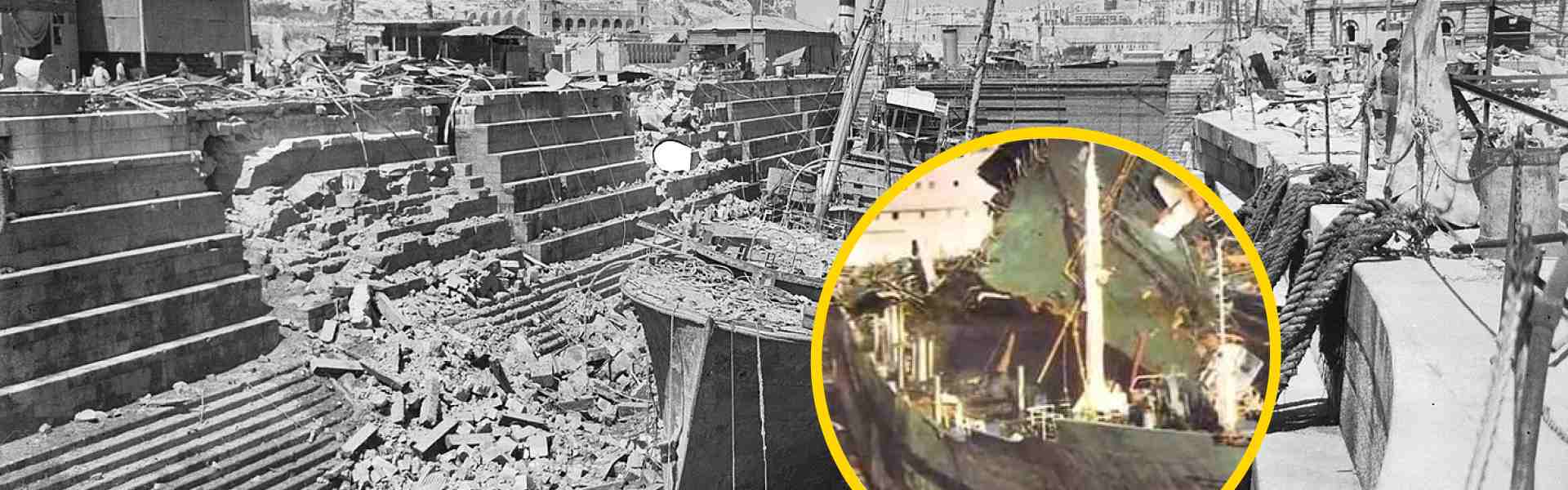
For generations of Maltese families, one word decided the shape of a life: tal-baħar. If you were a boy growing up in Bormla, Senglea or Vittoriosa; the Three Cities clustered around the Grand Harbour, the odds were that your father worked at the dockyard, your uncles worked at the dockyard, your neighbours worked at the dockyard, and one day, in all likelihood, so would you. The dockyard was not just where the men of the harbour towns worked. It was who they were.
The Malta Dockyard, or, in its later civilian life, the Drydocks, was for the best part of two centuries the single most important workplace in the Maltese islands. It was the largest employer, the greatest school of skilled trades, the engine of the harbour economy, and the crucible in which the modern Maltese trade-union movement, and much of modern Maltese politics, was forged. It fed families, built towns, and shaped the character of a whole community.
Its story is one of pride and skill and solidarity, and also of danger, hardship, bitter political conflict and, in the end, long decline. This is the story of how the dockyard shaped generations of Maltese families: honestly, including the hard parts.
From the Knights' Galleys to the Royal Navy's Dry Dock
Ship repair in the Grand Harbour is almost as old as the harbour towns themselves. The Knights of St John maintained galley-servicing facilities in the sheltered creek between Senglea and Vittoriosa, and in 1776 the Order began building a dockyard proper at Bormla. But the dockyard that shaped modern Malta was overwhelmingly a British creation.
When Britain took Malta in 1800 and, with the loss of Menorca, made it the Royal Navy's principal base in the Mediterranean, the Navy inherited the old facilities around Dockyard Creek in Bormla and set about transforming them. The single most important step came in the 1840s: a dry dock was cut from the rock at the head of the creek, begun in 1844 under the engineer William Scamp and opened in 1847, when it welcomed HMS Antelope, the first Royal Navy ship refitted there. It was the first dry dock built for the Royal Navy anywhere outside Britain, a mark of just how important Malta had become. By 1850 the yard had storehouses, a rope and sail works, foundries, workshops, a naval bakery and victualling stores, and quarters for its officers.
Then came steam, and the opening of the Suez Canal in 1869, which turned Malta into a vital coaling and repair station on the route to India and the East. The dockyard outgrew Dockyard Creek entirely. From 1865, on plans drawn up by Lieutenant Colonel Andrew Clarke, the Admiralty expanded around the other side of Senglea into French Creek, adding dry dock after dry dock. Between 1847 and 1909 the yard grew to encompass the whole sweep of harbour between Cospicua and Senglea, a world of cranes, docks, machine shops and slipways. And it needed men. Thousands and thousands of Maltese men.
A Whole World of Work and a Class of Craftsmen

The scale is difficult to overstate. As the growth of the harbour trades pulled the population toward the docks in the 19th century, the number of workers in Malta rose sharply — and by its peak in the late 1950s, the dockyard employed around 14,000 people. In a country of fewer than 320,000, that single figure was transformative: the dockyard, directly and indirectly, sustained a very large share of the entire Maltese economy. As Yellow's article on the British in Malta puts it, the surnames of the Three Cities are dockyard surnames, and the skills are dockyard skills.
And what skills they were. The dockyard was, in effect, the country's greatest technical university long before Malta had a technical university. Its apprenticeship scheme was famous and fiercely competitive, when the reactivated scheme advertised in 1964, hundreds of 'the best and brightest of their generation' applied for a hundred places. Young men entered at fourteen or fifteen and spent years mastering a trade: fitters, turners, boilermakers, shipwrights, riveters, caulkers, coppersmiths, blacksmiths, electricians, patternmakers, plumbers. The training was so thorough that, as the shipwright and trade unionist Michael Parnis recalled, within months an apprentice had learned enough to fix almost anything, from a leaking pipe to a dead light, for the rest of his life. A Drydocks tradesman was a man who could make things and mend things, and he knew it.
This bred a distinctive culture: proud, skilled, self-respecting, and intensely solidaristic. Working at the yard carried real prestige; it was regarded as securing the best technical and managerial know-how on the islands, and the yard competed with the best in Europe. The trades passed down through families, father to son to grandson, so that a dockyard skill became a kind of family inheritance. To be a dockyard worker, was to belong to something.
The Dockyard at War

If the dockyard shaped Maltese families in peacetime, in wartime it very nearly got them killed because the thing that made Malta valuable made it a target.
As the Royal Navy's central Mediterranean repair base, the dockyard was a prime objective for the Axis in the Second World War. The harbour towns that housed the dockyard workers; Bormla, Senglea, Vittoriosa, were among the most heavily bombed places on earth. In January 1941, German dive-bombers launched a massed attack on the dockyard specifically to destroy the crippled aircraft carrier HMS Illustrious, which was sheltering there for repairs, the ferocious assault Malta remembers as the Illustrious Blitz. Dry docks were hit; ships were sunk at their berths; whole streets of the Three Cities were flattened, and their populations scattered inland as refugees.
Yet the dockyard kept working, often through the raids, often at terrible risk, patching up the ships that kept Malta alive and the convoys moving. The story of the dockyard workers in the war is inseparable from the story of the George Cross the whole island was awarded in 1942. When the war ended, the harbour towns lay in ruins, and the dockyard, as it had for a century, went straight back to work.
The Great Uncertainty: From Royal Navy to Civilian Yard

The dockyard's greatest strength was also its fatal weakness: it depended almost entirely on British military spending. And after the war, as Britain wound down its empire and its armed forces, that spending began to shrink, throwing the livelihoods of thousands of Maltese families into decades of anxiety.
The workforce, which had numbered perhaps 13,000 in wartime, faced repeated fears of pay cuts and layoffs whenever the Fleet was reduced or sailed away. The dockyard question became the question of Maltese politics: what would happen to the islands' biggest employer as the British left? The answer played out over three tense decades. In 1959, the Admiralty handed the yard to a civilian firm, C.H. Bailey of Wales, on a long lease, to convert it from a naval dockyard into a commercial ship-repair business. That arrangement collapsed in acrimony; by 1963 the British and Maltese governments had intervened, and the yard, now trading as Malta Drydocks, with the British firm Swan Hunter as managing agents, turned decisively toward repairing civilian merchant ships.
Then, in 1968, four years after independence, the Maltese government took the yard over entirely. In February 1968 it ceased to be a Royal Navy base, and when the British military finally left Malta altogether on the 31st of March 1979; the day Malta marks as Freedom Day (Jum il-Ħelsien), the dockyard's transformation from imperial naval base to Maltese national enterprise was complete. The men who had spent their lives repairing British warships would now repair the merchant fleets of the world.
The Great Experiment: When the Workers Ran the Yard

What happened next was genuinely remarkable, and it made the Malta Drydocks the subject of international study. In 1975, under the Labour government of Dom Mintoff, the government did something few governments anywhere have done: it handed the running of the yard to the workers themselves.
Under this system of workers' participation or self-management, the affairs of the Drydocks were to be directed by a Council largely elected by the workforce, with the General Workers' Union (GWU), to which most dockyard workers belonged, at the very centre of the enterprise. This was industrial democracy on a scale rarely attempted: the fitters and boilermakers of Bormla and Senglea were, collectively, to be their own bosses. For the dockyard community, it was the culmination of a long journey from being the hired hands of a foreign navy to being the owners of a national industry.
And for a time, it worked. The yard was profitable through the second half of the 1970s, and in 1981 it recorded the highest profit in its history. When workers were polled in 1982, an overwhelming majority expressed support for the participatory system, and elections to the Drydocks Council drew consistently high turnouts. For a few years, the experiment looked like a vindication, proof that workers could run one of the country's largest and most complex enterprises themselves.
The Long Decline
But the wider world was against it. The international ship-repair industry was plagued by chronic over-capacity and brutally competitive pricing, and from 1982 the Drydocks slid back into loss; losses that became chronic and deepened over the years, reaching enormous sums by the mid-1990s. The yard survived only on heavy state subsidies, year after year. Much of its work came from the Eastern Bloc and from Libya; when the Soviet Union collapsed, that source of orders collapsed with it.
This is where the dockyard's story becomes, unavoidably, a political one, and it remains contested in Malta to this day, so it is worth being careful and fair about it. To its supporters, the Drydocks was a national asset and a source of thousands of dignified, skilled jobs, worth sustaining as a matter of social and industrial policy; the losses were the fault of a savage global market, not the workforce. To its critics, the yard had become an unsustainable drain on the public purse, kept alive for political and social reasons long after it had ceased to make economic sense. Both things can be true at once. What is not in dispute is the scale of the cost: by one government estimate, the expense of running the yard came to account for around a quarter of Malta's entire national debt, and over the full period of state ownership the enterprise accumulated losses on the order of €1 billion.
The Price Paid in Blood: Danger at the Yard

Behind the politics and the balance sheets were human bodies, because the dockyard was a genuinely dangerous place to work and the families of the Three Cities paid for it.
Dockyard work was heavy, hot and hazardous. Men worked with asbestos, now known to cause cancer, for decades before its dangers were understood, and a grim toll of disease followed in later life. The tank cleaners, who went down into the tanks of oil and chemical vessels, had among the most dangerous jobs of all. And on the night of the 3rd of February 1995, that danger produced the worst industrial accident in Maltese history. A gas explosion tore through the Um El Faroud, a Libyan oil tanker undergoing repairs in No. 3 Dock, killing nine dockyard workers and shattering windows across nearby Senglea.
The nine men are remembered as fallen workers, and the tragedy left a permanent scar on the close-knit dockyard community, where almost everyone knew someone affected. The ruined tanker itself was later towed out and scuttled off the Maltese coast, where it now lies as an artificial reef and a well-known dive site, an accidental underwater memorial to the men who died aboard her. The disaster stands as a sober reminder that the prosperity the dockyard brought to Maltese families was, at times, paid for in lives.
The End of the Yard
By the 2000s, the writing was on the wall. Malta was preparing to join the European Union (which it did in 2004), and EU rules sharply restrict the kind of open-ended state subsidy that had kept the Drydocks afloat for a generation. Under Nationalist Party governments, the yard, by then reorganised as Malta Shipyards Ltd, was progressively downsized, its self-management system wound up in the late 1990s, and its enormous, accumulated debts written off in an effort to make it viable. It was not enough.
In March 2010, Malta Shipyards was placed into liquidation. After some 160 years, the great Maltese ship-repair enterprise ceased to exist as a national institution. Its assets and facilities were leased to the Italian company Palumbo Shipyards, which continues to operate ship-repair and superyacht-refit business in the Grand Harbour to this day, so ships are still repaired in the old docks, but by a private international firm, not the state enterprise that once employed a large share of the nation. The final closure was accompanied, fittingly and painfully, by one last dispute between the government and the GWU over the fate of the remaining workers.
Parts of the historic dockyard have since been repurposed. The oldest docks in Bormla and their surroundings have been turned into public spaces, and the area has become home to the American University of Malta, the machine shops and slipways giving way, in the end, to lecture halls.
What the Dockyard Left Behind
So how did the Malta Dockyard shape generations of Maltese families? Almost completely.
It gave them their livelihoods; for a century and a half, the dockyard was the difference between security and poverty for tens of thousands of harbour families. It gave them their skills, a tradition of world-class craftsmanship in metal and machinery passed from father to son, which seeded engineering and technical ability across the whole Maltese economy. It gave them their politics: the solidarity of the dockyard workforce, and its union, is a foundation stone of the modern Maltese labour movement, and the fate of the yard drove some of the fiercest arguments in the nation's history. It gave the Three Cities their identity; tight-knit, proud, working-class communities defined by the trade at their heart. And it asked, at times, a heavy price, in danger, in disease, and in the nine lives lost aboard the Um El Faroud.
The docks are quieter now, and the great national enterprise is gone. But its legacy is everywhere in Malta: in the surnames of Bormla and Senglea and Vittoriosa; in the engineering and technical skills that the dockyard taught the nation; in the trade-union culture it created; and in the memory of a time when, for the men of the harbour towns, the whole of life; work, pride, community, struggle and identity, came down to a single word: tal-baħar.

About Matthew Gollcher
Hi, I'm Matthew, an SEO Specialist and Content Writer at Yellow Pages Malta. I'm passionate about creating meaningful content and exploring AI's creative possibilities. When I'm not working, I enjoy the gym, time with friends, watching series and reading, and playing guitar. I'm always eager to learn and grow both personally and professionally.