How the British Changed Malta and How Malta Changed the British


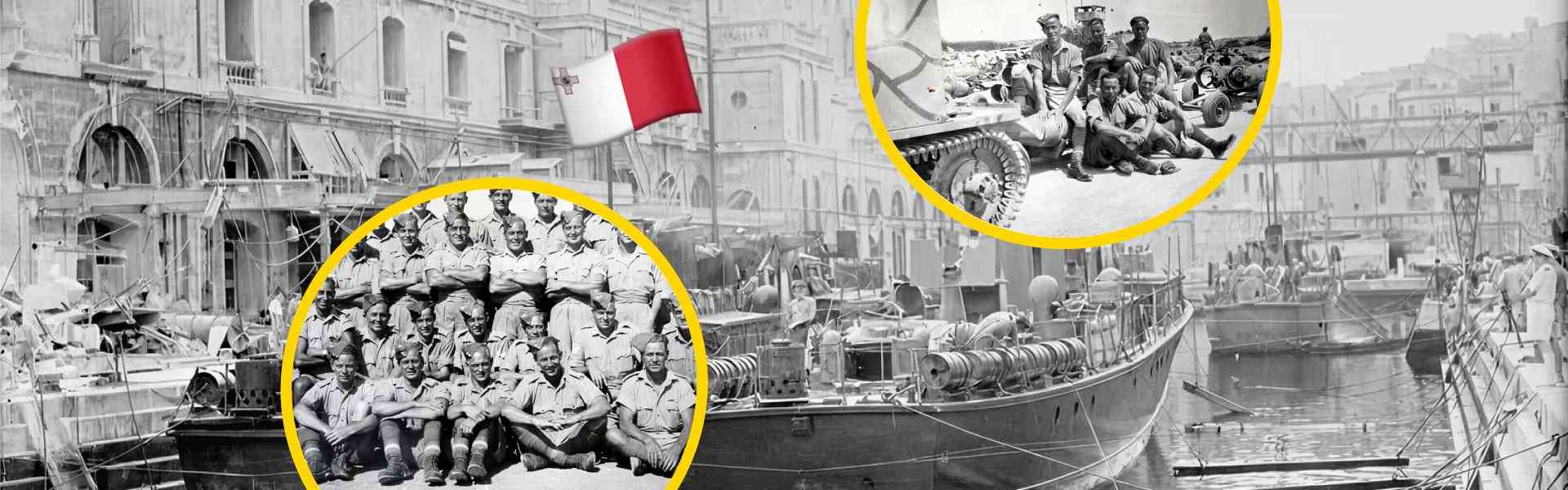
Most countries that ended up inside the British Empire did not choose to be there. Malta did. When French troops finally surrendered the Grand Harbour on the 4th of September 1800, after two years of siege by the Maltese themselves, the elected Congresso Nazionale knew exactly what it wanted next. Not the Knights of St John, who had handed the island to Napoleon without a fight. Not Naples, which had neither the will nor the means to defend them. They wanted Britain.
What followed was 179 years of a relationship more intimate, more fractious and more mutually transformative than any other in Malta's very long history of foreign rulers. The British built the dockyard that employed a tenth of the Maltese workforce. They garrisoned the island with thousands of soldiers whose spending shaped Valletta's economy and whose presence shaped its nightlife. They shot dead four Maltese men in the streets in 1919 and awarded the entire island a medal in 1942. They watched a future Queen grow up in a rented house in Pietà. And on the 31st of March 1979, they sailed out of Grand Harbour for the last time.
This is that story.
An Invitation, not a Conquest
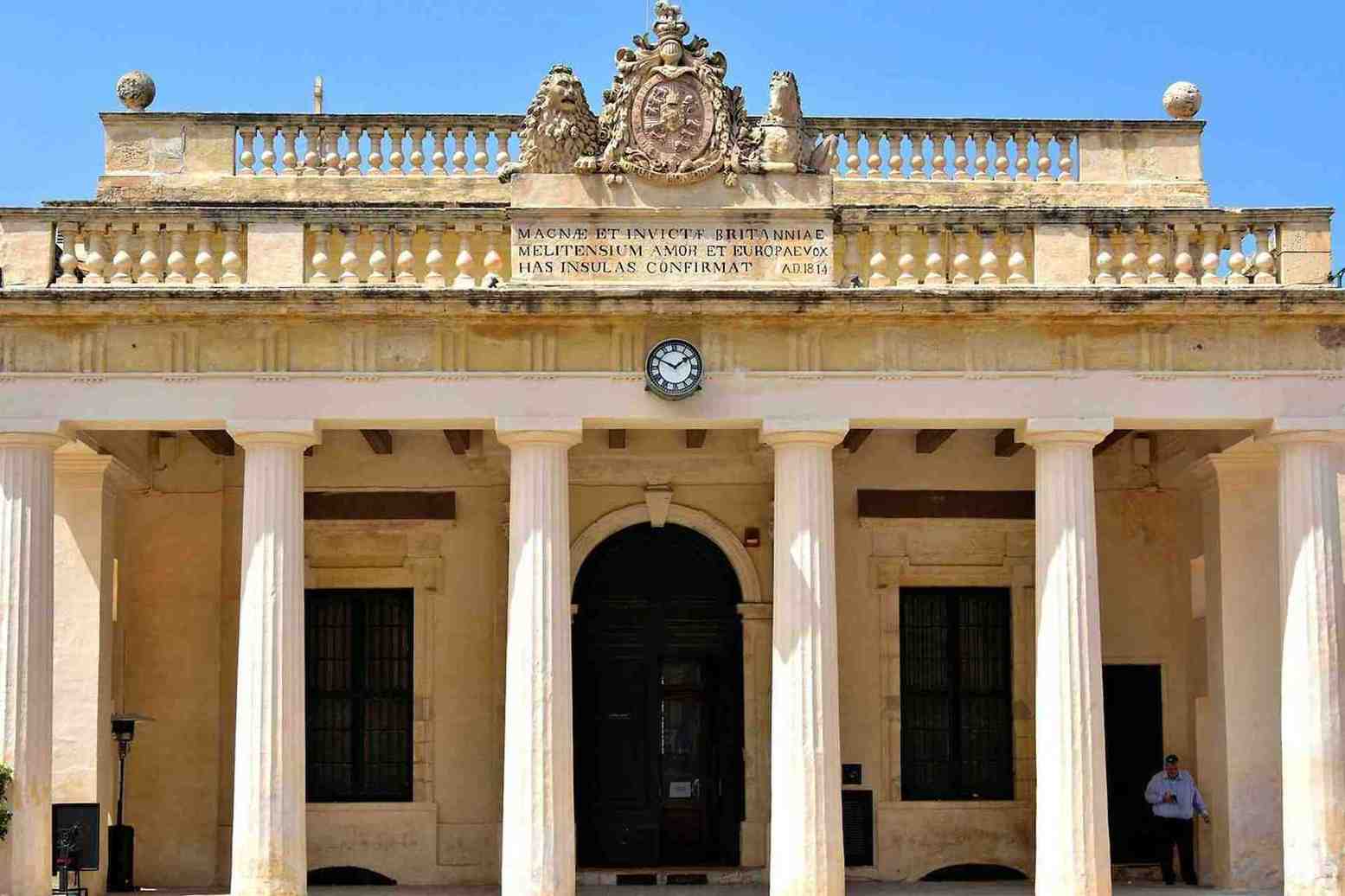
On the 15th of June 1802, 104 representatives of the Maltese Congress signed the Declaration of Rights of the Inhabitants of the Islands of Malta and Gozo. They were placing themselves under British sovereignty, but on their own terms. The King had 'no right to cede these islands to any power,' the document stated. If Britain ever withdrew its protection, the right to choose another sovereign 'belongs to us, the Maltese alone, and without control.'
The Treaty of Amiens of 1802 had attempted to return Malta to the Knights under Neapolitan guarantee, a settlement the Maltese themselves rejected. Britain agreed and refused to implement it. The Treaty of Paris of the 30th of May 1814 finally settled the matter in law: Malta, Gozo and Comino were declared to belong 'in full right and sovereignty' to the British Crown. The Maltese had not been conquered. They had negotiated.
That distinction mattered enormously to how the Maltese understood the relationship, and why, when Britain later failed to honour the spirit of that understanding, the resentment ran so deep.
The Dockyard: The Engine of Everything
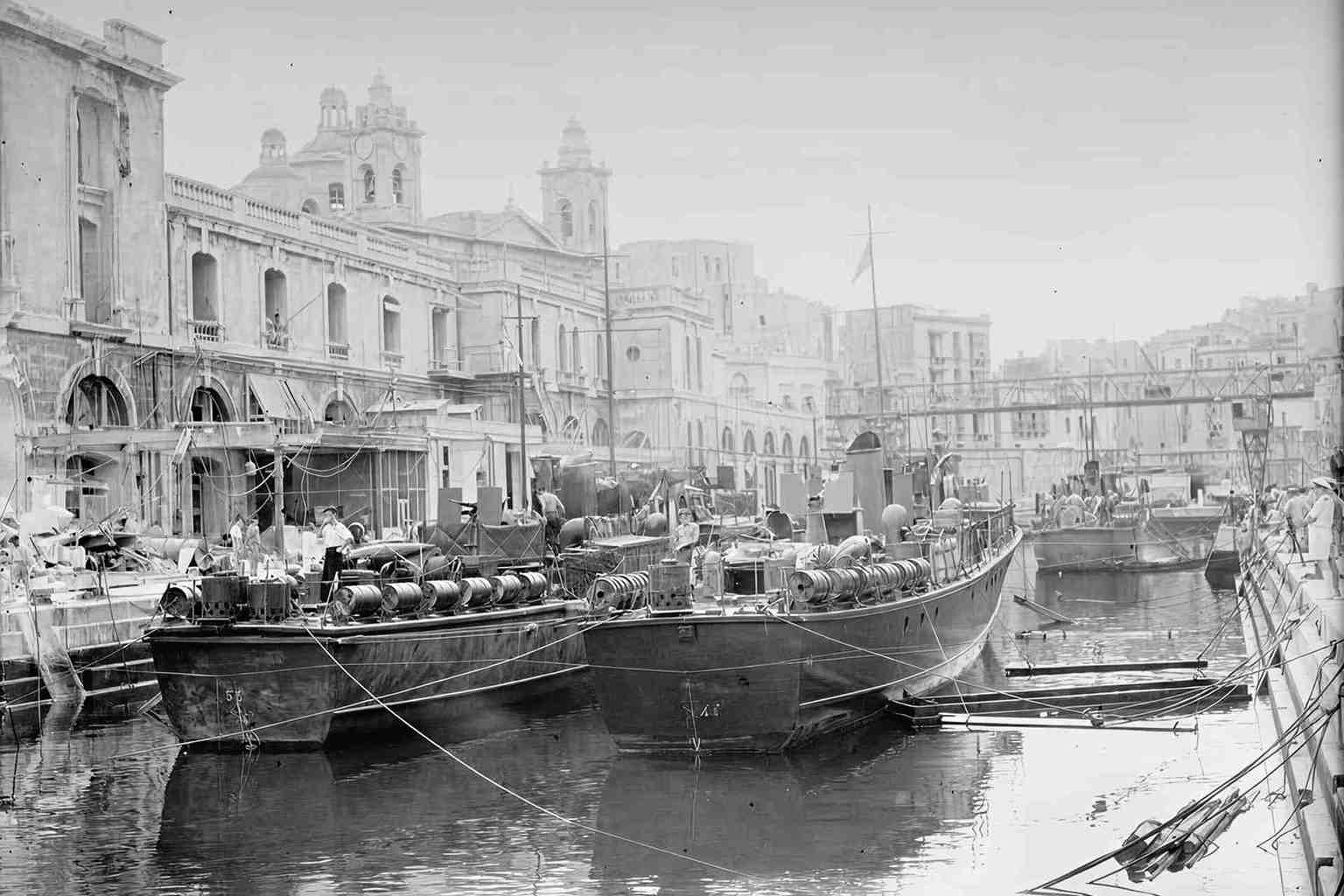
If you want to understand what Britain meant to Malta in practical terms, start with No. 1 Dock in Cospicua. Completed in 1847, it was the first Royal Navy dry dock built outside Britain. Over the following century, the dockyard complex grew to encompass the entire creek between Cospicua and Senglea, a world of cranes, dry docks, machine shops, rope works, and tens of thousands of Maltese men whose working lives were shaped entirely by the needs of the Royal Navy.
At its peak in the late 1950s, the dockyard employed around 14,000 people. In a country of fewer than 320,000, that figure was transformative. The surnames of the Three Cities, Vittoriosa, Cospicua, Senglea, are dockyard surnames. The skills are dockyard skills. The identity of Kottonera is inseparable from the cranes that once defined its skyline.
In the First World War, Malta's role shifted from naval base to hospital island. Twenty-seven hospitals opened across the archipelago, with some 25,000 beds in use at the peak. Between 1915 and 1919, more than 136,000 sick and wounded, from Gallipoli, Salonika, the Western Front, were treated on the island. The Australians and New Zealanders recovering from the Gallipoli disaster gave Malta the name that Maltese nurses and orderlies had earned: the Nurse of the Mediterranean.
In the Second World War, the dockyard became a target as much as an asset. After the Italian Regia Aeronautica launched its first bombing raid on 11 June 1940, the day after Italy declared war, the dockyard workers continued repairing warships under air attacks that eventually numbered more than 3,000. HMS Illustrious, badly damaged by German dive-bombers in January of 1941, was brought into Parlatorio Wharf for repairs under sustained Luftwaffe attack, with Maltese workers staying at their posts throughout. When King George VI awarded the George Cross to the island on the 15th of April 1942, the dockyard workers were as much recipients as anyone.
The Royal Navy and the Life of the Harbour

For most of the 19th and 20th centuries, the Grand Harbour was home to the British Mediterranean Fleet, the most powerful naval force in the world's most strategically important sea. The cultural and economic consequences of having thousands of British sailors on shore leave in Valletta shaped the city in ways that are still visible today.
The most concentrated expression of that influence was Strait Street. Running from St Lucia Street to St Nicholas Street through the lower reaches of Valletta, it was known to every sailor in the fleet simply as The Gut, a narrow, lamp-lit canyon of bars, music venues, and dance halls that was, depending on your point of view, either the best or worst street in the Mediterranean. The Egyptian Queen, the Splendid, the Silver Horse, the New Life Bar, the Moulin Rouge, at its peak in the 1940s and 1950s, Strait Street had over forty drinking establishments operating along a single block.

What the street also produced, less remarked upon, was music. The constant presence of British and American sailors brought jazz, swing and dance-band culture to Malta decades before it reached much of mainland Europe. Maltese musicians who cut their teeth on Strait Street, among them Oscar Lucas and Frankie 'il-Bibi' Camilleri, built careers that would otherwise not have existed. When the Mediterranean Fleet was formally disbanded in June 1967 and the last British forces departed in March 1979, Strait Street died with them. It did not revive until its recent reinvention as a bar and restaurant strip, trading now on the very history that was once considered an embarrassment.
The sailors also left their mark on the Maltese language. The word friġġ, meaning refrigerator, comes from the brand name Frigidaire. Kitla, meaning kettle. Liftju, meaning lift. Baxx, meaning bus. Stampa, meaning stamp. Hundreds of English words entered Maltese through the dockyard and the mess halls and the bars of Strait Street, absorbed and Malticised until they became as Maltese as anything else.
The Maltese Who Served

The Maltese did not only support the British war effort from behind the walls of the dockyard. They fought.

The Royal Malta Artillery was raised in 1861 and formally given the Royal prefix in 1889. The King's Own Malta Regiment, the KOMR, traces its origins to 1801 and received its final name in 1931. These were not ceremonial units. In the First World War, around 15,000 Maltese served in the British Army in various capacities. The Maltese Labour Corps, working men who had signed up to support the campaign in the eastern Mediterranean, lost 124 of their number at Gallipoli, Salonika and in northern Italy. In total, 592 Maltese died in the First World War, the majority at sea in Royal Navy service.

In the Second World War, Malta raised five Royal Malta Artillery regiments and four KOMR battalions. The anti-aircraft gunners of the Royal Malta Artillery were at their posts throughout the 3,000-plus raids of the siege, shooting down Axis aircraft and keeping the runways at Luqa and Ta' Qali operational. It is no accident that when the George Cross was awarded collectively to the island in 1942, the KOMR became the only regiment in the British Army ever authorised to carry that medal on its Regimental Colours. The distinction was earned.
Sette Giugno: The Day the Relationship Fractured

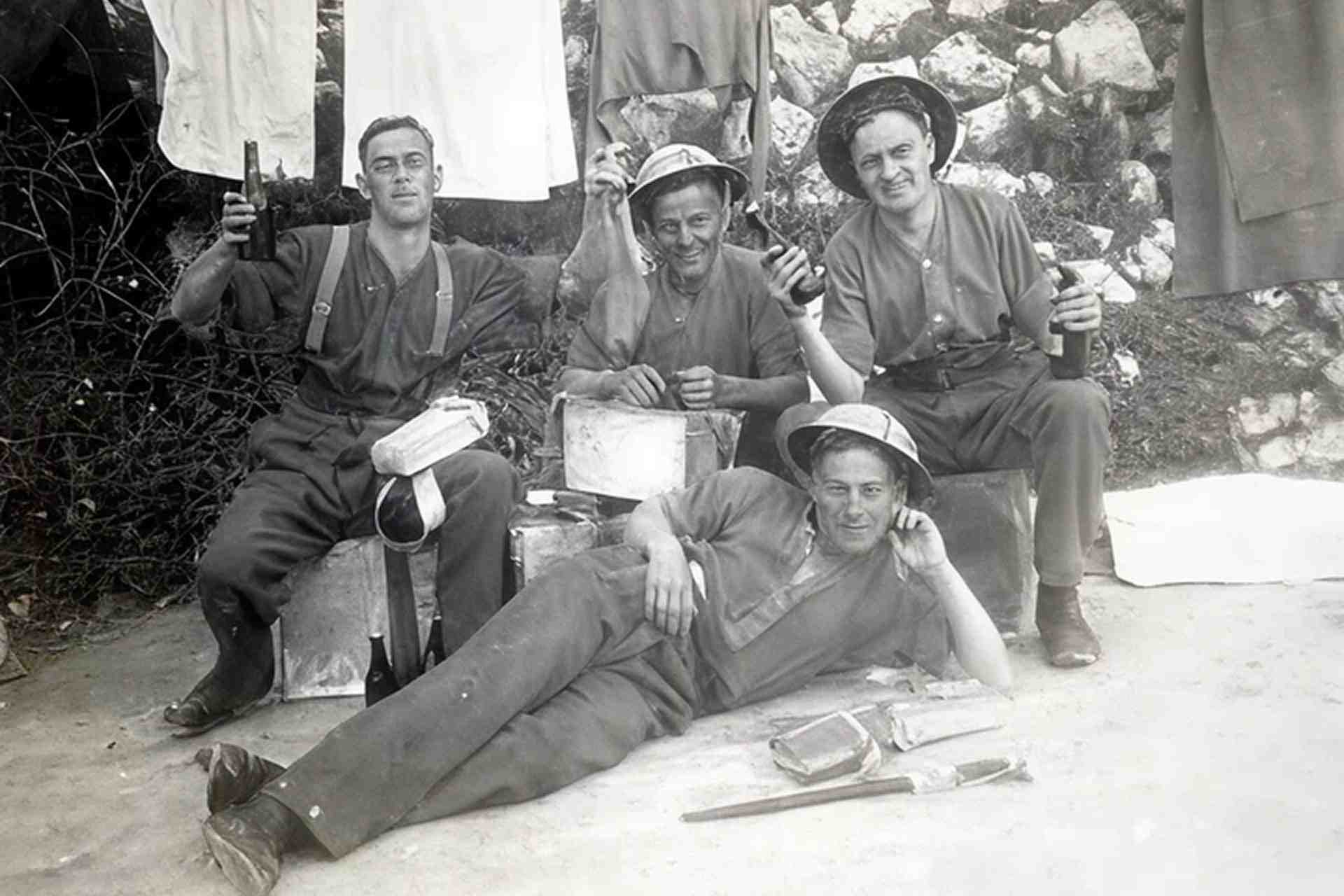
The goodwill of 1802 had limits, and on the 7th of June 1919 those limits were breached in the most brutal way possible.
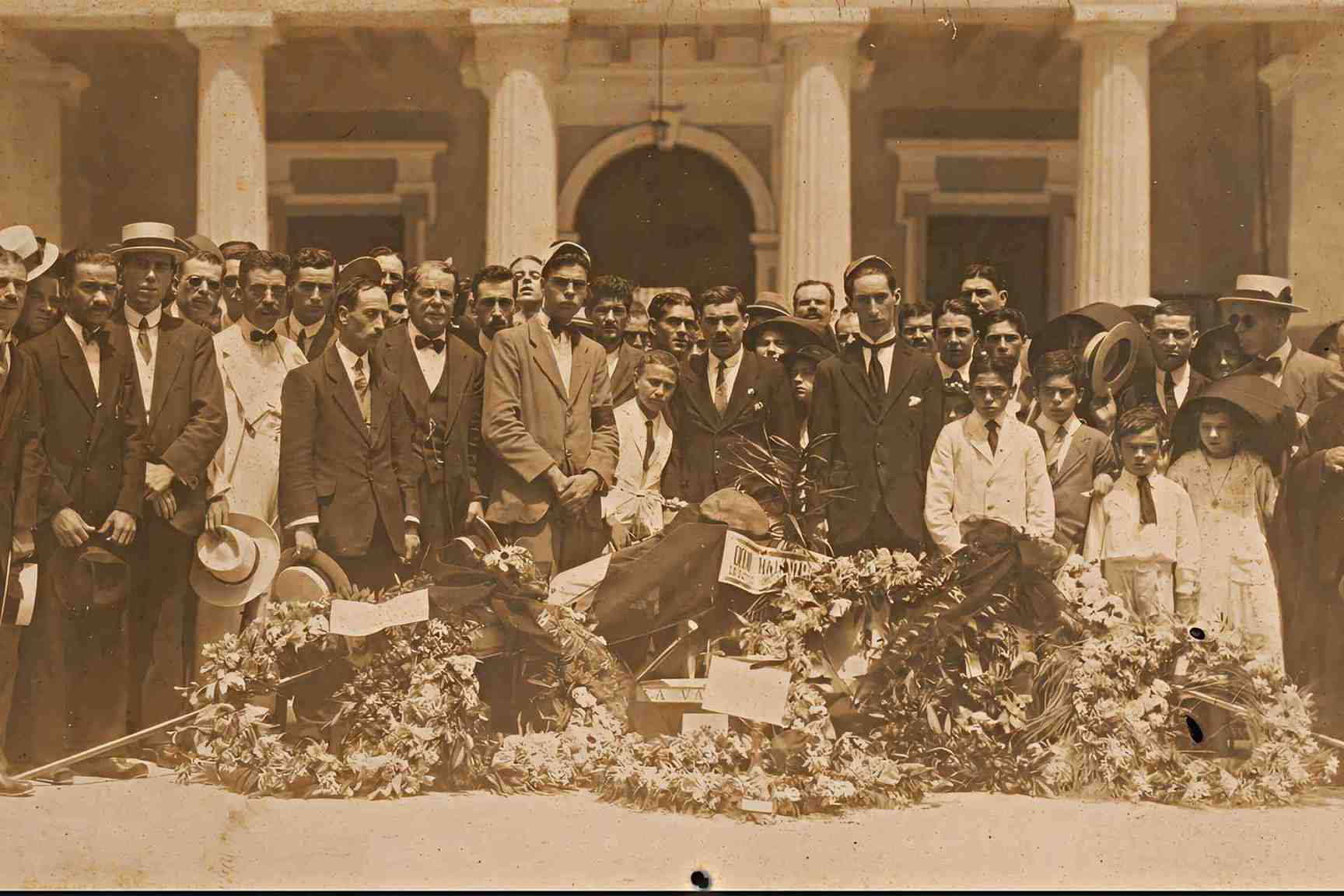
Post-war Malta was in crisis. The flour that had fed the island during the war was being exported back to Britain while Maltese bread prices soared. Unemployment was rising as dockyard contracts wound down. And politically, despite promises of representative government, the constitutional status of Malta had barely changed in a century. When crowds gathered in Valletta on the 7th of June 1919 to protest, the demonstrations turned into riots. Shops were looted. Government buildings were attacked. British troops opened fire.

Four Maltese men were killed: Manwel Attard, Ġużè Bajada, Lorenzo Dyer and Karmnu Abela. The day is known as Sette Giugno, the Seventh of June, and it has been a Maltese national holiday since 1989. The four men are commemorated by a monument in Valletta. The riots did eventually produce results: Malta received a new constitution and a degree of self-government in 1921. But the memory of what had happened never entirely faded.
The Road to Independence: From Integration to Freedom
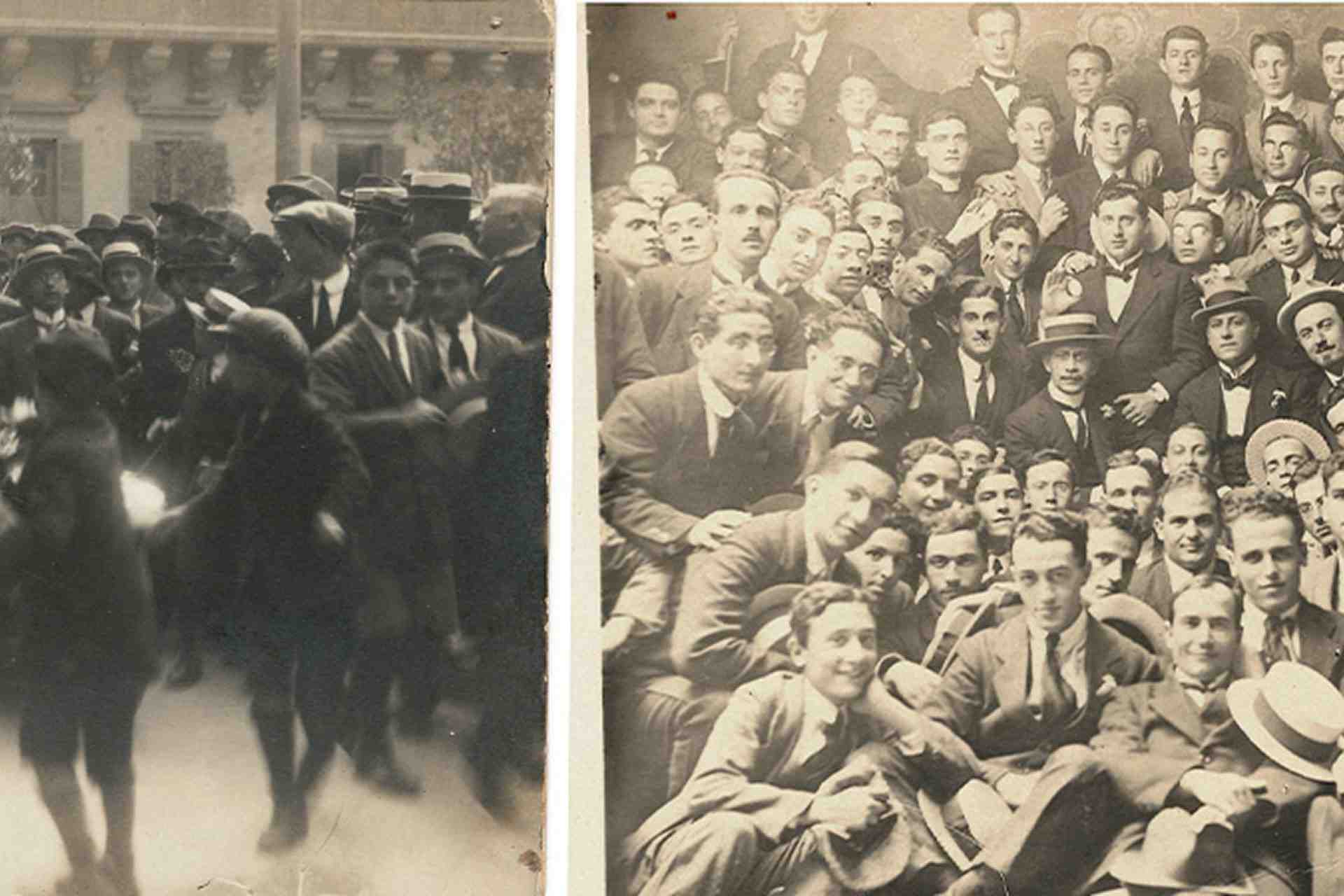
The decades between the end of the Second World War and independence in 1964 were defined by a question that sounds simple but was genuinely complicated: what did Malta want to be?
Dom Mintoff, the Labour leader who dominated Maltese politics for three decades, proposed integration. In the 1956 referendum, he asked Maltese voters whether they wanted Malta to become a full part of the United Kingdom, with three seats in Westminster, equal rights under British law, and the welfare state. The proposal won 77% of valid votes cast. But the Nationalist Party boycotted the vote, the Catholic Church raised objections, and the turnout meant that only 44% of the registered electorate had actually voted yes. The British government, unwilling to commit to the financial cost of full integration on those terms, let the plan die.
What followed was a period of constitutional turbulence, emergency rule and increasingly hostile relations between the Maltese government and London. It was Giorgio Borg Olivier, leader of the Nationalist Party, who eventually negotiated Malta's path to independence. On 21st of September 1964, Malta became an independent sovereign state within the Commonwealth, with Queen Elizabeth II remaining as head of state. Ten years later, on the 13th of December 1974, Malta became a republic.
But the British military presence continued. Mintoff, back in power by 1971, negotiated new rental terms for the military bases, a prolonged and at times furious process that also involved Libya's Colonel Gaddafi, who provided a financial guarantee. The last British forces left on the 31st of March 1979. At the ceremony on the Vittoriosa seafront, a British sailor from HMS London slowly lowered the Union Jack and shook hands with a Maltese dockyard worker, who raised the Maltese flag in its place. Dom Mintoff lit the flame at the Freedom Monument in Birgu. HMS London sailed out of Grand Harbour. Malta called it Jum il-Ħelsien, Freedom Day, and it remains a public holiday to this day.
The Princess in Pietà

Not all of the British period's history is about conflict. One of its most unusual chapters is a love story, or at least, the story of a young woman who found, briefly, something close to an ordinary life.
Between 1949 and 1951, Prince Philip was stationed in Malta with the Mediterranean Fleet, first as a lieutenant and then in command of HMS Magpie. He and Princess Elizabeth rented Villa Guardamangia in Pietà from Philip's uncle Lord Mountbatten, who owned the property. Elizabeth, who had not yet become Queen, made two extended visits. She later described her time in Malta as the only period in her adult life in which she was able to live as something close to a normal person: shopping in the market in Valletta, attending race meetings at Marsa, having dinner with naval families.
The villa fell into disrepair in subsequent decades. Heritage Malta began a full restoration programme in October 2025. When the work is complete, Villa Guardamangia will open as a museum, a rare monument to the personal, as opposed to the political, dimension of the British period.
What Malta Gave Britain

The influence ran in both directions, though Britain's cultural footprint in Malta is easier to see than Malta's in Britain. The driving on the left, the red pillar boxes, the three-pin plugs, the A-level system, the common law tradition, the English spoken as a first language by a large proportion of the population, these are the obvious inheritances.
What Malta gave Britain is subtler. Edward de Bono, born in Malta and educated at the Royal University, gave the English language the phrase lateral thinking and spent much of his working life in Britain. Joseph Calleia, born in Rabat, became one of Hollywood's most recognisable character actors in the 1930s and 1940s, playing villains and detectives in films alongside Orson Welles and Tyrone Power. The Maltese community in London, concentrated historically around Clerkenwell and Bayswater, has been part of the city's fabric since the 19th century; around 24,500 Malta-born people still live in England and Wales today.
And then there is the strategic dimension. Historians of the Second World War are generally agreed that the survival of Malta was a decisive factor in the Allied victory in North Africa. The island's submarines and aircraft, operating from Grand Harbour and the three airfields, sank or damaged enough Axis supply ships to leave Rommel's Afrika Korps chronically short of fuel, ammunition and reinforcements. By August 1942, a third of all Axis convoys to North Africa were being sunk. Britain's survival as a Mediterranean power depended on Malta holding. Malta held.
What Remains
It has been forty-six years since HMS London left Grand Harbour. Malta drives on the left. Its parliament operates on the Westminster model. Its courts apply common law. Its population speaks English with an ease that puts most former British colonies to shame. Its schools still prepare students for exams whose structure was set in London. Its red pillar boxes, embossed with royal cyphers from Victoria to Elizabeth II, still stand on the street corners of Valletta.
In 2024, 704,302 British visitors came to Malta, more than from any other single country. Around 15,000 UK-born people now live in Malta permanently. The kitla still boils. The friġġ still hums. And in the upper hoist of the Maltese flag, the George Cross, awarded by a British king to a Maltese island, still bears witness to what the two peoples went through together.
The empire is gone. The conversation has not ended.

About Matthew Gollcher
Hi, I'm Matthew, an SEO Specialist and Content Writer at Yellow Pages Malta. I'm passionate about creating meaningful content and exploring AI's creative possibilities. When I'm not working, I enjoy the gym, time with friends, watching series and reading, and playing guitar. I'm always eager to learn and grow both personally and professionally.