The Laqam: Why Every Maltese Family Has a Secret Nickname


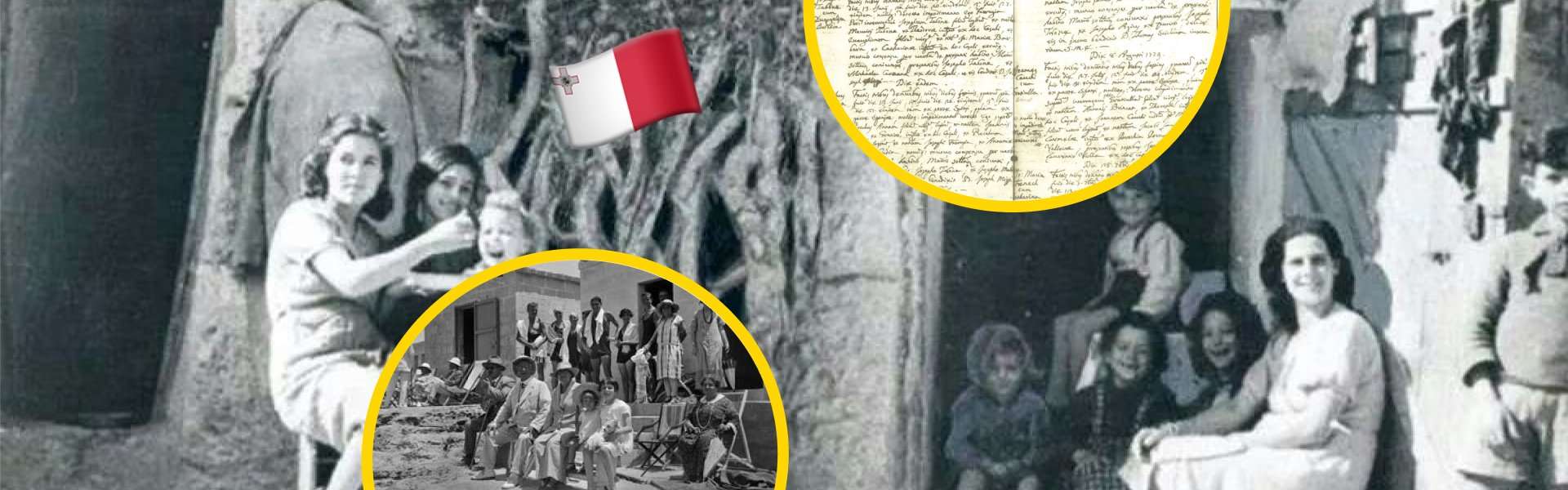
Somewhere in your family, there is an older relative, a grandmother, a great-uncle, a neighbour who has known your family for fifty years, who calls your family by a name that does not appear on any official document. Not your surname. Not your first name. Something else entirely. Something that has been attached to your family for so long that nobody is quite sure when it started, and sometimes nobody is even sure what it originally meant.
That is the laqam. The Maltese family nickname, an informal, inherited label that has run alongside the official name system for centuries and has in many villages functioned as the more reliable identifier of the two. When half the street is called Borg and the other half is called Camilleri, the surname alone tells you almost nothing. The laqam tells you which Borg family this is, where they come from, what they were known for, and what people have said about them for generations.
It is one of the least-documented and most quietly personal pieces of Maltese cultural identity. It appears in no passport, no voter register, no official form of any kind. It exists only in conversation, in memory, and in the mouths of people who remember. And it is, in the cities at least, slowly disappearing.
This is the story of where it comes from, how it works, what your village's nickname says about the people who gave it, and how to find out if yours still survives.
Where the Word Comes From: 1,000 Years of Arabic

The word laqam comes from the Arabic laqab, meaning epithet, title or honorific. In classical Arabic personal nomenclature, a person's full name could consist of five elements: the ism (personal name), the kunya (parental name, typically 'father of' or 'mother of' someone), the nasab (genealogical chain), the nisba (tribal or geographic identifier), and the laqab, the descriptive nickname that captured something specific about the person. Their appearance. Their character. Their trade. Their most memorable quality.
Arabic-speaking communities settled in Malta from the 9th century. Their language became the foundation of modern Maltese. And so did their naming culture. The laqab system was absorbed into the island's everyday life and eventually Malticised into laqam, the word every Maltese person knows today.
Some people explain the word differently. In popular use, laqam is connected to the Maltese verb tlaqqam, to graft, as a gardener grafts one plant onto another. A nickname, on this reading, is grafted onto your identity from the outside by the community around you. The image is vivid and the word fits. But the linguistic evidence, as documented by Mario Cassar, Malta's foremost authority on Maltese naming practices, points back to the Arabic. The grafting explanation is a later folk rationalisation, attractive and memorable, even if not strictly the true origin. The tradition itself, however, is undeniably Arabic in its structure and spirit.
The Maltese proverb that survives about laqmijiet is sharp: 'Skond għamilek laqmek', your nickname reflects your behaviour. This is not about being identified. It is about being judged. The community assigns the laqam based on what it has observed, and once given, it cannot easily be taken back.
How a Laqam is Built and How it is Inherited
Maltese laqmijiet come in two distinct forms, and the difference between them matters.
The first form uses the definite article il- or l- directly before a noun or adjective. This attaches to an individual and describes something specific about that person. Il-Fartas means the bald one. Il-Perit means the architect. Il-Prinċipal means the headmaster. Il-Ħotbi means the hunchback. Il-Qanfud means the hedgehog. L-Imnieħru means the one with the prominent nose. Il-Maħmuġ means the dirty one. These are personal laqmijiet: they describe whoever first earned them.
The second form uses the preposition ta' (of), or its contracted forms tal-, tas-, tar-, depending on the first sound of what follows. This is the inherited family laqam. Tal-Ħobż means of the bread family. Tal-Flieles means of the chicks. Tal-Ingliż means of the Englishman's family. Tas-Surmast means of the schoolmaster's family. You do not earn this laqam; you are born into it. It already exists when you arrive.
Historian Stanley Fiorini, who studied the nicknames recorded in the 1832 Naxxar parish register, an extraordinary document in which the village priest Don Giovanni Battista Grech wrote down the laqam of virtually every family in his parish, observed that the il- form was typically reserved for the originator of the nickname, while the ta'/tal- form was used by the descendants who inherited it. The grandfather who was bald was il-Fartas. His children and grandchildren became tal-Fartas: of the bald one's family. The personal nickname became a family name across generations.
In Naxxar in 1832, out of 144 households with a population of 2,891, no fewer than 544 nicknames were recorded. Only 97 surnames served those 144 households, meaning that popular names like Gauci, Camilleri, Vella, Galea and Sammut each labelled as many as 30 distinct households. Without the laqam, identifying a specific family was nearly impossible. The nickname was not a curiosity. It was the system.
What Gives a Family its Laqam: The Five Main Sources
The folklorist Ġużè Cassar Pullicino, whose 1956 study 'Social Aspects of Maltese Nicknames' in the academic journal Scientia remains the foundational text on the tradition, identified the main categories from which laqmijiet are drawn. They cover almost the full range of what people notice about each other.
Physical appearance is by far the most common source. A bald ancestor becomes il-Fartas. A lean one becomes in-Niexef. A tall one becomes tal-Ġġant (the giant family). Someone notably broad and well-built becomes Tal-Prim. A man with a prominent nose becomes L-Imnieħru. These are often blunt to the point of cruelty, which is part of their honesty: the laqam does not spare feelings, it records what the community saw and chose to remember.
Trade and occupation are the second great source. A family that baked bread became tal-Ħobż, of the bread. A commenter on the Malta Inside Out website, Carmel Vella, remembered exactly this: a family near her home in Balzan in the 1950s who ran a small bakery. 'They were called tal-Ħobż. No one could mistake them by that name. Brilliant.' Other examples include tas-Saqqafi (of the roofer), tal-Melh (of the salt vendor), tar-Rizzi (of the sea-urchin hawker), tas-Siġġijiet (of the man who looked after the chairs in churches), and tas-Surmast (of the schoolmaster). The trade is gone, in many cases, but the name remains.
Geographic origin creates a third category. A family with English connections, an ancestor who worked for the British, or came from England during the colonial years, might become tal-Ingliż. In Munxar, Gozo, a family whose roots were on the main island was known as tal-Malti, the Maltese one. In Sliema, one Borg family whose grandfather served in the mounted police became known as tal-Paddy, a laqam whose precise origin is now forgotten by the family themselves, but whose English sound suggests an Irish or British connection somewhere in the line. The migration is remembered even when the migrant is not.
Animals gave another rich category: tal-Flieles (of the chicks), ta' Gelluxa (of the young bull), il-Kavall (the mackerel), il-Qanfud (the hedgehog), tas-Summiena (of the quail), ta' Ħanfusa (of the beetle). A priest documented by Cassar Pullicino was nicknamed il-Ġurdien, the rat. He reportedly described it as 'a purgatorial penance.'
And then there are the laqmijiet rooted in a single incident that the family itself can no longer explain. A family from Gozo whose laqam is tal-Korkos cannot say what korkos means or where it came from. They have asked, generation after generation. They receive blank stares. One possibility, suggested by a commenter citing the linguist Joseph Aquilina, is that konkos means concrete in one Gozitan usage, or refers to a type of local cheese-and-bean cake in another. Nobody is certain. But the name outlasted the knowledge, which may be the most distinctively Maltese thing about the whole tradition.
Your Village's Laqam: What it Says About You

The laqam is not only a family tradition. Every village has a collective nickname for its inhabitants, a label applied by the neighbouring towns, rooted in some historical trade, a local legend, an old insult, or simply something the village could never live down. They are compressed pieces of Maltese social history.
Ħamrun is Tas-Sikkina, of the knife. There are several explanations and nobody can say with certainty which is true. One is that a considerable number of Ħamrun men worked as stevedores on the docks and carried knives as part of the job. Another is that Sicilian settlers who came to the area in the 16th century performed a traditional knife dance, wielding small stilettos which they carried in their socks. A third, less historical, is simply the reputation of the Ħamrun Spartans football club. The knife image stuck regardless of which version began it. Ħamrun also carries a second collective nickname: Ta' Werwer, the scary ones, which suggests the community wore both names with some pride.
Tarxien is Tar-Redus, of the droppings, from the goat farming that defined the village for centuries. Cassar Pullicino noted this nickname 'triggered a violent disturbance' between villages at some point within living memory. A collective laqam could wound, which is why it was used.
Qormi is Sa Nofsinhar, until midday, because its bakers work through the night to get bread to market by morning, and are done by noon. It is also called Ħobż u l-Forni: bread and the ovens. Birkirkara is Ta' sormhom ċatt, the flat-bottomed people, from the story of residents falling over while pulling up the enormous church bell at the Basilica of Saint Helen. Sliema is Tal-Pepé, from the way upper-class Sliema families in the early 20th century called their fathers papà in Italian rather than the Maltese missier. The rest of Malta noticed.
L-Isla (Senglea) is Tar-rixa, of the feather, from the tradition of displaying turkey or cockerel feathers in balconies to show the neighbours how well the family had eaten. Vittoriosa is Tat-toqba, of the hole, from the tunnel in the bastions leading to the sea. Msida is Tal-Ħama, of the sludge, from the flooding. Żejtun is Ta' saqajhom ċatta, the flat-footed, from a legend that the people of Żejtun chased St Paul through the streets because they did not want to hear his teachings. Paola is Tal-midjunin, of the debtors, because the Grandmaster who built the town cleared new residents' debts to attract settlers. Żabbar is Tal-Makki, of the maize. Floriana is Taċ-Ċawl, the soup people. Siġġiewi is It-Tnabar, the drums, for its loud festa celebrations. Bormla is Tal-Ħaruf, of the lamb.
The collective laqam even applies to businesses. Crystal Palace Bar in Rabat is known to everyone in the town not by its name but as Tas-Serkin, a laqam that has replaced the official name entirely. The bar's actual name is secondary to what the neighbourhood decided to call it.
In Gozo, the Laqam is Still a Living System

The laqam tradition survives most robustly in Gozo. The island's fourteen villages are small enough that nearly everyone knows nearly everyone, and the combination of very common surnames, Vella, Attard, Camilleri, Grech, Portelli as the top five, with close-knit, geographically stable communities created the ideal conditions for the tradition not just to develop but to persist.
If you introduce yourself to an older Gozitan, they will ask for your surname and then, almost immediately, for your family's laqam. This is not nosiness. It is identification. With the laqam, an elderly Gozitan can instantly deduce quite a number of things about you, such as the locality where you live, who are other members of your family, and other traits, good or bad, traditionally associated with your family.
The families known as tal-Zunzana, of the bumblebee, in Gozo carry a name whose origin story has been entirely lost. When asked how the name began, the family's oldest members give a blank stare. What they can say is what the zunzana represents: industry, cleverness, the ability to run households and fields and families simultaneously, a kind of immortality through work. The story of how the name started has gone. What remains is what the name means to the family. That gap between origin and meaning is perhaps the most Maltese thing about the whole tradition.
When a Laqam Becomes a Weapon
Not every laqam is affectionate, and not every family is happy with the one they carry.
The Inquisition records of late 18th-century Malta show that calling someone by a malicious nickname was a recognised form of social aggression, a way of attacking a person's honour and their family's reputation. The nickname could wound precisely because it stuck. A family that resented their laqam could not simply decide to stop being known by it. The name existed in other people's mouths, not their own. You cannot confiscate what other people remember.
There are families who have tried to suppress their laqam, particularly when it carries some embarrassment: a physical characteristic that was unkind, a trade that was considered low, an ancestor who did something nobody wants remembered. Some have partially succeeded, especially after moving to a different neighbourhood or town. But suppression requires the co-operation of the entire community, which is rarely given. The Tarxien disturbance over Tar-Redus is the most dramatic documented example, but there are quieter versions of the same conflict in almost every village that takes its collective laqam personally.
The dual function of the laqam, identification and social commentary simultaneously, is what makes it both so useful and so charged. It is the community's memory of your family, expressed in the shortest possible form. That memory is not always flattering. But it is, in its way, a form of attention. To have a laqam is to be known.
Is Yours Still Alive?
The tradition is declining. Luke Micallef, whose 2018 book The Maltese Laqam: Rabat's Perspective is the most recent dedicated study, noted it had not been 'researched in depth in the Maltese Islands, most probably since nicknames are considered as secondary.' Jean Claude Vancell of laqam.mt, who has hand-painted hundreds of family laqmijiet as artworks, calls it 'a dying piece of culture.'
The decline is uneven. In Valletta, Sliema and the newer towns, the laqam is largely forgotten: urban anonymity has no use for it. In older villages, Rabat, Żebbuġ, Qormi, Żejtun, Vittoriosa, across Gozo, it is still alive among older generations, still understood even if less frequently invoked. The tradition did not die on any particular day. It simply became less necessary as people moved, as villages lost their boundaries, as the closed world that produced the laqam opened up.
The advice is consistent from everyone who has studied it: ask the oldest person in your family. Not your parents, necessarily. Their parents' generation. The laqam tends to skip the middle generation, who sometimes found it embarrassing or simply stopped passing it on. The grandparents remember.
And if the oldest person in your family no longer knows it? Then it may be that your family's laqam died with the generation that gave it up. A thread of identity that connected you to a specific place, a specific ancestor, a specific detail of how your family was known where your name was first spoken. Gone, not dramatically, but quietly, one conversation not had, one question not asked, until one day nobody was left who remembered the answer.
Ask now, while you still can.


About Matthew Gollcher
Hi, I'm Matthew, an SEO Specialist and Content Writer at Yellow Pages Malta. I'm passionate about creating meaningful content and exploring AI's creative possibilities. When I'm not working, I enjoy the gym, time with friends, watching series and reading, and playing guitar. I'm always eager to learn and grow both personally and professionally.