Where Do the Maltese Actually Come From? What History and DNA Tell Us


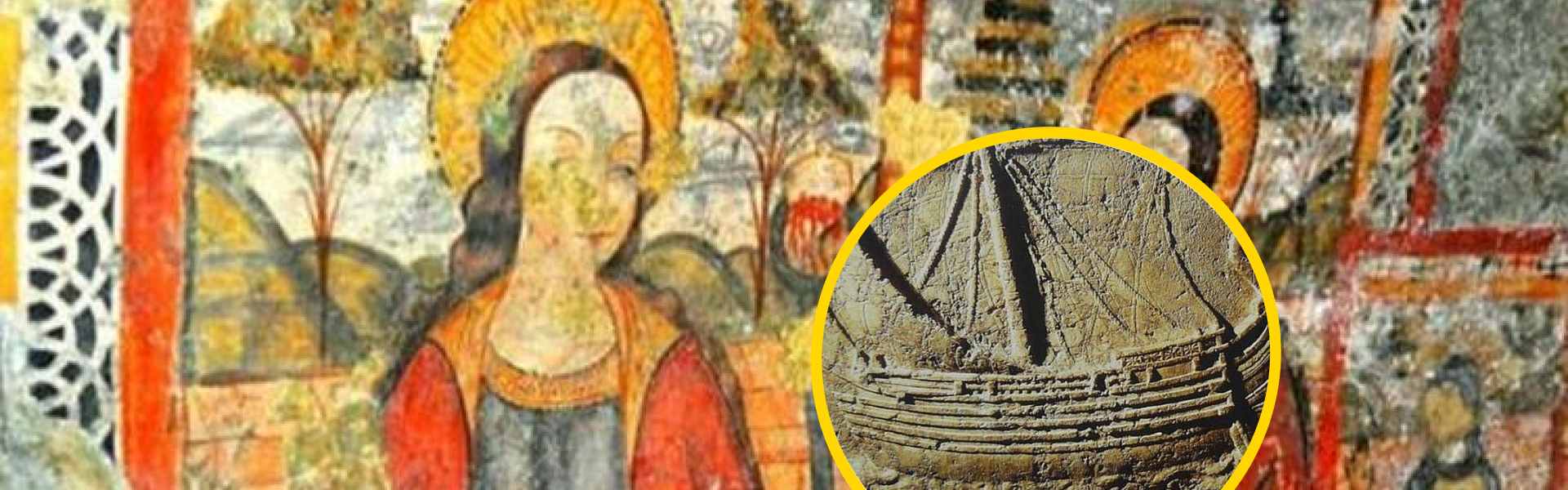
It is one of the most surprisingly emotional questions you can ask in Malta: where do the Maltese actually come from? Ask around and you will get a range of confident, and contradictory, answers. Some will tell you the Maltese are the last descendants of the Phoenicians, the ancient seafarers of the Bible. Others will point to the Arabs, noting that the Maltese language is Semitic. Others still will say the Maltese are essentially Italian, or Sicilian, or simply 'a mix of everyone who ever passed through'.
For most of history, this was a question that could only be answered with guesswork, national feeling, and the reading of old chronicles. But in the last two decades, something has changed: genetics. Scientists, many of them Maltese, working on the Maltese genome itself, can now read the ancestry written into Maltese DNA, and compare it against the historical record. And the answer they have arrived at is clear, well-evidenced, and in one important respect genuinely surprising, because it overturns one of Malta's most cherished national myths.
This article sets out, as honestly as the evidence allows, what history and DNA together tell us about the origins of the Maltese. It is a story with some firm conclusions and some genuine uncertainties, and we will be clear about which is which. Where a popular belief does not survive the evidence, we will say so, gently, because these things matter to people.
The Phoenician Myth and the DNA that Broke It

Let us begin with the most beloved and most contested claim of all: that the Maltese are the descendants of the Phoenicians.
This idea has deep roots. The Phoenicians really did settle Malta from around 700 BC and stayed, through their Carthaginian successors, until the Romans, a span of some six centuries. For generations, many Maltese took pride in a supposed Phoenician bloodline, and the theory received a spectacular boost in 2004, when a study associated with National Geographic and the Lebanese geneticist Dr Pierre Zalloua made headlines by claiming that a large proportion of Maltese men, by some reports around half, carried a genetic marker (the so-called J2 haplogroup) linked to the ancient Phoenicians. It was a wonderful story, and it travelled the world.
There was just one problem: on closer examination, it did not hold up. The J2 marker, it turns out, is roughly 12,000 years old, many thousands of years older than the Phoenician civilisation itself, and is spread widely across the whole Mediterranean and Near East. Carrying it does not make someone 'Phoenician'; it simply reflects very ancient population movements long predating the Phoenicians. When later researchers looked specifically for a genetic link between the Maltese and the modern Lebanese (the closest living relatives of the Phoenicians), they found no conclusive evidence of one. And the historical record backs this up: as Maltese geneticists point out, there was never a large enough Phoenician population settled on Malta to have survived, genetically, to the present day, the Phoenician presence was a commercial and cultural elite, not a mass population.
So the honest verdict is this: the romantic idea that the Maltese are 'descended from the Phoenicians' is not supported by the genetic evidence. The Phoenicians left Malta an enormous cultural and archaeological legacy, but they did not, it seems, leave it their genes in any significant measure.
So What Does the DNA Actually Say?

If not the Phoenicians, then who? Here the modern research speaks with a remarkably consistent voice, and it points firmly north, to Sicily and Southern Italy, just 80 kilometres away.
The most thorough work has been done through the Maltese Genome Project at the University of Malta, led by figures such as Professor Alex Felice, building on a landmark study of Mediterranean Y-chromosome lineages published in the Annals of Human Genetics in 2005. The findings, from both the male line (the Y chromosome, passed father to son) and the female line (mitochondrial DNA, passed mother to child), consistently show the same thing: contemporary Maltese men and women cluster genetically with Sicilians and Calabrians, and most can trace their ancestry to Sicily and Southern Italy around 1,000 years ago. Strikingly, even the study of inherited genetic diseases in Malta points the same way, most of the island's disease-causing mutations are shared with Sicily and Southern Italy.
What about a Middle Eastern or North African contribution, the genetic echo of the Arab period, or of Malta's position off the African coast? It exists, but it is modest. According to the Maltese Genome Project researchers, direct Middle Eastern input, including Lebanese, contributed less than 5% of Maltese DNA on the lineage studies. Broader, whole-genome ('autosomal') ancestry tests of the kind sold by companies like 23andMe tend to show Maltese people as roughly 88% European, the large majority of it Southern European, labelled 'Italian', with around 9–11% Middle Eastern and North African, and a small trace of Sub-Saharan African. In genetic terms, the Maltese sit squarely in a central Mediterranean cluster, closest of all to Sicily, Pantelleria and Southern Italy.
The conclusion is hard to escape, and the Maltese researchers state it plainly: the Maltese are, overwhelmingly, of Sicilian and Southern Italian descent, not Phoenician, and not, in the main, Arab either.
The History behind the Genes: An Island Nearly Emptied

Genetics tells us who the Maltese are related to. History tells us why, and the story turns on one dramatic, still-debated event.
For most of the first millennium AD, Malta was a modestly-populated outpost of the Byzantine (Eastern Roman) Empire, its people Greek-speaking Christians clustered around the old capital of Melite, today's Mdina. Then, in 870 AD, a Muslim army of the Aghlabid dynasty, based in Ifriqiya, modern Tunisia, and in the midst of conquering Sicily, besieged and stormed Melite. The city was sacked, and by the surviving accounts its inhabitants were killed, enslaved or scattered.
What happened next is the crucial and genuinely debated part. According to the medieval Arab geographer al-Himyari, whose account is our main source, Malta was left practically uninhabited after 870, a near-empty ruin, for well over a century, until it was deliberately re-colonised around 1048–1049 by a Muslim community, together with their slaves, coming across from Sicily. If this account is accurate, it is enormously significant: it would mean that the population of Malta was very nearly wiped clean and started again, with today's Maltese descending overwhelmingly from these 11th-century settlers rather than from the earlier inhabitants.
It is only fair to note that this 'total depopulation' is not universally accepted. Some scholars, pointing to the survival of certain Latin-derived place-names and to gaps in the archaeological picture, argue for at least pockets of continuity, that some indigenous population may have hung on through the upheaval. The truth may lie somewhere in between: a catastrophic collapse and a massive resettlement, but perhaps not a literally empty island. What is not seriously disputed is that the 11th-century influx from Sicily was demographically decisive, and this is exactly what the DNA records, dating the main ancestry of the Maltese to roughly a thousand years ago.
The settlers who arrived came from Arab-ruled Sicily, and this is the key to the whole puzzle. They were, genetically, a largely Sicilian / Southern Italian population, but they were culturally and linguistically Arabised, speaking the Arabic dialect of Sicily. That is how Malta ended up with a European gene pool and a Semitic language at the very same time.
The Great Misunderstanding: Language is Not Ancestry
This brings us to the single most important idea for making sense of Maltese origins, and the source of most of the confusion: the language you speak is not the same as the genes you carry.
The Maltese language is Semitic. It descends from Siculo-Arabic, the medieval Arabic dialect of Sicily, and it is the only Semitic language written in the Latin alphabet and the only one that is an official language of the European Union. Because it is Semitic, it can sound, to an outsider, like evidence of Middle Eastern or Arab ancestry. And for a long time, that is exactly how people reasoned: the Maltese speak a Semitic tongue, therefore the Maltese must be, by blood, Phoenician or Arab.
But that reasoning is simply mistaken, and the Maltese case proves it beautifully. Languages travel by culture and conquest, not by bloodline. The largely-Sicilian settlers who repopulated Malta a thousand years ago brought their Arabised Sicilian speech with them, and it took root and evolved into Maltese, even as the people speaking it remained, genetically, a central-Mediterranean, largely European population. The language is a genuine and precious inheritance from the Arab world; the genes are mostly from just across the water in Sicily. Both things are true, and there is no contradiction between them once you stop assuming that language equals ancestry.
It is the same lesson history teaches everywhere: the English speak a Germanic language but are not mostly of Anglo-Saxon blood; the Mexicans speak Spanish but are largely of Indigenous descent. Malta is one of the clearest and most elegant examples in the world of a people whose language and ancestry come from different places.
The Other Layers: Everyone who Passed Through
None of this means the Maltese are only Sicilian. Malta's position at the crossroads of the Mediterranean meant that almost every power in the region left something behind, and the genome carries faint traces of many of them.
On top of the dominant Sicilian and Southern Italian ancestry lie thinner layers deposited across the centuries: the modest Middle Eastern and North African contribution already noted; the Normans and other Europeans who arrived after Count Roger of Sicily took Malta in 1091 and drew it into the Christian, Latin, European orbit; the Sicilians and mainland Italians who kept arriving over the following centuries; and the smaller genetic memories left by everyone from the Knights of St John (a European aristocratic order drawn from across the continent) to the various traders, soldiers, slaves and settlers who passed through under Aragonese, Spanish and eventually British rule. Researchers have detected a scattering of these deposits, what geneticists call 'founder effects', in the Maltese genome: little signatures of distant visitors who left their mark.
So the fullest, most honest answer is layered. At the base, and by far the largest component, is a Sicilian / Southern Italian population that repopulated the islands around a thousand years ago. Over that lies a modest Middle Eastern and North African element, and thin scatterings from the many European and Mediterranean peoples who ruled or visited Malta across its long history. The Maltese are, genetically, a central Mediterranean people, with Sicily as the overwhelming home of their ancestors.
Pulling it all together, the honest, evidence-based answer looks like this.
The Maltese are not, to any significant genetic degree, descendants of the Phoenicians, despite the enduring romance of that idea and the famous 2004 headlines, that claim has not survived closer scientific scrutiny. Nor are they, in the main, of Arab blood, despite speaking a language born from Arabic. Overwhelmingly, the Maltese descend from Sicilians and Southern Italians who resettled the islands around a thousand years ago, following the near-collapse of Malta's population in the wake of the Arab conquest of 870. To that Sicilian foundation, history has added a modest Middle Eastern and North African contribution and a scattering of genetic memories from Normans, Knights, Europeans and others, the whole cast of Malta's long story.
And the deepest lesson of all is that identity is not the same as ancestry. The Maltese carry a largely Sicilian gene pool, speak a language descended from Arabic, practise a fiercely-held Roman Catholic faith, and think of themselves as unmistakably, unrepeatably Maltese, and all of those things are true at once. What makes the Maltese 'Maltese' was never a single bloodline. It is the particular, unique way in which all these inheritances, Sicilian genes, Arabic words, Christian faith, a thousand years of Mediterranean history, fused together on one small set of islands into something that exists nowhere else on earth.
Where do the Maltese come from? From Sicily, mostly, by blood. From the Arab world, by language. From everyone, by history. And, in the end, from Malta, which took all of it and made something entirely its own.

About Matthew Gollcher
Hi, I'm Matthew, an SEO Specialist and Content Writer at Yellow Pages Malta. I'm passionate about creating meaningful content and exploring AI's creative possibilities. When I'm not working, I enjoy the gym, time with friends, watching series and reading, and playing guitar. I'm always eager to learn and grow both personally and professionally.