The Generation of Maltese Who Grew Up During the War: What Life Was Actually Like


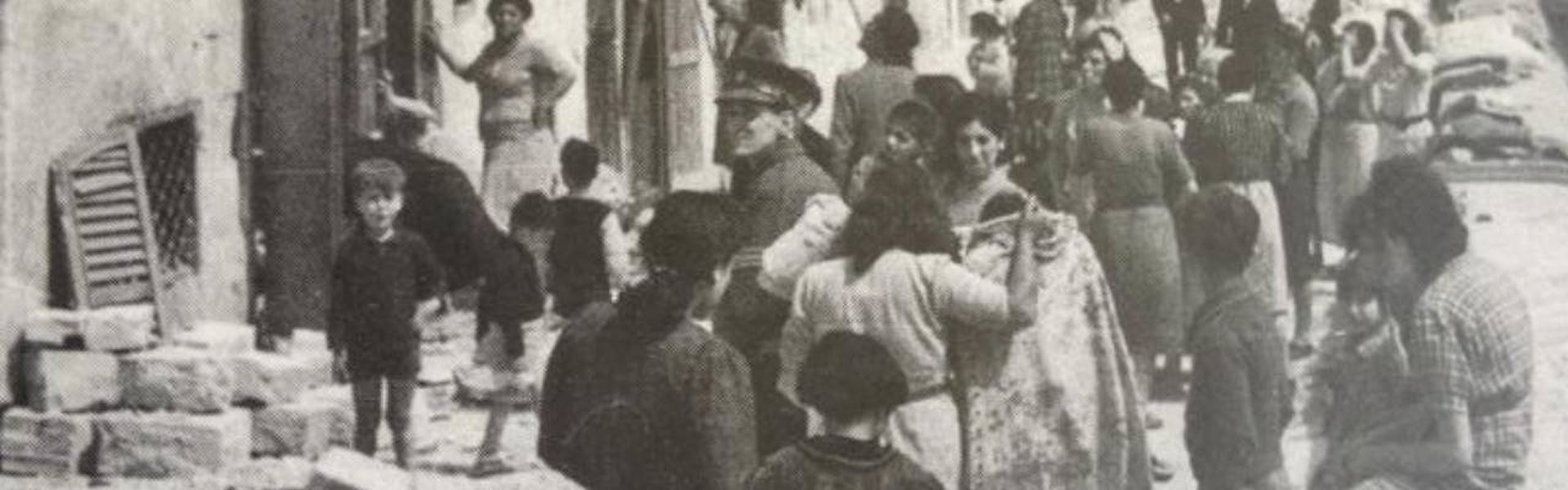
There is a generation of Maltese, now very old, and fewer with every passing year, who carry a set of memories almost impossible for the rest of us to imagine. They were the children of the siege: the boys and girls who grew up on the most heavily bombed patch of ground on earth, and who came of age not amid the ordinary business of childhood but amid air-raid sirens, collapsing buildings, gnawing hunger and the daily presence of death.
We have written elsewhere about the great events of Malta's war, the George Cross, the convoys, the families who lived underground. But this article is about something quieter and more intimate: not the strategy or the heroism, but what everyday life was like for the Maltese who were children through it all. What did they eat? Did they go to school? What did they play? What did they see? And how did living through such a thing, at such an age, mark them for the rest of their lives?
Wherever possible, we let the people who were there speak in their own words, drawn from survivors' testimony and memoirs. Every fact and figure has been checked against the record. It is not always an easy read, but it is an honest portrait of a childhood that the Maltese of that generation never forgot, and that the rest of us should not either.
The Morning Life Changed
For the children of Malta, the war arrived on a specific morning: the 11th of June 1940, the day after Fascist Italy declared war. The island's radio and Rediffusion wire service carried the first air-raid warning in English and then in Maltese in the early morning, and within hours the bombs were falling on the crowded harbour towns.
One girl, Margaret, who was living in Floriana, remembered the family huddling on the kitchen floor under the window, listening to 'a tremendous noise' like a great thunderstorm, all of them terrified. When they went outside, the street was buried in broken masonry and glass, and people had been killed nearby. It was there, on that first day, that she saw her first dead body — an elderly man who had lost an arm. She was a child. This was the beginning, and it would go on, relentlessly, for more than two years.
The scale of what these children were about to live through is hard to overstate. In a little over two years, Malta, an island of roughly a quarter of a million people, would endure some 3,000 air raids, becoming the most bombed place on earth. For a long stretch of 1942, there was scarcely a single day without bombs. A Maltese childhood, for this generation, would be measured out in sirens.
Fleeing the Harbour: A Nation of Refugees

The first great upheaval in these children's lives was often leaving home. The Axis bombers were aiming at the Grand Harbour, the dockyard and the airfields, which meant that the tightly-packed towns around the harbour, Valletta, Floriana, and above all the Three Cities of Cospicua, Senglea and Vittoriosa, along with Sliema; were the deadliest places on the island. The authorities urged families in these areas to get out and take refuge inland, with relatives in the rural villages away from the targets.
And so a huge internal migration took place, as harbour families crowded in with country cousins. The result was extraordinary overcrowding. One man who was a boy at the time recalled that thirty-three people were packed into his family's house, refugees from Sliema, Valletta and the Three Cities all under one roof. For the children involved, it meant being uprooted from home, often losing that home to the bombs entirely, and squeezing into a strange village where the local dialect might be a little different and food was just as scarce. It also opened up a gulf that many remembered for life: between the harbour refugees who had lost everything and the country families who at least had their fields, and between those who went hungry and the relative few who could still find food.
School Between the Sirens

Remarkably, the children of the siege mostly kept going to school, though 'school' came to mean something very different from what it had been.
Education was, in the words of one history of the period, 'severely affected'. Many school buildings were bombed outright; many others were requisitioned by the authorities to serve as hospitals, air-raid-precaution centres or housing for refugees. In Birkirkara, one boy recalled, the state school became St Francis Hospital. To keep teaching the island's children at all, the authorities converted large private houses into makeshift schools, and because there were far more children than space, lessons ran on a shift system: you went either in the morning or in the afternoon, never a full day.
Even then, learning was constantly interrupted. Teachers had been conscripted into the forces or the civil-defence services; there were acute shortages of the simplest materials, copybooks, chalk, pencils, paper. And above all there were the air-raid alerts, which could sound at any moment and send the whole class hurrying down into a shelter, sometimes for hours at a stretch. A child of the siege might spend as much of the school day underground as at a desk. That so many of this generation emerged literate and educated at all is a quiet testament to the stubbornness of Maltese teachers and parents.
Always Hungry: Growing up on an Empty Stomach

If you ask the survivors what they remember most, though, it is very often not the bombs. It is the hunger.
Malta could not feed itself, and the Axis blockade was designed to starve the island into surrender. As supplies dwindled through 1942, the government took over the distribution of food, and the Victory Kitchens, communal kitchens where people handed over ration coupons or a few pence in exchange for one cooked meal, became the thin line between the population and famine. By October 1942, around 100,000 people, something like 40% of the entire population, were queuing at the Victory Kitchens for their lunch and dinner. For a few pence a child might carry home a small pot of watery stew or minestrone; often it was soup and, if the family was lucky, a slice of bread.
The testimony of those who were hungry children then is genuinely harrowing. One Maltese woman, Dolores, remembered simply: 'Food was scarce and we were dying of hunger.' Every day for months, she recalled, the family queued at the Victory Kitchen for soup and sometimes a little bread. And in one unforgettable detail, she described being so desperate that she would secretly scratch the lime off the walls of the family home with her fingernails and eat it, 'it was like eating dust', she said, but for a few moments it dulled the hunger. She was a small child.
Families improvised endlessly to fill young stomachs. 'Coffee' was brewed from chicory and dandelion; children chewed on carob pods to keep the hunger pangs at bay; bread was eked out with whatever unusual flours could be found; powdered milk and dried eggs replaced the fresh. Those with a little land, a few rabbits or chickens, or contacts in less-bombed Gozo, fared better; the poorest, and the largest families, suffered most. And beloved family pets vanished, in one family's account, the cat was stolen for food, and the mother quietly cooked the children's pet rabbit for dinner. In a siege, sentiment was a luxury few could afford.
Sickness in a Weakened Generation
Hunger and overcrowding brought their inevitable companion: disease and it fell hardest on the children.
The crammed shelters and refugee houses, the contaminated water from bomb-damaged sewers, and the widespread malnutrition combined to spread illness through the young population. Scabies, the maddening parasitic skin disease, was so common that children who caught it often had their heads shaved. Dysentery was rife, from untreated water. Typhoid swept through, one survivor blamed the use of human waste as fertiliser on the fields, together with sewage leaking into the water supply after bombing, and killed many.
And in the winter of 1942–43, as the siege reached its lowest point, came an epidemic of poliomyelitis. According to the medical study of the outbreak, there were 483 cases across Malta and Gozo between November 1942 and February 1943, a disease that struck mainly at young children left weakened by malnutrition. Polio could kill, and could leave survivors permanently disabled. For a generation of Maltese children already living on the edge, sickness was one more daily peril, stalking them in the very shelters that kept them safe from the bombs.
When Death Becomes Ordinary
Perhaps the most haunting thing about these childhoods is how normal the extraordinary became. Children are adaptable, and the children of the siege adapted to a world in which sudden death was simply part of the everyday.
One boy, living near a converted hospital, remembered the 'never-ending stream' of horse-drawn glass hearses passing his house, especially during the epidemics. His reflection is chilling in its childish matter-of-factness: 'Death became an everyday thing, not particularly scary to children.' What he mostly remembered was finding the black-plumed horses that pulled the ornate hearses interesting. A child who watches funeral processions pass daily, and thinks chiefly that the horses look splendid, tells you almost everything about what the siege did to the texture of a young life.
The fear, when it came, came in bursts, the shriek of the siren, the whistle of falling bombs, the sprint for the nearest gap in a bastion wall. The same girl from Floriana remembered running with her sister for a small gap in the stonework as the bombs came down, huddling there with some Maltese workmen until it passed. Then, when the 'all clear' sounded, life simply resumed. That was the rhythm of a siege childhood: terror, then the all-clear, then back to whatever you had been doing, over and over, for two years.
Childhood, Despite Everything

And yet, and this matters, it was still a childhood. Children remained children, and the human capacity to find normality, even joy, in the worst circumstances shines through the testimony again and again.
Manufactured toys had all but vanished, but children have always had the one thing that matters most, imagination, and they improvised games and playthings from whatever the rubble and the household could provide. The cinema remained hugely popular throughout the war; many picture houses even had their own air-raid shelters built in, precisely so that people would keep coming, and a trip to the pictures was a treasured escape. Band clubs played in the refugee centres; the village teatrin put on its little dramas; the radio and Rediffusion carried music and news between the alerts. Faith, too, was woven through everything — the rosary in the shelters, the festa kept alive where it could be, the deep Maltese Catholicism that gave families a framework of meaning and hope amid the chaos.
This is why so many survivors, describing scenes of almost unbearable hardship, will add, almost in the same breath, that 'morale was always good'. People grew thin and shabby, one man recalled, the lack of food and the endless tension marking them all, and yet the spirit held. That combination, real suffering and unbroken morale, is exactly what the George Cross was meant to honour, and the children absorbed that collective resilience as thoroughly as they absorbed the fear.
Deliverance, and a Mark that Never Faded
For the children of the siege, salvation had a date and a name: the 15th of August 1942, the feast of Santa Marija, when the battered ships of the Santa Marija Convoy fought their way into the Grand Harbour with the food and fuel that saved the island. The relief was seared into young memories. Dolores called the convoy 'the light at the end of the tunnel', and remembered, with a child's precision about such things, that they were given cheese and butter; luxuries almost forgotten. Another, who had been nine, said the name of the convoy's crucial tanker, Ohio, was 'indelibly printed' in his mind for the rest of his life.
The siege eased, the bombs stopped, and these children grew up. But they were marked forever. This was the generation that would go on to rebuild Malta from the rubble, to live through the end of empire and the coming of independence, and, in enormous numbers, to emigrate, carrying their memories of hunger and siege to Australia, Britain, Canada and beyond. Many never lost the habits the war had burned into them: a horror of wasting food, a reflexive thrift, a tendency to keep the pantry full. Ask an elderly Maltese person today why they cannot bear to throw away leftovers, and the answer often reaches straight back to a Victory Kitchen queue in 1942.
They are leaving us now, the children of the siege, as all that generation must. But while they are here, they remain the last living link to one of the most remarkable ordeals any European civilian population endured in the whole of the Second World War, and the keepers of a truth worth preserving: that this comfortable, prosperous, well-fed modern Malta was built by people who, as children, once scratched lime from the walls to quiet their hunger, went to school between the bombs, and learned not to be frightened of the hearses going by.
Their childhood was stolen by the war. What they did with the rest of their lives, and the island they went on to build, is their answer to it.

About Matthew Gollcher
Hi, I'm Matthew, an SEO Specialist and Content Writer at Yellow Pages Malta. I'm passionate about creating meaningful content and exploring AI's creative possibilities. When I'm not working, I enjoy the gym, time with friends, watching series and reading, and playing guitar. I'm always eager to learn and grow both personally and professionally.