The Knights of Malta: What They Actually Did for the Island and What They Didn't


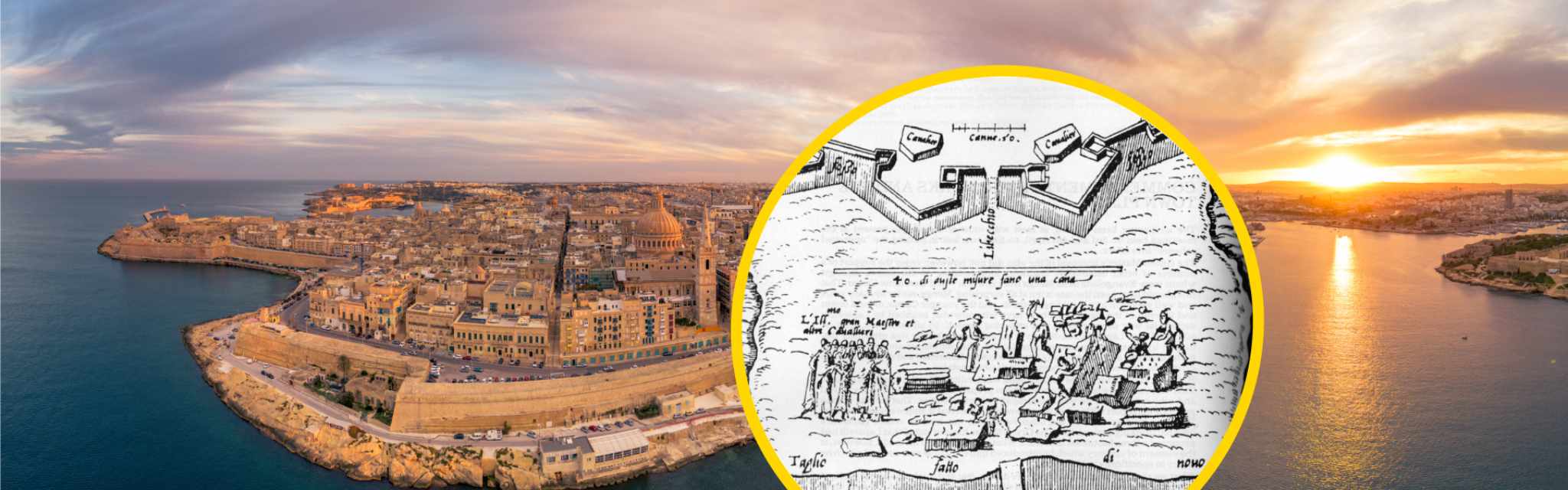
The Knights of Malta are the most romanticised chapter in Maltese history. The Great Siege, the Maltese Cross, the city named after a Grand Master, the hospital that was the wonder of Europe, the legend is so well established that it can be difficult to see the reality underneath it.
The reality is more interesting. The Order of St John were simultaneously one of the most significant forces in Maltese history and one of its most self-interested ruling classes. They built a capital city from bare rock in five years. They ran the largest slave market in the Christian Mediterranean for two and a half centuries. They produced the greatest hospital in the world and staffed it partly with slaves. They brought Caravaggio to Malta and Mattia Preti and the finest baroque craftsmen of Europe. They also treated the Maltese as a subject people, excluded the local nobility from their ranks, and were so comprehensively corrupt and despised by 1798 that they surrendered Malta to Napoleon, without a fight, after 268 years.
The Knights of Malta were all of these things simultaneously. Here is the full picture.
How They Arrived: A Rock of Soft Sandstone

On the 26th of October 1530, Grand Master Philippe de Villiers de l'Isle Adam took formal possession of the island of Malta on behalf of the Order of St John. It was not a triumphant arrival. The Knights had been expelled from their base at Rhodes by the Ottoman Sultan Suleiman the Magnificent in 1522 after a six-month siege, and had spent seven years drifting around Europe without a permanent home. Emperor Charles V, as King of Sicily, offered them Malta, Gozo and the North African port of Tripoli in perpetual fiefdom in exchange for an annual tribute of one live Maltese falcon, to be delivered on All Souls' Day to his representative, the Viceroy of Sicily. This arrangement is the historical fact that inspired Dashiell Hammett's famous 1930 novel.
The Knights were not thrilled. The island was barren, sparsely populated, short of water and offered nothing like the strategic grandeur of Rhodes. Grand Master de Villiers de l'Isle Adam reportedly called it 'merely a rock of soft sandstone.' They settled at Birgu, now Vittoriosa, a small fortified maritime town beside the Grand Harbour, because a naval order needed a harbour above all else. Mdina, the old capital on its hilltop, was handed back to the Maltese nobility. Malta was not the Knights' dream destination. It was the best available option after eight years of homelessness.
For the first thirty-five years, the arrangement was uneasy. In 1551, the Ottoman commander Turgut Reis, known as Dragut, arrived with a fleet of 10,000 men, decided Birgu and Fort St Angelo were too strong to assault, and instead enslaved the entire population of Gozo: somewhere between 5,000 and 6,000 people, shipped to Ottoman Tripolitania. It was the most catastrophic single event in Gozitan history. The Knights, based at Birgu on Malta, were unable to prevent it.
Everything changed in 1565.
What They Did: The Great Siege and The Defence of Europe
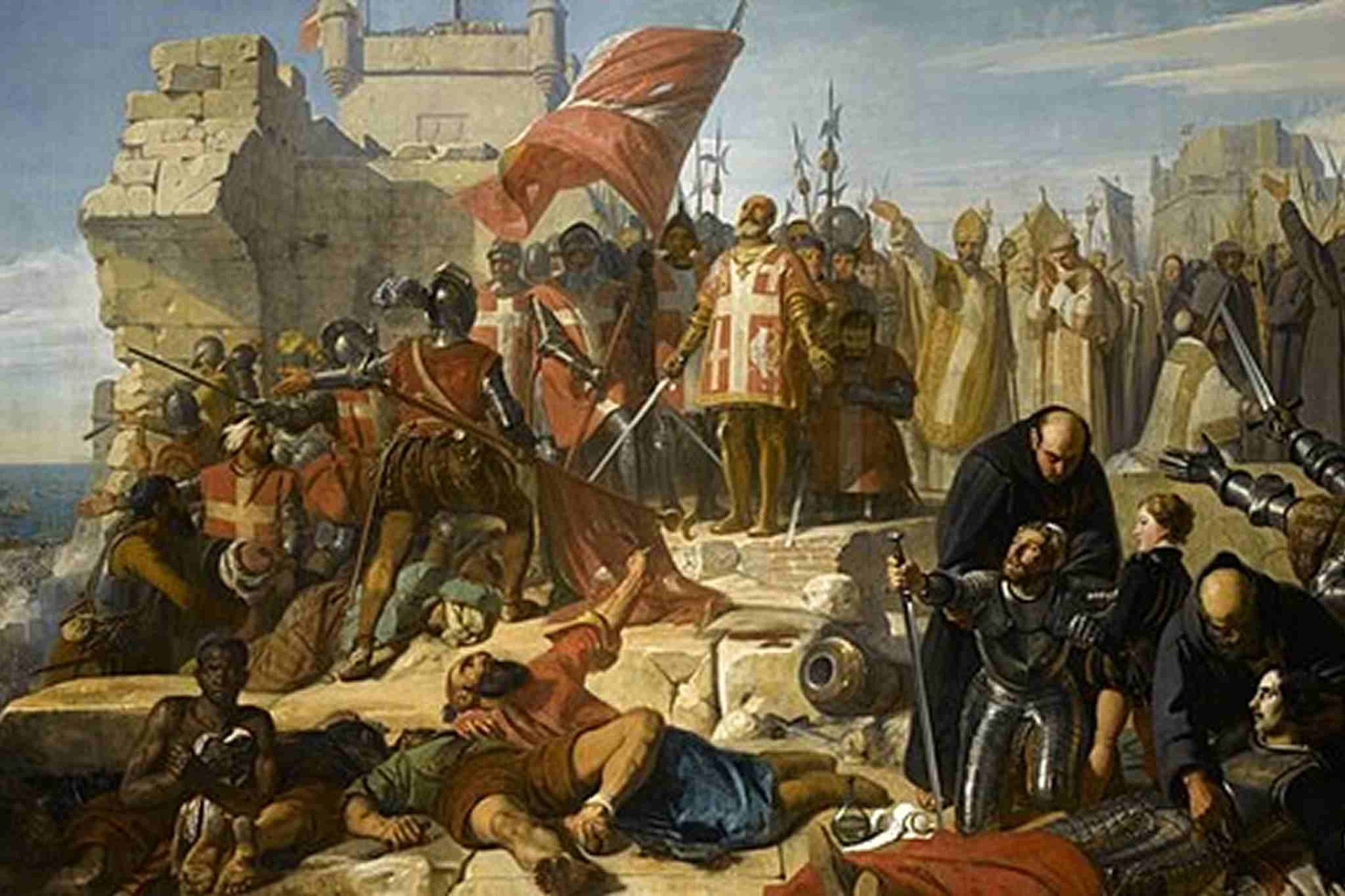
In May 1565, the Ottoman Sultan Suleiman the Magnificent sent the largest fleet the Mediterranean had seen, estimated at 40,000 men, to destroy the Order and take Malta as a forward base for the conquest of southern Europe.
What followed was one of the most extraordinary military engagements in European history. Grand Master Jean Parisot de Valette had approximately 700 Knights and 8,000 Maltese soldiers, militiamen and civilians to defend the island. Fort St Elmo, at the tip of the Sciberras Peninsula, was expected to fall within days. It held for 31 days, buying the defenders critical time. When it finally fell, no defender was left alive. After Fort St Elmo fell, the Ottomans decapitated the bodies of the dead Knights and floated them across the harbour towards Fort St Angelo on mock crucifixes. De Valette retaliated by ordering Ottoman prisoners to be beheaded; according to the traditional account, their heads were then fired back into the Ottoman camp. The savagery was total.
By August, the situation of the defenders was desperate, their numbers dwindling daily, their fortifications crumbling. When his council suggested abandoning Birgu and withdrawing to Fort St Angelo, de Valette refused. Relief finally came on the 7th of September 1565 when the Viceroy of Sicily's relief force landed. The Ottomans, exhausted and decimated by disease, withdrew. When the siege was over, fewer than 600 men among the defenders were still capable of bearing arms.
The Great Siege was a genuine turning point in European history. The Ottoman advance in the central Mediterranean was halted. The Order's fame across Europe was enormous. The Maltese, who had fought alongside the Knights, died alongside them and suffered the destruction of their towns alongside them, had earned something too, though the Knights would not always remember it.
What They Built: A City from Bare Rock
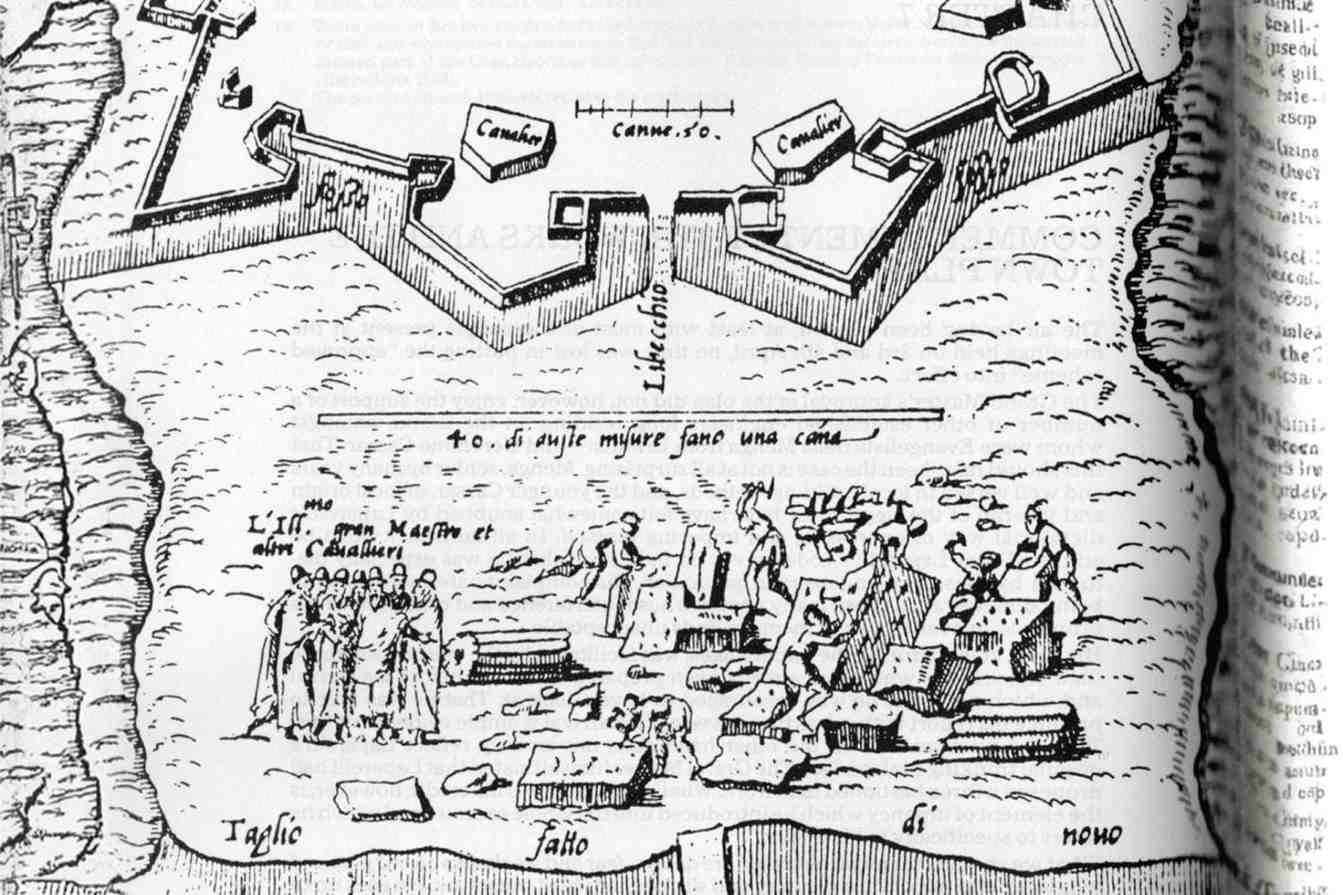
Grand Master de Valette laid the foundation stone of a new capital city on the 28th of March 1566, barely seven months after the siege ended. The site was the Sciberras Peninsula, a bare limestone ridge between the Grand Harbour and Marsamxett Harbour where nothing stood except the ruins of Fort St Elmo. He wrote to the European monarchs for support. Pope Pius V sent his own military architect, Francesco Laparelli. Philip II of Spain sent substantial funds.
The plan Laparelli drew was revolutionary. Rather than the winding, organic streets of medieval Mdina, Valletta was laid out on a rectangular grid, the first planned Renaissance city in the Mediterranean. Wide straight streets ran from the City Gate to the harbour's edge. Bastions rose 47 metres high. When Laparelli left Malta in 1570 and died the same year, the work was taken over by his Maltese assistant, Girolamo Cassar, born in Birgu around 1520, the son of a stonemason who had trained briefly in Rome. Cassar designed the Grand Master's Palace, St John's Co-Cathedral, the Sacra Infermeria, and six of the eight Auberges, or inns of the different national groups within the Order. He is the greatest architect in Maltese history, and most people outside Malta have never heard his name.
Valletta was formally made the capital on the 18th of March 1571, when Grand Master Pierre de Monte moved from his seat at Fort St Angelo in Birgu to the Grand Master's Palace. The city de Valette had planned was completed. He himself had died from a stroke on the 21st of August 1568, aged 74, never seeing it finished. His remains now rest in St John's Co-Cathedral.
Over the following century and a half, the Knights transformed not just Valletta but the entire island. The Wignacourt Aqueduct, built between 1610 and 1615, carried water from Dingli and Rabat to Valletta, it remained in use until the early 20th century and most of its arches still stand. The fortification lines; Floriana Lines, Santa Margherita Lines, Cottonera Lines, encircled and multiplied the Grand Harbour's defences across the 17th century. The Cittadella in Gozo was completely rebuilt between 1599 and 1622. Fort Ricasoli, Fort Chambray, Fort Manoel, all Knights construction. These were not decorative. They were the reason Malta was never successfully invaded again.
The Hospital: The Most Advanced in the World
The Order of St John had begun as a hospital order in Jerusalem, founded to care for sick pilgrims. Whatever its later military identity, this hospitaller vocation was never entirely abandoned. In Malta it produced something extraordinary.
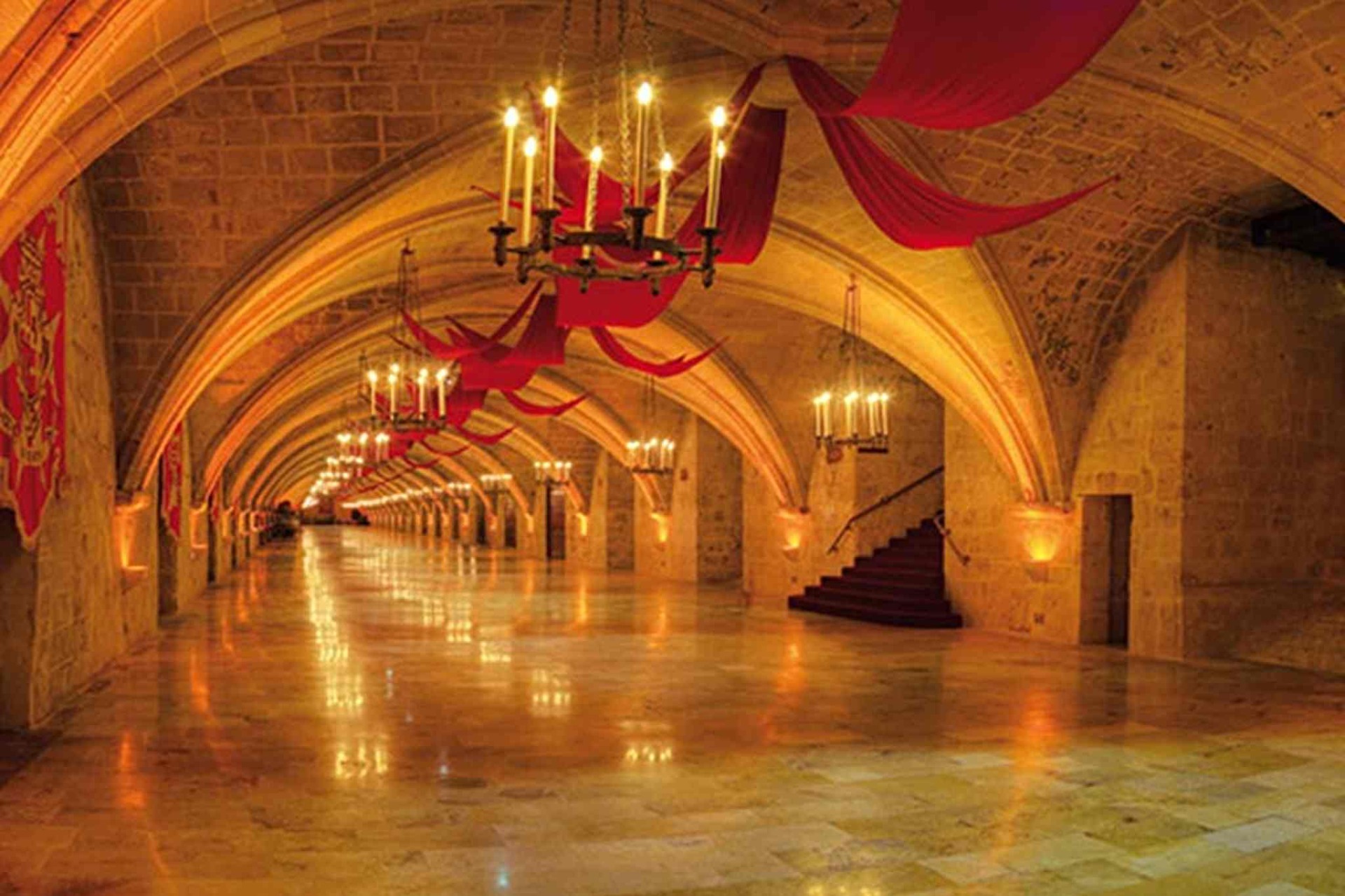
Construction of the Sacra Infermeria, the Holy Infirmary, began in 1574 under Grand Master Jean de la Cassière, on the Valletta waterfront near Fort St Elmo. Its Great Ward, measuring 155 metres in length, was one of the largest halls in Europe. By 1787 it had 563 permanent beds and could hold 914 in an emergency. It treated patients of every nationality, class and faith, free of charge.
What distinguished it was not simply its size but its methods. Patients received individual beds, in most contemporary European hospitals, multiple patients shared a single bed. The bedding was changed and cleaned regularly. Patients were given well-prepared food twice daily, eaten from silver utensils, silver being known for its antibacterial properties. The Knights themselves took turns nursing the patients, as part of their religious vows. Male patients of every background; knights, civilians, galley slaves and foreign sailors alike, were admitted and treated equally in the main wards.
In 1676, Grand Master Nicholas Cotoner founded a School of Anatomy and Surgery at the Infirmary, the first in Malta. Its pharmacy produced up to 400 different medicines, including treatments derived from rare plants such as the Maltese Fungus from Fungus Rock in Gozo, used for dysentery and syphilis. During the First World War, the building's legacy reached its furthest point: Malta became known as 'the Nurse of the Mediterranean,' with the Sacra Infermeria serving thousands of Allied wounded. The building now operates as the Mediterranean Conference Centre.
There is a dark footnote. The Sacra Infermeria's standards were not applied equally to everyone. Women were treated separately at a smaller facility near the harbour. The same building that admitted slaves to its wards also had a basement section, the Great Magazine Ward, specifically designated for 109 sailors and soldiers of the Order, as well as galley-slaves. The most advanced hospital in the world was also the hospital of a slave state.
What They Also Did: The Slave Market the History Books Skip Past
The Knights' other major economic activity, the one that appears less often on tourist plaques, was piracy and slavery.
From their arrival in Malta, the Knights operated as a corsairing state: issuing letters of marque to private ships, running their own naval fleet, and sending both on raids against Ottoman and Muslim merchant shipping across the Mediterranean. Between 1654 and 1694 alone, Maltese corsairs captured 338 prize ships, approximately eight per year. Contemporary records describe the Order as having a near-100% success rate, with Muslim merchant ships fearing the Maltese corso above any other force at sea. The corsairing economy was so central to the Order's finances that by the early 17th century it had effectively replaced the European donations and estate incomes that had once sustained the Order.
The human cargo of that corsairing was brought to Malta and sold. The Order established the largest slave market in the Christian Mediterranean, operating continuously from 1530 to 1797, one year before Napoleon arrived. Captured prisoners were held in large slave prisons called the bagnio near the Grand Harbour, auctioned publicly, and put to work in three main capacities: chained to the oars of the Order's war galleys, employed in the construction of the very fortifications that now define Malta's heritage, or kept as domestic servants in the households of the Knights and wealthy Maltese.
The great limestone bastions of Valletta, the Floriana Lines, the Cottonera Lines, built in significant part by the unpaid labour of enslaved men. The Knights themselves acknowledged this: some Grand Masters noted that the fortification programme would have been impossibly expensive without the slave workforce. Slaves wore Arab clothing, Christian dress was forbidden; cropped hair, and an iron ring on one leg.
Prominent Grand Masters personally participated in corsairing. Hugues Loubenx de Verdalle and Alof de Wignacourt, both of whom rose to lead the Order, owned their own corsairing vessels. In 1605, Grand Master Wignacourt established a formal tribunal, the Tribunale degli Armamenti, to regulate the corsairing industry.
The same Grand Master Wignacourt also founded, in 1607, a charity called the Monte della Redenzione degli Schiavi, the Fund for the Redemption of Slaves, to raise money to ransom Maltese and Christian captives held in Muslim territories. The Order ran a slave market and a slave rescue charity simultaneously. The moral complexity of this was not lost on contemporaries; it apparently was not enough to stop either.
Art, Culture and the World They Created
Whatever the Knights' failures as governors, their cultural patronage transformed Malta into one of the most remarkable artistic landscapes in Europe.
The interior of St John's Co-Cathedral, designed by Girolamo Cassar, its plain exterior concealing one of the most extravagant Baroque interiors in existence, was decorated between 1660 and 1680 by the Calabrian artist Mattia Preti, who became a Knight of the Order and never left Malta. He painted eighteen episodes of the Life of St John the Baptist on the vault, discovering that oil paint could be applied directly to Maltese limestone, a technique that allowed him to work in extraordinary colour. He died in Malta in 1699. The floor of the cathedral is tiled with the marble tombstones of 400 Knights, their heraldic achievements set in inlaid coloured marble. It is considered the richest pavement in the world.
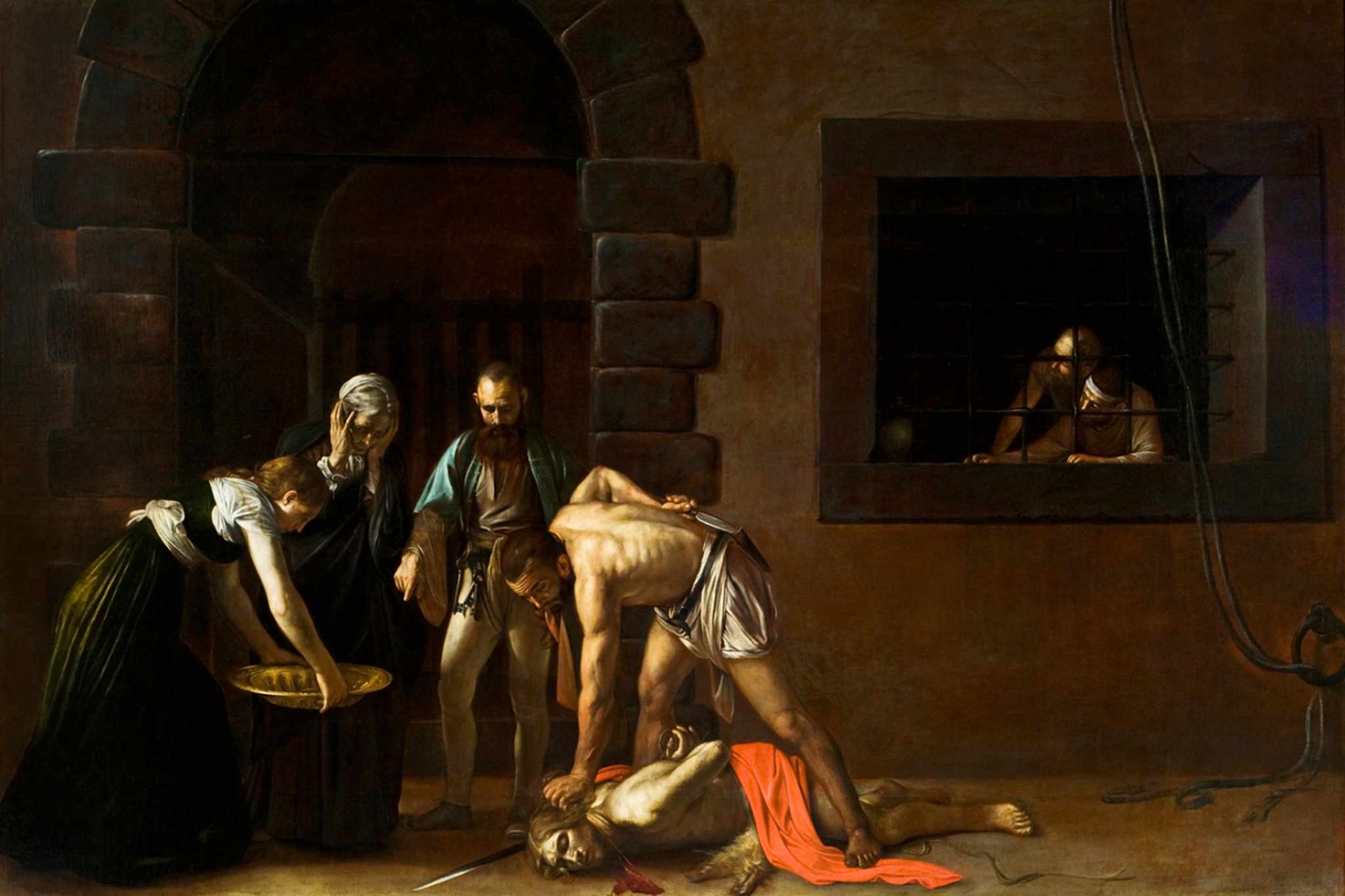
In 1607, Michelangelo Merisi da Caravaggio arrived in Malta, a fugitive from a murder conviction in Rome, hoping that the Order might grant him a fresh start. Grand Master Alof de Wignacourt received him, sat for a portrait, and had him made a Knight of Grace. Caravaggio painted the Beheading of St John the Baptist for the Oratory of St John's, the largest canvas he ever produced, and the only painting he ever signed, writing his signature in the blood of the beheaded figure. Within a year he had committed another offence, the records are silent on its exact nature, been stripped of his knighthood, imprisoned in Fort St Angelo, escaped mysteriously, and fled to Sicily. The painting stayed.
The Knights also founded the Public Library in 1761, the first public library in Malta, now the National Library of Malta. The University was founded in 1769. A School of Mathematics and Nautical Sciences was established in 1786. These were genuine contributions to Maltese intellectual life, late in the period but real.
What They Didn't Do: The Maltese under the Knights

The relationship between the Knights of St John and the Maltese people they governed was never one of equals, and became increasingly antagonistic as the centuries wore on.
The Order was a closed aristocratic institution. Membership required proof of eight generations of noble birth on both sides; a qualification that automatically excluded every Maltese family, since no Maltese family could satisfy its genealogical requirements. The Maltese nobility, who had run the island's administration through the Università, the communal governing body of Mdina, found themselves reduced to a local administrative role under an entirely foreign ruling class. Some wealthy Maltese obtained first tonsure and minor clerical status specifically to qualify for tax exemptions that the Knights imposed on the general population.
The Maltese were taxed to fund an organisation in which they could never hold senior rank. They provided the bulk of the soldiers and militiamen who fought in the Great Siege and every subsequent defence, while the Knights took the historical credit. Their language — Maltese — was ignored by the Order, which conducted its affairs in Italian, French and Latin. The Knights regarded the islands primarily as a strategic and economic base, not as a community with interests of its own.
By the 18th century, the relationship had curdled. Grand Master Manuel Pinto da Fonseca, who reigned from 1741 to 1773, spent the Order's money on an extravagant lifestyle that left it effectively bankrupt. The corsairing income had declined as European powers, seeking to trade freely with the Ottoman world, pressured the Grand Master to restrict privateering. The French Revolution of 1789 abolished the Order's French estates, a critical income source, and seized its French properties in 1792, completing the financial collapse.
In 1775, during the reign of Grand Master Francisco Ximénez de Tejada, a revolt known as the Rising of the Priests broke out. Discontented Maltese clergy and civilians captured Fort St Elmo and Saint James Cavalier. The revolt was suppressed and its leaders executed, imprisoned or exiled. But the signal was clear: after 245 years, the Maltese had run out of patience.
How It Ended: 6 Men and a White Flag
On the 9th of June 1798, Napoleon Bonaparte arrived off the coast of Malta with a fleet of 472 ships and 40,000 men, on his way to Egypt. He demanded provisioning and entry to the harbour. Grand Master Ferdinand von Hompesch zu Bolheim refused entry to more than four ships at a time, in accordance with the Order's neutral status.
Napoleon landed his troops. The Knights, whose code forbade them from raising arms against fellow Christians, and whose finances had been gutted by the French Revolution, mounted almost no resistance. Within two days, the Grand Master was negotiating surrender terms. On the 11th of June 1798, the convention was signed. Von Hompesch left Malta on the 18th of June 1798 with a small pension, the sword of Grand Master de Valette, and a few sacred relics. He sailed to Trieste. The Order that had held Malta for 268 years departed in less than two weeks.
The historical irony is acute. The fortifications the Knights had spent two centuries building, the fortifications that had withstood the 40,000-man Ottoman assault of 1565, were surrendered to Napoleon by a bankrupt, demoralised and divided Order without a serious fight. The physical legacy outlasted the institution by centuries. The institutions, the finances, the governance, the military discipline, had rotted from within.
Many Maltese initially welcomed the French. The Knights had been unpopular for decades. What they found instead was a French occupation that immediately began seizing church treasures, abolishing religious institutions and imposing taxes of its own. Within months, the Maltese rose in revolt against the French, the same Maltese who had been indifferent to the Knights' departure. They would eventually turn to Britain, and Malta's next chapter began.
The Honest Balance Sheet: What 268 Years Actually Left Behind
The Knights of Malta were in Malta for 268 years. The balance sheet of that occupation is genuinely complicated.
On the credit side: they saved Malta from Ottoman conquest in 1565, an event that almost certainly preserved the island's Catholic identity and European cultural orientation. They built Valletta; a UNESCO World Heritage Site and the smallest capital city in the EU, densely packed with some of the finest architecture in the Mediterranean. They built the fortifications that defined Malta's strategic geography for 400 years. They built the Sacra Infermeria, which was for two centuries the most advanced hospital in the world and helped establish the institutional model for modern European medicine. They brought Caravaggio, Mattia Preti, and the full flowering of Baroque art to an island that would otherwise have had no access to it. They founded the Public Library and the University.
On the debit side: they ran the largest slave market in the Christian Mediterranean for 268 years, enslaving tens of thousands of men who built their fortifications and rowed their galleys. They excluded Maltese from their own governance. They taxed the Maltese to fund an organisation the Maltese could never join. They declined into corruption and financial mismanagement that left the island effectively undefended by the time Napoleon arrived. They left Malta not as a gift to a free people but as an abandoned property when the situation became uncomfortable.
The legend of the Knights, the Great Siege, the Maltese Cross, the chivalric ideal, is not wrong. It is incomplete. What the Knights actually did for Malta was extraordinary in several respects and deeply problematic in others. Understanding both is what it means to take the history seriously.
The Grand Master's Palace is now the office of the President of Malta. St John's Co-Cathedral receives a million visitors a year. The Sacra Infermeria hosts conferences and concerts. The fortifications are a World Heritage Site. The Knights themselves are headquartered in Rome, operating humanitarian missions in 130 countries, having redirected their mission from crusading to medical care; which, in a sense, is where they started.
The Maltese Cross once appeared in Malta's official flag imagery and remains one of the island's most recognisable symbols.

About Matthew Gollcher
Hi, I'm Matthew, an SEO Specialist and Content Writer at Yellow Pages Malta. I'm passionate about creating meaningful content and exploring AI's creative possibilities. When I'm not working, I enjoy the gym, time with friends, watching series and reading, and playing guitar. I'm always eager to learn and grow both personally and professionally.