Why Are Maltese Houses Named? The Story Behind Thousands of Names Above Our Front Doors


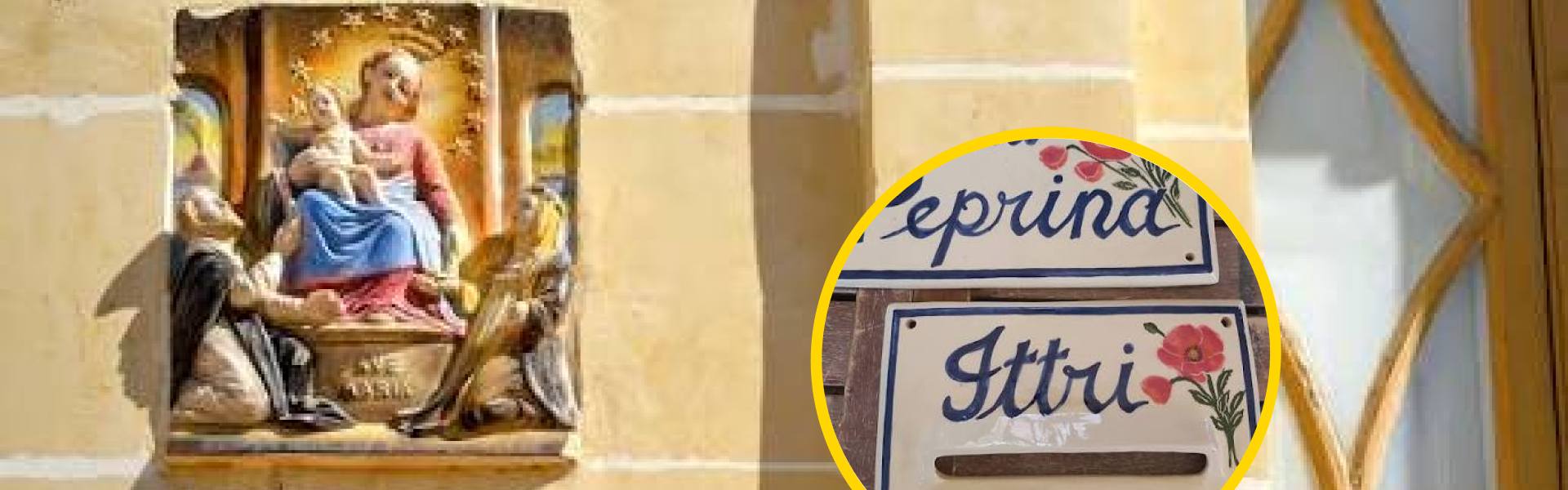
Walk down almost any street in Malta or Gozo and, if you look up and to the side of the front doors, you will notice something that visitors always remark on and locals barely register: the houses have names. Not just the grand villas and palazzos, but ordinary townhouses, terraced homes, even blocks of flats. There, on a pretty ceramic plaque beside the door, you will read them: San Ġużepp. Ave Maria. Sea Breeze. Bay View. Dar il-Ħelsien.
Almost every house in Malta has a name, and, unlike the whimsical house names you might find elsewhere, in Malta the name is not merely decorative. It is part of your official postal address, and in many older neighbourhoods and villages it is genuinely how your post reaches you. Naming the house is not a quirk; it is part of how the country is organised.
But the names are far more than an addressing system. They are a running, street-level commentary on what the Maltese have loved and valued across the generations, their faith, their politics, their families, their villages, their sense of humour. Read the plaques above the doors of a Maltese town and you are reading, in miniature, the story of Malta itself.
What Exactly is Above a Maltese Door?

Before we get to the names, it is worth untangling the several different things a traditional Maltese doorway carries, because they are often confused and they come from different traditions.
There is the house name, usually on a ceramic or maiolica plaque beside or above the door our main subject. There is, very often, a separate religious plaque or image, a Madonna and Child, the Holy Family, or a favourite saint, set into the facade as a small act of devotion and protection. On older and grander houses there may be a niċċa: a niche, built about a storey up (and often on the corner of a corner-house), holding a stone statue of a saint or of Our Lady, watching over the street. And there is the famous door knocker, il-ħabbata, the ornate brass or iron fixture, often shaped like a fish, a dolphin or the Maltese cross, that was historically a marker of a household's status and pride (and which, by old custom, was removed to signal a death in the house).

These overlap, a single doorway might carry a name, a saint plaque, a niche and a knocker all at once, but they are distinct traditions. The religious statues and niches are an old, indigenous, devotional practice, part of the deep Catholic fabric of Maltese life. The house name, as we'll see, may have a rather different and more recent origin.
Where Did Naming Houses Come From?
Here we have to be honest, because the tradition's exact origin is not as well-documented as you might expect.
The most commonly-given explanation is that house-naming came to Malta through British influence. In Britain, then as now, a great many houses, especially villas and country homes, carry names rather than, or as well as, numbers, and the practice is said to have arrived in Malta during the long British period (1800–1964), beginning with the naming of grander villas and then gradually spreading, in a very Maltese way, to houses of every size until even a modest terraced home had its plaque. On this account, naming was originally a mark of status and possession, rather as people name a boat, that democratised over time into something everyone did.
It is a plausible story, and probably broadly true. But it is worth flagging that it is not firmly proven, and even careful observers have admitted uncertainty over whether the custom predates British rule or was purely a British import. What we can say with confidence is that the religious impulse behind so many Maltese house names is older and home-grown: long before anyone was writing 'Sea Breeze' on a plaque, the Maltese were placing images and statues of saints on their facades to bless and protect the home. So the modern named plaque may well be a British-era format that the Maltese poured a much older devotional instinct into. The container may be British; a great deal of the content is purely Maltese.
The Names of Faith: Saints above the Door

For most of the tradition's life, and especially on older homes, Maltese house names were overwhelmingly religious, an outward sign of the intense Catholic faith that has shaped Maltese identity for centuries. To name your house for a saint or for Our Lady was to place your home, quite literally, under their protection, and to declare your devotion to every passer-by.

The scale of this is striking. Research into Maltese house names found that more than 240 houses, across just ten major localities, were named after St Joseph (San Ġużepp) alone, fittingly, since Joseph is the patron saint of workers and the secondary patron of a number of Maltese towns. Names honouring Our Lady are equally woven through the streets: Stella Maris (Star of the Sea), Ave Maria, Marija Immakulata, Madonna tal-Karmnu and countless others, alongside homes named for the Sacred Heart, the Holy Family, and the particular patron saint of the family's own village. In a country with a church for nearly every day of the year, the houses simply extended the devotion from the parish onto the front door.
There is a quiet beauty to this. A street of religiously-named houses is, in effect, a litany, a walking prayer, each home offering up the name of a saint. It is one of the purest expressions of how completely faith and daily life were once interwoven in Malta.
The Names of Politics and Nation
If faith is the first great theme of Maltese house names, politics is the second, and in Malta, famously, politics runs almost as deep as religion.
Walk the right streets and you will find homes proclaiming their owners' political loyalties and national pride. Some are named for political giants, most notably 'Dom', after Dom Mintoff, the towering Labour prime minister. Others commemorate the great milestones of the nation's journey to sovereignty: Dar il-Ħelsien, Villa Indipendenza, and 31 ta' Marzu (31st March, the date of Freedom Day, one of Malta's national days). There is even a neat overlap between the two great themes: the enormous popularity of St Joseph as a house name owes something to the fact that, as patron saint of the working class, he sits comfortably with the ideology of the Labour movement. Faith and politics, in Malta, are rarely far apart, and sometimes they share a plaque.
The Names of Family, Place and Memory

A great many Maltese house names are simply, and touchingly, personal.
Countless homes are named by fusing together the names of the couple who built or bought them, a portmanteau of a husband's and wife's first names, or after their children, or with the family surname. The house becomes a permanent monument to the family that made it, its name a small declaration that this is ours, and these are the people in it. Because Maltese families historically moved house rarely, homes were held and passed down across generations — such a name could label a family's home for the better part of a century.
Others record a place: somewhere the family once lived, a town they love, or, very poignantly, given Malta's vast emigration, the faraway country to which a beloved relative emigrated. A house called Dar Toronto or Sydney House is a small monument to the aunt or son who left for Canada or Australia and never fully came home, the family keeping the connection alive, quite literally, over the front door. In this way the house names quietly map the great Maltese diaspora, street by street.
The Names of Today: Sea Breezes, Flowers, and Sunsets

In recent decades, something has shifted and the house names are among the clearest places to see it.
As Malta has grown more prosperous, more cosmopolitan and, like most of Europe, somewhat more secular, the overwhelmingly religious naming of the past has given way to a far more secular and personal palette, especially in newer developments. The evidence is quite precise: in one study of a modern part of Marsaskala built after 1977, the second most popular house name of all was the thoroughly secular 'Sea Breeze', appearing fourteen times, sitting alongside a whole vocabulary of naturalistic names: Bay View, Sunset Flats, and flower names; Poinsettia and Villa Rose.
This tracks a broader change that researchers of Maltese religious culture have noted: the old habit of identifying a house by a saint's name is markedly more common on older homes than in newer developments, where you are now just as likely to find a secular phrase, or simply a number. It is the same shift, some observers point out, that has seen Maltese parents increasingly choose original given names for their children rather than the traditional saints' names. The saint above the door is, gently, fading.
And then, at the lighter end, there is the modern Maltese gift for the humorous house name. Alongside the sea breezes and the saints, the country's streets have sprouted names commemorating holidays, celebrities, football allegiances and private family jokes, proof that, even as the tradition secularises, the Maltese instinct to give the home a name, a personality and a story is as strong as ever. The impulse hasn't weakened; it has just loosened its collar.
Not Just Sentiment: The Name is the Address
It would be easy to treat all this as pure charm, but the Maltese house name has a hard practical function that keeps the tradition alive: it is a genuine part of the postal address.
A Maltese address typically pairs a house name and/or number with the street (Triq), the locality, and a postcode of three letters (the locality code) and four digits. Crucially, in many older village cores and rural areas, formal street numbering is patchy or absent, and there the house name does the essential work of telling the postman exactly which door is yours. Far from being a decorative afterthought, the name is often the operative part of the address. This is precisely why the tradition has never died out the way purely ornamental customs tend to: in Malta, naming your house is, in a real sense, part of the infrastructure.
It also means that changing a house's name is not a trivial act, it can mean updating your official address, which lends the names a permanence and seriousness they might not otherwise have. A Maltese house name is a small piece of public record.
A Country Written Above its Doors
Why are Maltese houses named? For a tangle of reasons that, together, are deeply revealing of the place. Partly for the practical necessity of finding a door in a village with no numbers. Partly as an inheritance, most likely from the British, of naming a home as a mark of pride and possession. But mostly because the house name gave the Maltese a perfect little canvas on which to declare the things they cared about most: their faith, above all, and then their politics, their families, their villages, the relatives they lost to emigration, and lately the sea view and the good life.
That is why the plaques above the doors are worth pausing over. Taken one at a time, a house name is a small thing. Taken together, street after street, they are a kind of national autobiography, written a few words at a time above thousands of front doors: a record of what a devout, proud, family-minded, much-emigrated island has loved across the generations. The shift from San Ġużepp to Sea Breeze is, in two little plaques, the story of modern Malta itself a country moving from the saint to the sunset, but never, ever losing the urge to give its home a name.
So, the next time you walk a Maltese street, look up at the doors. The island is telling you about itself, one name at a time.

About Dr Hillary Hopkins
Dr Hopkins is a Maltese lawyer, with a love for Malta's historic stories, forgotten corners, and little cultural rabbit holes.