The Old Malta Bus: How One Transport System Became Part of Maltese Identity


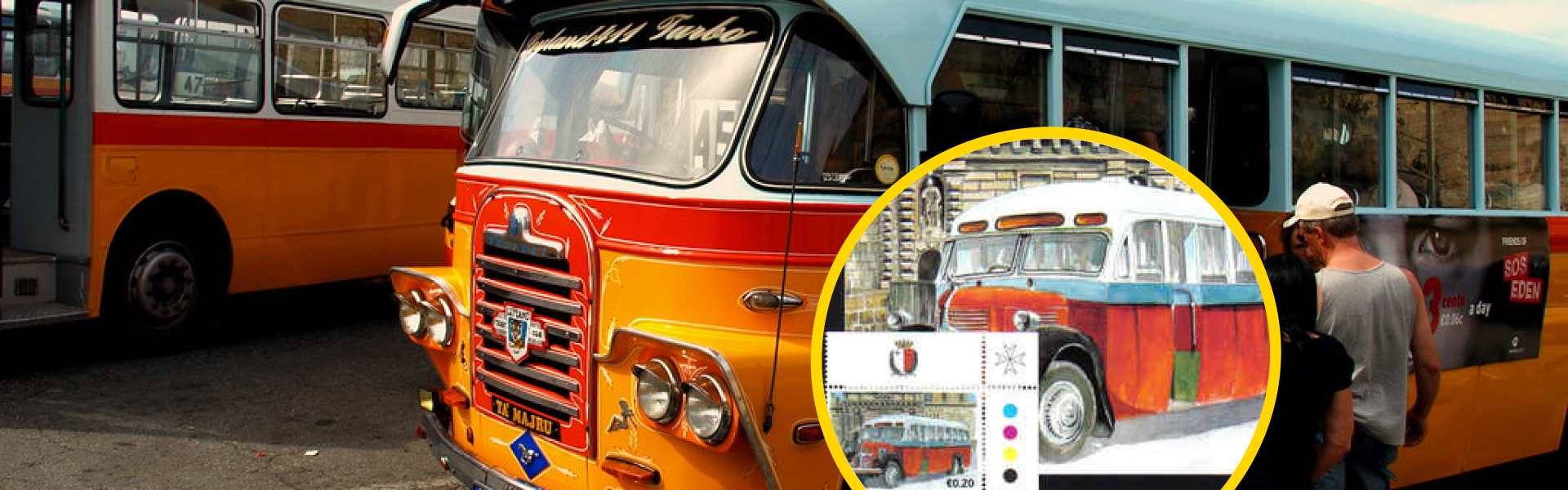
There are a handful of things that, to the Maltese, simply are Malta: the limestone, the festa, the luzzu fishing boat with its painted Eye of Osiris, and, until surprisingly recently, the bus. Not a bus in the abstract, but the old Malta bus: the rattling, gleaming, smoke-belching, saint-adorned, hand-decorated vehicle that carried generations of Maltese to work, to school, to church, to the beach and to Valletta, and that looked like public transport nowhere else on earth.
For more than a century, the old Malta bus, in Maltese the xarabank (from the French-English 'char-à-banc') or the karozza tal-linja, the 'bus of the line/route', was woven into daily Maltese life so completely that it became part of the national furniture. And when the last of them were pulled off the roads in July 2011, the islands felt it as a genuine loss: the end of an era, mourned in newspaper columns and even commemorated on a set of postage stamps.
How did a humble public bus become a beloved national icon? The answer lies in one unusual fact about how the system worked, and everything that grew out of it. This is the story of the old Malta bus, checked carefully against the record.
From Horse-Carts to the Xarabank
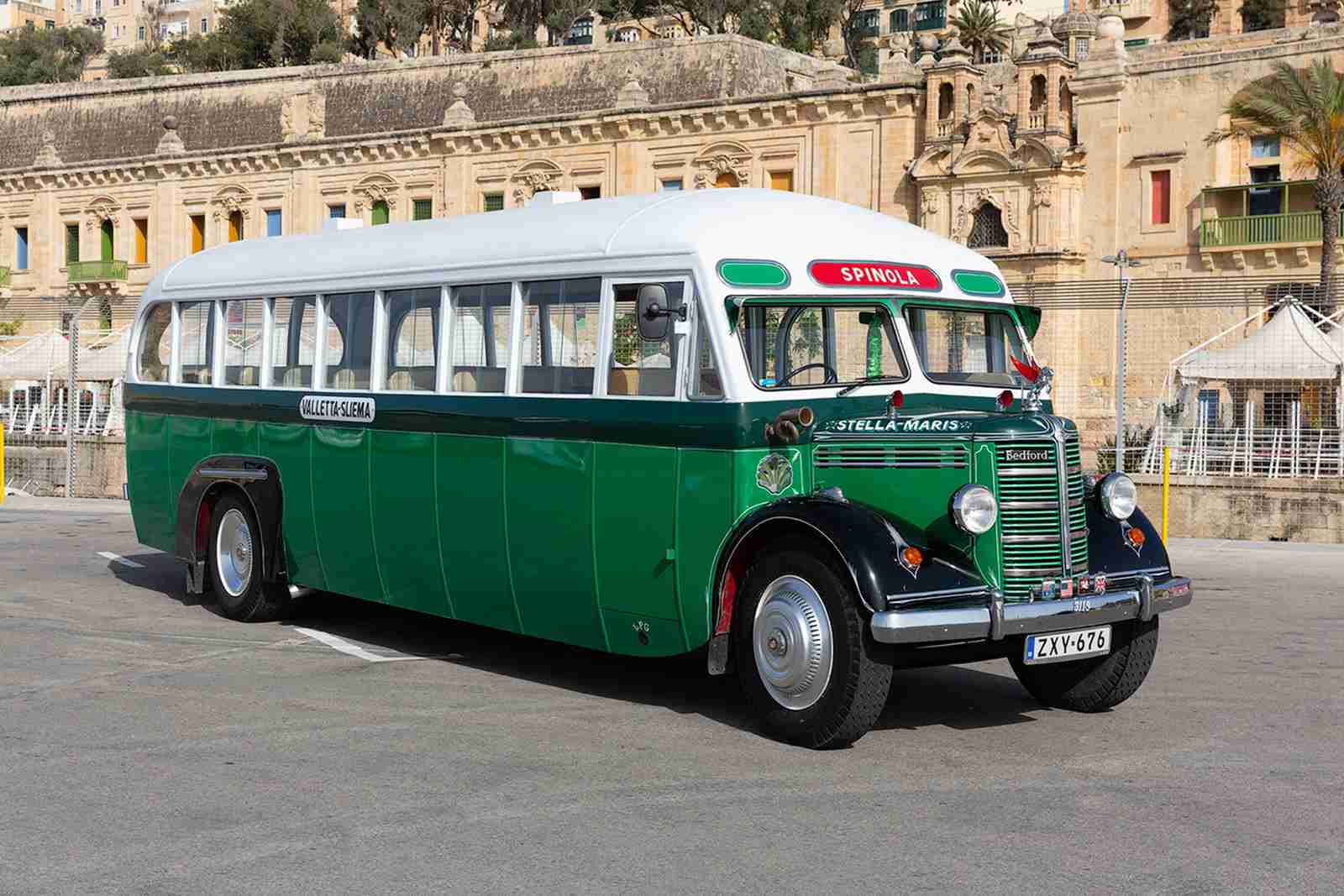
Before the bus, getting around Malta meant walking, the horse-drawn karrozzin cab, or, on one short stretch, the little railway that ran from Valletta up to Mdina and Rabat. Then, in 1905, the motor bus arrived, the first vehicles imported from England, and Maltese mobility changed forever. Early operators such as the pioneers of the Valletta–Sliema and Cottonera routes put motor omnibuses on the roads, and the public took to them quickly.
The service grew rapidly and, crucially, chaotically. By around 1930 there were already several hundred buses on Maltese roads, by one count some 385, the great majority of them owned by the individual men who drove them, competing freely for passengers with no unified timetable and plenty of hair-raising rivalry. It was popular, but it was a free-for-all. The first serious attempt to bring order came in 1931, with the creation of the Traffic Control Board, the first real regulation of Maltese public transport. Buses had to be upgraded to meet new standards, and, as owners invested in improving their vehicles, the great Maltese tradition of decorating and customising the bus was born.
The Secret Ingredient: The Owner-Driver
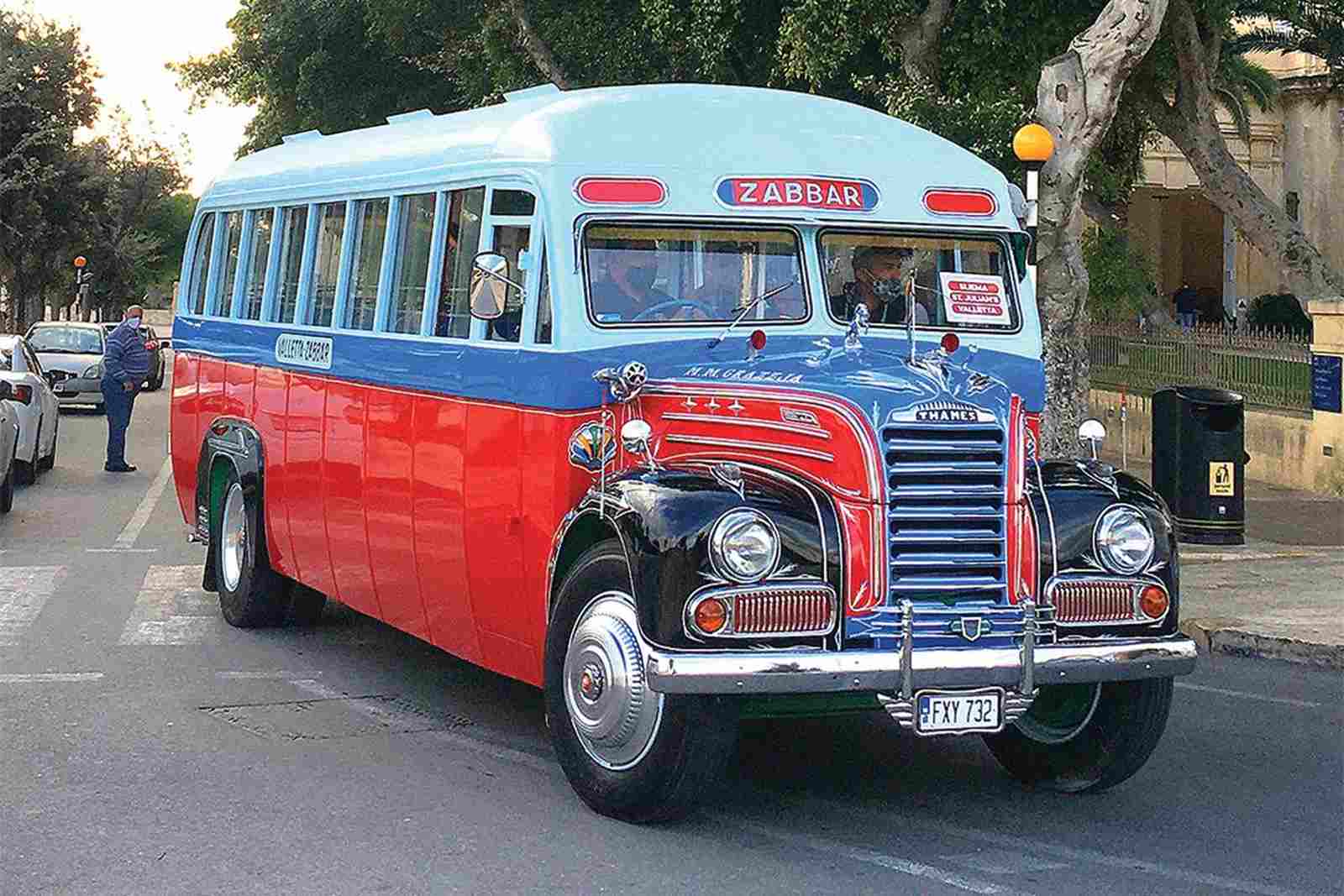
To understand why the Malta bus became what it became, you have to understand one thing above all: for most of its history, each bus was owned by the very person who drove it. This was not a fleet of anonymous corporate vehicles maintained in a central depot. It was hundreds of individual small businessmen, each the proud proprietor of his own single bus, which he drove, maintained, repaired, improved and, above all, personalised.
Everything memorable about the Malta bus flows from that one fact. Because a man owned his bus, he cared for it like a member of the family. Because he depended on it for his living and took pride in it, he made it look magnificent. Because there were many owners in friendly (and sometimes not-so-friendly) competition, a culture of one-upmanship developed, each driver trying to make his bus a little smarter, a little shinier, a little more his own than the next man's. The buses' unique character came directly from this tradition of local ownership and in-house maintenance, the vehicles rebuilt and modified by hand in small local workshops rather than churned out to a single template.
And this is also why the buses were mechanical veterans. An owner-driver did not scrap a perfectly good bus because it was old; he maintained it, rebuilt it and kept it going, sometimes for half a century. That is how Malta ended up, astonishingly, running a working fleet full of 1950s, 60s and 70s vehicles right up to 2011, to the amazement of every tourist who stepped aboard what was, in effect, a living transport museum.
British Bones, Maltese Bodies
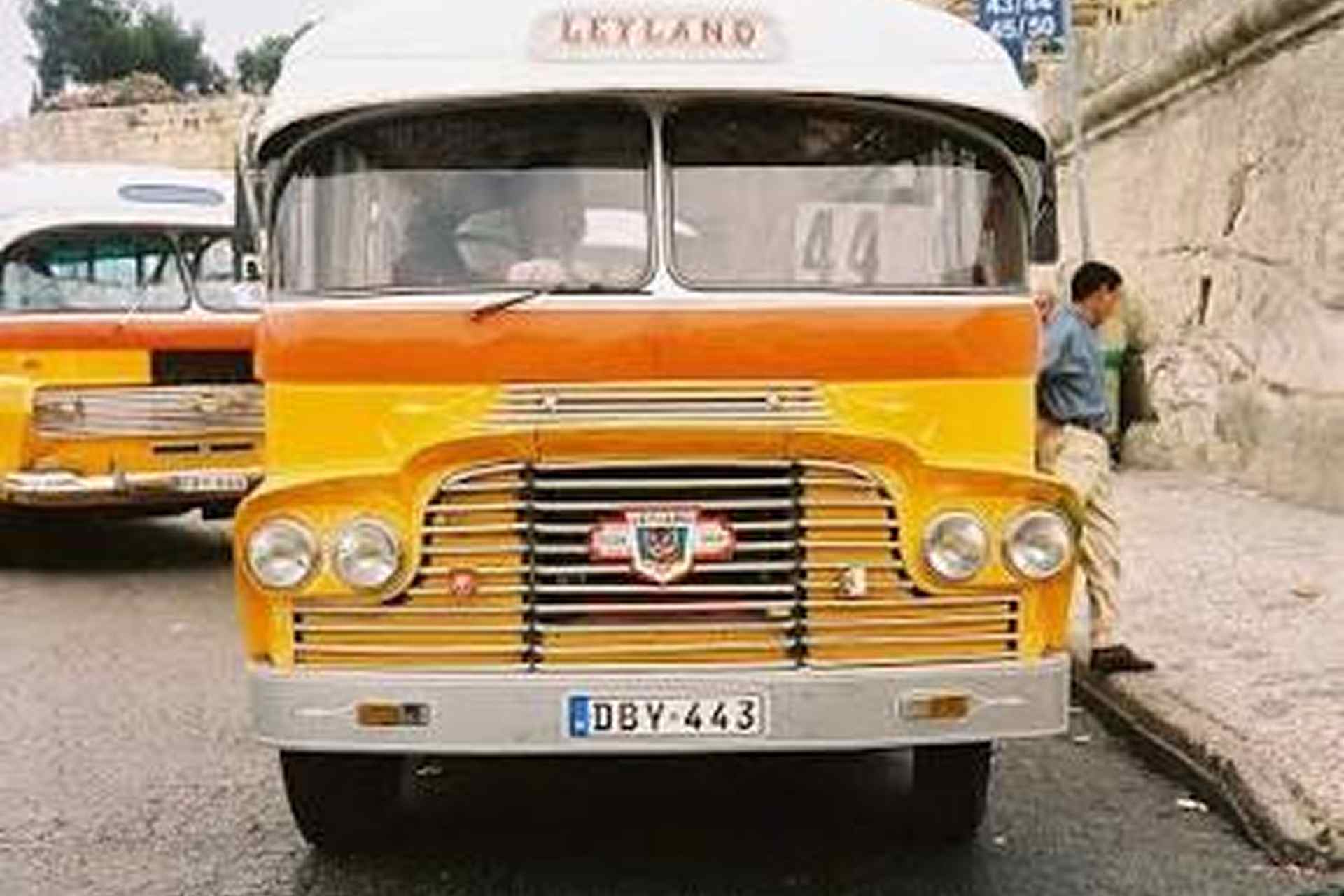
The buses themselves were a very Maltese marriage of imported engineering and local craft. The mechanical underpinnings, the chassis and engines, were mostly British, from famous marques of the era: Bedford, AEC, Leyland and Ford, with others such as Canadian-built Dodges in the mix. Many were bought second-hand, some having had an earlier life on the streets of British cities before being shipped out to Malta for a long second career.
But the bodies, the part you actually saw and rode in, were very often built or rebuilt in Malta itself, by local coachbuilders whose family names became part of the story: Zammit, Brincat, Debono, Aquilina, Micallef and others. These craftsmen fitted the imported chassis with distinctive Maltese coachwork, and it is their work; the curved windscreens, the sloping roofs, the elaborate grilles, that gave the Malta bus its unmistakable look. A classic Malta bus was, quite literally, British bones wrapped in a Maltese body.
Chrome, Saints and Tberfil: The Art of the Malta Bus
It is the decoration that people remember most, and here the Malta bus became something close to folk art on wheels.
A well-kept bus gleamed with chrome: extra bumpers, mirrors, grilles and trim, polished to a shine. Owners added extra lights and reflectors, flags, banners and bunting, and a particular Maltese touch; loud air horns. Above all there was the tberfil: the hand-painted decorative line-work, ornamental patterns and lettering that Maltese sign-writers applied to the bodywork, articulating the bus's features and emblazoning it with names, numbers and slogans. Tberfil is a genuine traditional Maltese craft, and the buses were among its greatest canvases.
And then there was the religion. In a deeply Catholic country, a man's bus was also, quietly, a shrine. It was completely normal for a Malta bus to carry a small image of a favourite saint, a picture or statuette of the Madonna, a crucifix or a rosary swinging from the mirror, and a devotional motto, a line of prayer or a saint's name, painted above the windscreen or across the bodywork. The driver often chose the patron saint of his own village or a devotion close to his heart. Stepping onto a Malta bus, you were stepping into a small mobile expression of its owner's faith, family pride and personality all at once. No two were quite the same.
Reading the Bus by its Colour
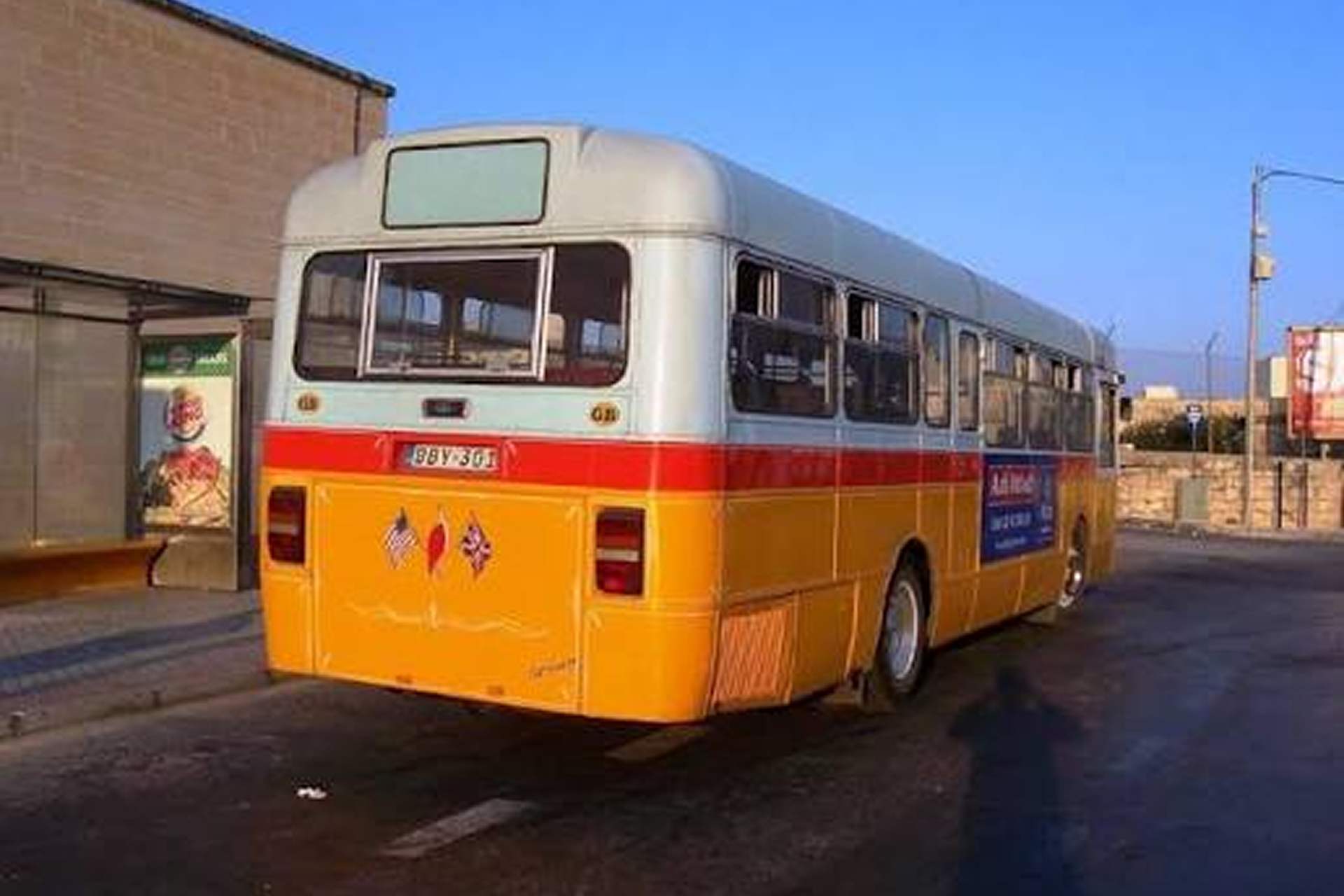
One of the most charming features of the old system, and one many people have forgotten is that for decades you could tell where a Malta bus was going by its colour, before you could read a word on it.
The earliest buses wore a dark olive-green with a black stripe. But from the 1930s, buses came to be painted according to the route they served. The Valletta–Żurrieq buses, for instance, wore a distinctive shade of orange; the Sliema buses were green with a black stripe; other routes had their own colours. This was not just decoration, it was a genuinely useful system in an era when not everyone could read: you learned that your bus was the orange one, or the green one, and you could pick it out of a crowded terminus at a glance. The colour was the route.
This wonderful route-colour system lasted until the mid-1970s. In 1975, as part of wider reform, all Maltese buses were standardised to a single green. Then, in 1995, came the livery most people alive today remember best: a yellow lower body and white upper, separated by a red band just below the windows. Over on Gozo, the buses had their own look for decades, grey with a red stripe. By the end, 'the yellow bus' had become the classic image of Maltese public transport, but it is worth remembering that for forty years before that, the buses were a moving rainbow, colour-coded across the island.
Bringing Order without killing the Character
The free-for-all of the early decades was gradually tamed, but, importantly, without destroying what made the buses special.
After the Traffic Control Board of 1931 came a bigger reform in the 1970s. In 1977, bus operations were centralised under a body called the Public Transport Association, in Maltese, the Assoċjazzjoni Trasport Pubbliku or ATP, which was, fittingly for Malta, organised as a worker cooperative. The ATP took charge of the day-to-day running of the network: a unified timetable and roster, coordinated routes, a basic common livery.
But here is the crucial point, and the reason the character survived: the ATP did not take the buses away from their owners. The individual drivers still owned their individual buses. The cooperative organised the service, but the man behind the wheel was still, as he had always been, the proprietor of the vehicle he was driving, free to maintain it, decorate it, and take pride in it exactly as before. Malta had found a very Maltese compromise: enough central organisation to run a proper network, but not so much that it flattened the buses into anonymous uniformity. The saints stayed on the dashboards. The chrome kept shining.
The End of an Era

By the 21st century, though, the very things that made the old buses beloved were also making them a problem and Malta faced an uncomfortable choice between heritage and modernity.
For all their charm, the ageing buses were heavily polluting, pumping out thick diesel fumes in a small, densely-populated country increasingly worried about air quality. They were not accessible to elderly or disabled passengers, with their high steps and cramped doorways. Many were genuinely old, and questions were raised about safety and comfort. And the service, run by a cooperative of individual owners, could be slow and inconsistent. A first attempt at modernisation came in 2003, when around a hundred of the oldest buses were scrapped and replaced with modern imported vehicles, but the fundamental system remained.
The real break came in 2011. The government reformed public transport wholesale and handed the network to a large international operator, the British-based Arriva, which on the 3rd of July 2011 took over the routes across Malta with a modern fleet, low-floor, wheelchair-accessible, cleaner-running buses, including controversial secondhand ex-London articulated 'bendy buses'. The traditional Malta buses were, almost overnight, withdrawn from regular service, kept on only for special heritage runs. After more than a century, the xarabank had made its last scheduled journey.
The Maltese reaction was genuinely emotional. Yes, people had grumbled for years about the fumes and the slowness but faced with the actual disappearance of the old buses, the islands felt the loss of something irreplaceable. MaltaPost captured the mood with a commemorative set of stamps issued that year under a title that said it all: 'Malta Buses – The End of An Era'.
What Became of the Buses and the Road Since
And the old buses themselves? They scattered. As the reform came in, the individual owners were compensated to hand in their vehicles. Some buses were simply scrapped. A number were preserved, kept by their former owners, or taken into the care of Heritage Malta, the national heritage agency. A good many were bought by enthusiasts and shipped to the United Kingdom, where British collectors, delighted to reclaim these long-lost Bedfords, AECs and Leylands, lovingly restored them. And a lucky few still ply Maltese roads today as vintage tour buses, giving visitors (and nostalgic locals) a taste of how the islands used to travel.

About Matthew Gollcher
Hi, I'm Matthew, an SEO Specialist and Content Writer at Yellow Pages Malta. I'm passionate about creating meaningful content and exploring AI's creative possibilities. When I'm not working, I enjoy the gym, time with friends, watching series and reading, and playing guitar. I'm always eager to learn and grow both personally and professionally.