The 200 Years Nobody Talks About: How the Arabs Shaped Malta Forever


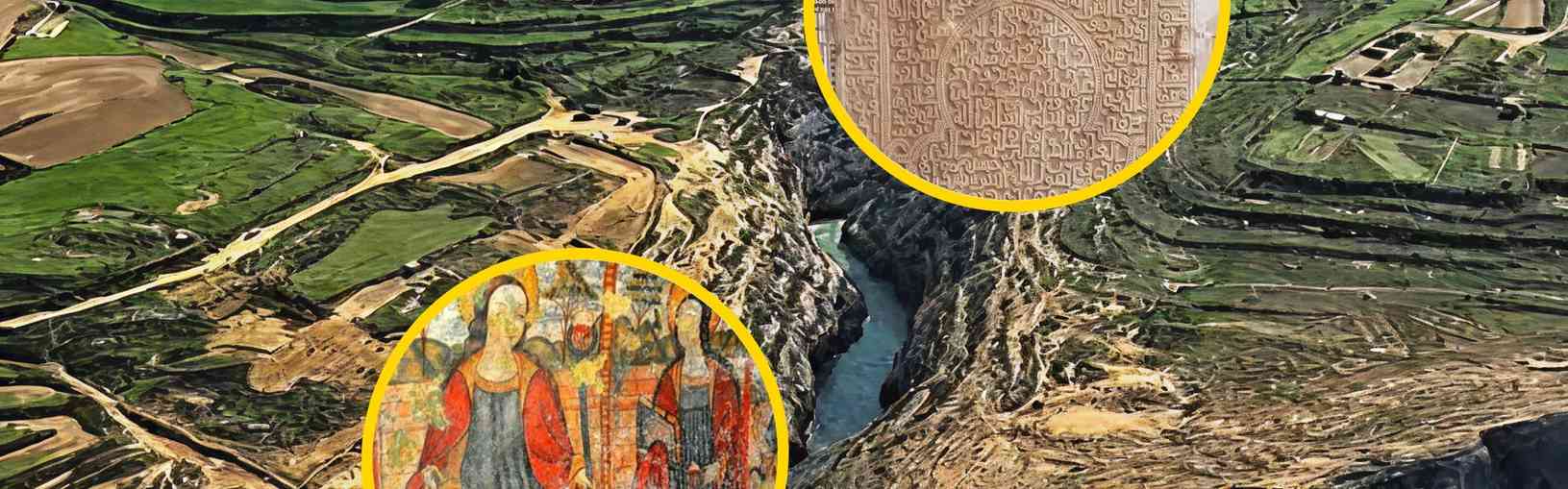
Say the word: Alla. It is Arabic. Say Randan, the Maltese word for Lent. It comes from Ramadan. Drive through Mdina, whose name comes from the Arabic al-madīna, meaning the city. Turn off towards Rabat, from al-ribāṭ, meaning a frontier garrison or suburb. Head south to Marsa, Arabic for port. Pass through Gżira, Arabic for island. Or Birzeħbuġġa, whose first syllable means bir, a well, in Arabic. Look at the terraced fields on the hillsides, an Arab agricultural system, still functioning after a thousand years.
The Maltese surnames Borg, Cassar, Farruġa, Mifsud, Fenech, Chetcuti, Psaila, Xuereb, Zahra, Zammit, all carry Arabic roots. The muxrabija, the traditional Maltese wooden balcony window, derived from the Arab mashrabiya. The Għana, the traditional Maltese folk song of the countryside, is so close to the Arab zajal that specialists have difficulty telling them apart.
Malta spent roughly two centuries, from 870 to 1091 AD, as an Arab Muslim island. Its capital was renamed in Arabic. Its land was farmed according to Arab methods. Its people spoke Arabic, prayed in Arabic, and were governed according to Arab law. And then, over the course of the 12th and 13th centuries, the Muslim population was converted, deported or simply absorbed into the newly Christian community that replaced them, and by around 1270, barely a single professed Muslim remained on the island.
The faith disappeared. The language stayed. The terraced fields stayed. The village names stayed. The surnames stayed. The word for God stayed.
This is the story of the two centuries of Maltese history that shaped almost everything about the island, that are acknowledged in school curricula and immediately skipped past, and that deserve, at least once, to be told properly.
Before the Arabs: What Malta Looked like in 870
In 870 AD, Malta was a small, modestly populated island at the edge of the Byzantine Empire, which had controlled it since 535 AD. Its capital was the walled hilltop city of Melite, the same high ground that is now Mdina, surrounded by a Roman fortification and inhabited by Greek-speaking Eastern Christians. The island's bishop was resident there. The old Roman fortification that would one day become Fort St Angelo guarded the harbour.
The Arab expansion that had swept out of the Arabian Peninsula after the death of the Prophet Muhammad in 632 had already transformed the Mediterranean world. North Africa had been Arabised and Islamised. Sicily had been under attack since 827 and was being steadily conquered by the Aghlabid dynasty, a Muslim emirate based in Ifriqiya, the region that is now Tunisia. Malta, lying between Sicily and the Tunisian coast, was an obvious next target.
A preliminary Aghlabid force under Ahmad bin ʿUmar briefly occupied Malta in 869 and was then expelled. In 870 the main force came.
29th August 870: The Siege of Melite
The date of Malta's fall to the Arabs is one of the few precisely confirmed facts in this period. The Kitab al-ʿUyūn, an Arabic chronicle, records the conquest by the Aghlabid ruler Abdallah I and gives the date as three days before Ramadan in the year 256 AH, that is, 28th – 29th of August, 870. A Greek chronicle from Cassano, Calabria, independently confirms that the island of Melite surrendered on the 29th of August 870.
The initial siege was led by Halaf al-Hādim, described in the sources as a renowned engineer. He was killed during the fighting and replaced by Sawāda ibn Muḥammad. The city fell. What happened next was described by Arab and later European historians as brutal: the Byzantine Greek population was killed, enslaved or expelled. The bishop was arrested and imprisoned in Palermo. The island's churches were destroyed. Some historians have claimed that Christian structures were physically dismantled and taken to Sousse, in present-day Tunisia, as prestigious spoils of victory.
After the conquest, according to the 14th-century Arab chronicler Al-Himţyārī, Malta was left almost uninhabited. More recent archaeological work has complicated this picture, 10th and 11th century Arab pottery found at Mesquita Square in Mdina suggests some level of occupation throughout this period, and Malta's strategic position on the sea route between Sicily and the newly founded city of al-Mahdiyya in Tunisia (910 AD) would have required a military garrison regardless. But the demographic reality is clear: whatever population existed before 870 did not survive in any recognisable form. As the Maltese historian Godfrey Wettinger, the greatest authority on medieval Maltese history, put it: the Arab conquest broke any continuity with the previous population of the island.
The pre-Arab languages; Latin, Greek, Punic, have left almost no trace in modern Maltese. The language that replaced them came with the settlers who arrived two centuries later.
1048–49: the settlers who gave Malta its language

The repopulation of Malta happened primarily around 1048–49, when a wave of Arabic-speaking Muslim settlers arrived from Sicily. They were possibly refugees who had fled the island during the ongoing Arab-Byzantine wars in Sicily. They brought with them their language, a dialect of Arabic close to Tunisian Arabic and Siculo-Arabic, their religion, their agricultural knowledge and their urban culture.
By the beginning of the 11th century, Mdina was a thriving Muslim settlement. Archaeological finds show pottery closely resembling contemporary Sicilian examples, confirming active trade across the strait. The community grew. Gozo was settled. New villages were founded, and they were given Arabic names that survive to this day.
It was in this period that the map of Malta was essentially named.
Every village that begins with Ħal- or Raħal- carries the Arabic word raḥal, meaning village: Ħal Qormi, Raħal Ġdid, Ħal Tarxien, Ħal Luqa. Mdina comes from al-madīna — the city. Rabat from al-ribāṭ — a frontier settlement or suburb, the same word that is still the name of the capital of Morocco. Marsa from the Arabic for port. Gżira from the Arabic for island or peninsula. Birzeħbuġġa from bir, a well. Qala from qalʿa, a fort. Gharb from gharb, west. Xlēndi and Għajnsielem carry Arabic words for spring and source of water. Żejtun carries the Arabic zaytūn — olives.
The surnames that run through Maltese phone books today are equally Arabic in origin. Borg, Cassar, Farruġa, Mifsud, Zammit, Fenech, Chetcuti, Psaila, Xuereb, Zahra — all documented by Wettinger and other scholars as carrying Arabic etymologies. They are not the names of Arab settlers themselves but of families whose naming practices, and often whose family lines, carried into the Christian era from the Arabised population.
What They Built, Grew and Left Behind

The Arab settlers were skilled farmers and engineers, and the land they worked still shows it.
They introduced the water wheel, known in Maltese as the sienja, from the Arabic noria, which allowed irrigation of fields that the dry Maltese climate would otherwise have left barren. They built the terraced field system that covers Malta's hillsides and which remains, a thousand years later, the defining landscape of the Maltese countryside. They introduced the cultivation of cotton, which would become the mainstay of the Maltese economy for centuries, only declining in the later period of the Knights of St John. They brought citrus fruits, figs and almonds, sweet pastries and spices. The Arab chronicler Al-Himţyārī wrote of Malta: 'The island was visited by shipbuilders because the wood in it is of the strongest kind, by fishermen because of the abundance and tastiness of the fish around its shores, and by those who collect honey because that is the most common thing there.'
The architecture carries traces too. The muxrabija, the enclosed wooden balcony window seen on old Maltese buildings, derives from the Arab mashrabiya, the latticed wooden screen that provided shade and privacy in Islamic domestic architecture. In Malta the style evolved: the wooden lattice became enclosed glass, responding to the wind and rain of the Maltese winter rather than the dry heat of North Africa. The word gallarija, which replaced muxrabija as the standard term, came via Italian, but the form it describes is recognisably Arab in origin.
The Arabic language embedded itself so deeply in Maltese daily life that some of it survived conversion to Christianity and integration into the Latin European world. The Maltese word for God is Alla, directly from Arabic. The word for Lent is Randan, a Maltese form of Ramadan. Even the Għana, the traditional Maltese folk song of the countryside, spontaneous, melodic and slightly melancholic, has been compared by specialists to the Arabic zajal, the improvised sung poetry of the Arab world, to the point of being difficult to distinguish from it.
Malta did not just adopt Arab words. It adopted Arab ways of seeing, farming, building and singing, and carried them forward through eight centuries of Catholic European identity.
1091: Roger Arrives, and Almost Nothing Changes

In July 1091, Count Roger I of Sicily, the same Norman warrior who had been fighting to reclaim Sicily from its Arab rulers for thirty years, arrived in Malta. The local Muslim garrison surrendered quickly. They agreed to pay tribute, give up their weapons, and release their Christian captives. The Normans recorded that as the Christian captives emerged from the Medina, they cried out 'Kyrie eleyson', Lord have mercy on us, in Greek, weeping with relief at their sudden liberation.
Roger accepted these terms and left. He had larger strategic concerns in North Africa. The Muslim community in Malta was allowed to continue its internal administration and religious life under Norman overlordship. They paid their tribute and carried on. The Norman conquest of Malta in 1091 was, in practical terms for most Maltese Muslims, barely a disruption.
This is the fact that most general accounts of Maltese history obscure. The Norman arrival did not convert Malta to Christianity. It imposed a feudal overlord. For the next 150 years, the island remained culturally, linguistically and demographically Muslim. A 1198 document issued by Empress Constance, written in both Latin and Arabic, was addressed formally to 'all the Christians and the Muslims of Malta and Gozo, may God guide them!' The two communities coexisted, prayed in different ways, and continued speaking the same language.
In 1122, there was a Muslim uprising against Norman rule. In 1127, Roger's son King Roger II of Sicily crushed it and established firm Christian governance on the islands. Missionaries arrived. Churches were rebuilt on the sites of mosques. The Latin Catholic diocese of Malta was gradually organised. Christianity began to spread. But it spread slowly, and the Muslim community did not simply dissolve.
The Most Extraordinary Document in Medieval Maltese History
The most revealing document from this entire period is not a conquest account or a papal letter. It is a census. In 1240 or 1241, a royal official named Giliberto Abate, serving as governor of Malta under the Holy Roman Emperor Frederick II, compiled a report on the population of the Maltese islands. His numbers are extraordinary.
In Malta proper: 681 Muslim households. 47 Christian households. In Gozo: 155 Muslim households, 203 Christian households. Total across both islands: 836 Muslim families, 250 Christian families, 33 Jewish families.
Read that again. In 1241, a century and a half after the Norman conquest, eighty years into a sustained campaign of Christianisation, Muslims outnumbered Christians in Malta by more than three to one and in Malta proper by more than fourteen to one. The island was still, by any demographic measure, a Muslim island.
Godfrey Wettinger, who spent his career studying medieval Malta, acknowledged that the Giliberto figures raise questions that cannot be fully answered: perhaps Giliberto's Christian count was incomplete, or perhaps the Christian population was genuinely tiny. What is not in question is that Islam was still numerically dominant in Malta in the 1240s, despite 150 years of Norman and subsequent Christian rule.
By 1249, according to the historian Ibn Khaldun, Emperor Frederick II sent the Maltese Muslims into exile, together with the Muslims of Sicily, who are known from other evidence to have been deported to the colony of Lucera on the Italian peninsula. The process was probably more gradual than a single deportation suggests: those who did not leave could escape expulsion by accepting baptism. Wettinger's assessment is the most precise: 'It is not clear what actually happened then, except that the Maltese language, derived from Arabic, certainly survived. Either the number of Christians was far larger than Giliberto had indicated, and they themselves already spoke Maltese, or a large proportion of the Muslims themselves accepted baptism and stayed behind.'
By the time the Catholic diocese of Malta was firmly established in 1270, no professed Muslim remained on the island as a free person. The faith had vanished. The people, or most of them, had stayed, converted, and continued speaking the language they had always spoken.
The Stone that Survived Them All: Maymūnah

The most moving object from the Arab period of Maltese history is a marble slab in the Gozo Museum of Archaeology at the Cittadella in Victoria.
It is called the Maymūnah Stone, il-Ġebla ta' Majmuna in Maltese. It is the tombstone of a young Muslim woman named Maymūnah, daughter of Hassan, son of ʿAlī al-Hudālī, known as Ibn as-Sūsī, who died on the 21st of March 1174, eighty-three years after the Norman conquest, at a time when Malta was still predominantly Muslim.
The stone is carved in Kufic Arabic script, the angular, formal script used for tombstones and inscriptions. The inscription begins with the Bismillah: 'In the name of Allah, the merciful and compassionate.' It invokes the Prophet Muhammad and his followers. It reflects on death and the mercy of God. It is a prayer for a young woman, and it was carved by people who assumed, in 1174, that they would be burying their dead in Malta for generations to come.
The stone itself tells a subtler story about continuity and change. The marble slab was originally a Roman artefact, carved with a rose relief on its reverse side in the Roman architectural style. The Arab stonecutter turned it over and inscribed the Islamic prayer on the other side. Roman marble, carrying an Arab inscription, commemorating a Muslim woman in a Norman-controlled island, in a language that would eventually become the foundation of the only Semitic language in the European Union. The Maymūnah Stone is not just the most important archaeological artefact from the Arab period in Malta. It is one of the most remarkable objects in the history of the Mediterranean.
According to Judge Giovanni Bonello, the Maltese legal historian, it is 'a spectacular visual relic of the Islamic presence in Malta.' It has been on display at the Gozo Museum of Archaeology since 1960. Heritage Malta produced a replica for the Dubai Expo in 2021, where it drew considerable attention from Arab visitors encountering for the first time the evidence of their ancestors' presence in a European Catholic island.
Why the Language Survived When the Faith Did Not
The paradox at the heart of the Arab period is the question that every historian of Malta eventually has to confront: how is it possible that a language, the most intimate marker of cultural identity, survived when an entire religious civilisation disappeared completely?
The answer lies in understanding what was under pressure and what was not.
When Muslim Malta became Christian Malta, religion was a political question. To be Muslim under Norman, then Swabian, then Angevin, then Aragonese Christian rule was to be on the wrong side of the feudal order. Religion determined your legal status, your social standing, your access to land. Converting to Christianity was not simply a matter of conscience; it was a matter of survival. Those who could not or would not convert left or were expelled. Those who stayed and converted did so because it was the only way to remain in their homes.
Language, by contrast, was not a political question. The new Christian rulers — Normans, then Swabians, then Aragonese and eventually the Knights of St John — used Latin for the Church, Sicilian for administration, and later Italian for their own affairs. Nobody made any systematic effort to teach the Maltese population a different spoken language. In a world where well over 90% of the population was illiterate, and where no public education system existed, language was simply what you heard as a child, what you used to buy bread, what you whispered at home.
So, the converted Muslims of 13th-century Malta became Catholic Christians who spoke Arabic, and their children inherited both the faith and the language. The faith was reinforced from above, by the Church and the feudal order. The language was passed below that, in houses and fields and markets, generation by generation, beneath the notice of the ruling classes who cared about what you believed, not what you said.
Over the following centuries, the language accumulated a heavy layer of Romance vocabulary from the Sicilian and Italian administrative culture around it, and then English words from British colonial rule, until it became the distinctive hybrid that Maltese is today: a Semitic grammatical skeleton, a Romance vocabulary, written in the Latin alphabet, spoken by a Catholic European people. It is, as linguists describe it, the only Semitic language with EU official status, and the only one written in the Latin alphabet.
The Myth that was Built on Top of the Truth
For most of the period between the 13th century and the 20th, the Arab period of Maltese history was not simply forgotten. It was actively rewritten.
The key figure in this rewriting was the 17th-century Maltese historian Giovanni Francesco Abela, whose 1647 work Malta Illustrata promoted what historians now call the myth of Christian continuity: the claim that the original Christian population of Malta had survived the Arab conquest intact, had maintained their faith in secret throughout the two centuries of Muslim rule, and had emerged at the Norman conquest still Catholic and still Maltese.
This story was comforting. It preserved the idea of an unbroken Maltese Catholic identity stretching back to the conversion by St Paul in 60 AD. It made the Arab period a temporary occupation by outsiders rather than a fundamental demographic and cultural transformation. It became, as Wikipedia's article on the Norman invasion of Malta notes, 'romanticised into a tale where Roger liberated the Christians of Malta from oppressive Muslim rule.'
Historians are now largely agreed that the myth is not supported by the evidence. The near-total absence of pre-Arab linguistic traces in modern Maltese, the Giliberto census figures showing an overwhelmingly Muslim population in 1241, the Maymūnah Stone marking a Muslim grave in 1174, the documentary evidence of a functioning Muslim community under Norman rule, all of this contradicts the idea of an underground Christian population quietly waiting for deliverance.
What actually happened is more interesting, and in its way more remarkable. The Arab settlers did not simply occupy Malta. They became Malta. Their language became the Maltese language. Their village names became the Maltese map. Their agricultural systems became the Maltese landscape. And when the political and religious tide turned against them, a significant number of them, or their children, or their grandchildren, accepted baptism, changed their public identity, and carried everything except the faith forward into the Catholic world.
The Maltese are not Arabs. But they are not quite European in the way that the people of England or France or Germany are European either. They are something specific to this island and to this history: a people whose language is Semitic, whose faith is Catholic, whose surnames are Arabic, whose terraced fields are Arab, whose word for God comes from the same root as the God of Islam, and who have been constructing a story about themselves for 800 years that makes sense of all these contradictions.
Walk through Mdina Differently Now
The next time you walk through Mdina, walk through it differently.
The name means the city, in Arabic. The labyrinthine streets of the eastern half of the old walled town follow an Arab urban plan, surviving the 1693 earthquake that reshaped the western half. The suburb outside the walls is still called Rabat, the Arabic word for a settlement outside a fortified city, the same word that names the capital of Morocco.
The fields you drive past on the way there were terraced and irrigated by Arab farmers. The cotton that made Malta's economy work for centuries was an Arab introduction. The sienja in old Maltese farmyards was an Arab machine. The muxrabija on old balconies is an Arab window.
Somewhere in the Gozo Museum of Archaeology, the Maymūnah Stone sits in its case. A young woman who died on a Thursday in March 1174, whose father had a grief that crossed eight and a half centuries to reach you. She was Muslim. She was Gozitan. She prayed in Arabic. She is part of the same history that produced the Maltese language, the Maltese church bells, the festa, the Għana, and every Maltese surname with an Arabic root.
The two centuries nobody talks about are in everything.

About Matthew Gollcher
Hi, I'm Matthew, an SEO Specialist and Content Writer at Yellow Pages Malta. I'm passionate about creating meaningful content and exploring AI's creative possibilities. When I'm not working, I enjoy the gym, time with friends, watching series and reading, and playing guitar. I'm always eager to learn and grow both personally and professionally.