The Maltese iGaming Industry: How a Small Island Became One of the World's Online Gambling Capitals


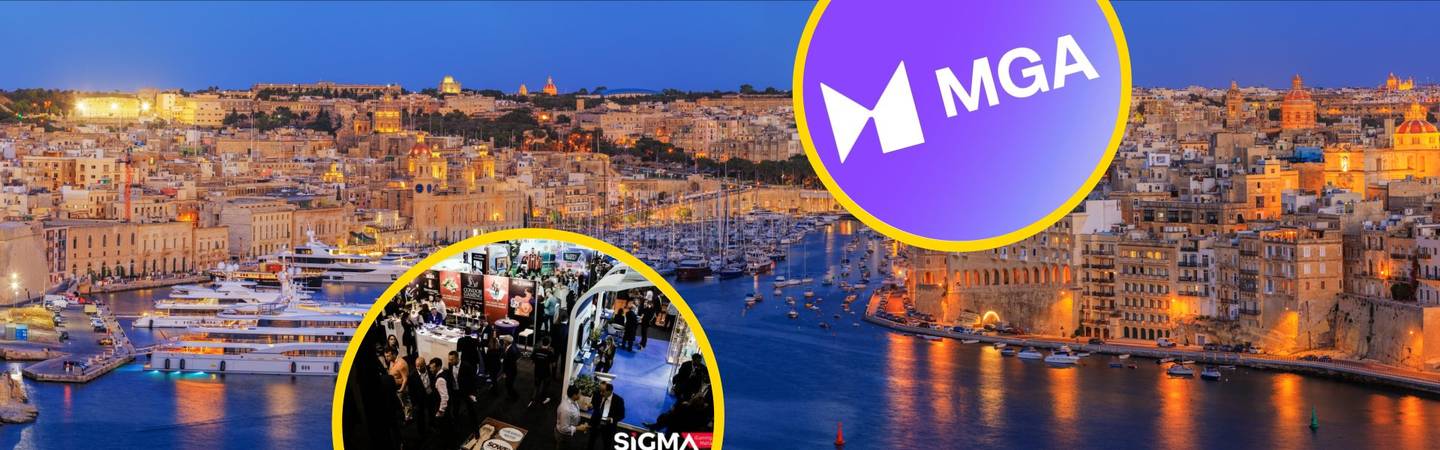
In 2004, the same year that Malta joined the European Union, the Maltese Parliament passed the Remote Gaming Regulations, a piece of legislation that, almost no one outside a small group of specialists noticed at the time, would change the global online gambling industry. The regulations made Malta the first EU member state to enact a comprehensive framework specifically for remote gambling. They created a licensing regime, an enforcement regime, and a tax regime aimed squarely at attracting international operators of online casinos and sportsbooks to relocate to a small island in the central Mediterranean.
Twenty-two years later, the bet has paid off. According to the Malta Gaming Authority's Annual Report for 2024, the gaming industry generated €1.386 billion in gross value added, directly accounting for 6.7% of Malta's entire national economy, and 10.1% when indirect economic spillover is included. Across direct and indirect employment, the industry supports around 14,357 jobs, nearly 5% of Malta's workforce. The Maltese government, in 2022, hailed iGaming as the country's second-largest export industry after tourism. Some of the biggest names in global online betting; Betsson, Tipico, LeoVegas, Kindred, Flutter, and many more have, at one time or another, held Maltese licences.
This is the story of how a country smaller than Greater London became one of the most important regulatory jurisdictions in the global online gambling industry, and of the regulatory pressures it now faces, with the European Commission, the OECD, and the Financial Action Task Force all, in different ways, reshaping the environment Malta originally bet on.
Why Malta? The Strategic Choice in the Early 2000s
To understand how a country of (then) around 400,000 people ended up at the centre of a global digital industry, you have to go back to the late 1990s and very early 2000s. Online gambling was new, controversial, and largely unregulated. Many of the early operators were based in offshore jurisdictions; the Caribbean, Gibraltar, the Isle of Man, the Channel Islands, with light-touch licensing regimes and little EU recognition. Mainstream credibility, banking relationships, and access to European customers were all difficult.
Malta's government made a strategic decision. In 2001, the Maltese Parliament passed the Lotteries and Other Games Act, which created the Lotteries and Gaming Authority, the body that would, over the next decade, become one of the first specialised gambling regulators in the world. In 2004, the year of Malta's accession to the EU, the government enacted the Remote Gaming Regulations, which set out a structured licensing framework specifically for online operators. A Maltese licence gave operators an authorisation issued within an EU Member State and a basis from which to argue cross-border service provision, although online gambling remained outside a fully harmonised EU passporting regime.
The package of incentives Malta offered to potential licensees was carefully designed:
-
An EU Member State base, on the basis that a Maltese licensee could, in principle, argue for cross-border service provision within the single market, although the actual EU position on online gambling has always been more complicated than this simple formulation suggests.
-
An attractive fiscal regime: a 5% gaming tax on revenue, combined with Malta's long-standing corporate tax system (35% headline rate with a refund mechanism that often reduces the effective rate substantially).
-
A regulatory body that adopted, in the early years particularly, a deliberately business-friendly and constructive stance towards operators.
-
An English-language legal system, a modern professional services sector (lawyers, auditors, banks, corporate-services firms), and a workforce that was, even in the early 2000s, highly literate in financial services compliance.
-
A Mediterranean lifestyle and modest cost of living that helped attract skilled international staff to relocate.
The combination worked. Operators that had previously been registered in Antigua or Curaçao began to redomicile to Malta. New entrants licensed directly from the start. By the late 2000s, a recognisable cluster of online gambling companies had taken shape, principally along the St Julian's–Sliema coast in the centre of the island. The Lotteries and Gaming Authority, renamed the Malta Gaming Authority in 2015, became, in the words of one industry analyst, 'a flagship authority within the gambling industry'.
From Remote Gaming Regulations to the Gaming Act 2018
The 2004 Remote Gaming Regulations were the foundation of the industry, but they were also the product of a moment when online gambling itself was poorly understood. By the mid-2010s the regulatory framework was showing its age. The original licence-class system, separate licence categories for casino, betting exchange, peer-to-peer, and controlled-skill games, had become rigid in a market where many operators offered all of those products through a single integrated platform. In 2017, the Malta Gaming Authority announced a comprehensive overhaul.
The result was the Gaming Act 2018 (Chapter 583 of the Laws of Malta), which came into force on the 1st of August 2018, replacing the original Remote Gaming Regulations. The new framework introduced:
-
A simplified two-licence structure: B2C licences for operators offering gambling services directly to players, and B2B licences for suppliers of gaming software, platforms, and other infrastructure to the licensed operators.
-
An emphasis on responsible-gambling and player-protection requirements.
-
An updated AML/CFT framework, particularly important in the run-up to and aftermath of Malta's FATF assessment.
-
An expanded regulatory tool-kit including administrative penalties, suspension and cancellation powers, and a structured supervisory regime built around risk-based assessment of operators.
The 2018 framework has held up reasonably well as the industry has grown, and Maltese gaming law is now widely regarded, as one of the more sophisticated and comprehensive regimes in the world.
The Scale of the Industry Today

The Malta Gaming Authority publishes detailed annual statistics on the industry, and its data is the gold-standard source for any account of the sector's scale. The headline figures from successive MGA Annual Reports show both the size of the industry and the way the picture has evolved:
Gross Value Added (direct contribution to GDP):
-
2022: €1.495 billion — 9.6% of the national economy
-
2023: approximately €1.34 billion — 7.0% of the national economy
-
2024: €1.386 billion — 6.7% of the national economy
Total Economic Contribution (including indirect effects):
-
2022: 12.4% of total GVA
-
2024: 10.1% of total GVA
Employment:
-
2022: 11,245 MGA-licensed-company employees (92.2% in online); 15,774 total industry employment (5.5% of total workforce)
-
2023: 10,519 MGA-licensed-company employees (91% online); 16,428 total industry employment (5.2%)
-
2024: approximately 14,357 total industry employment (~4.9%)
The apparent decline in the gaming industry's share of the Maltese economy, from 9.6% in 2022 to 6.7% in 2024, is mostly a denominator effect. The underlying gaming GVA has remained at around €1.3–1.5 billion across these years. What has changed is that the rest of the Maltese economy has grown faster, particularly in financial services and adjacent professional sectors. The Maltese National Statistics Office considers gaming (formally classified as NACE 92) and the closely-related programming and software sector (NACE 62) as effectively a single integrated cluster; together, those two sectors account for over 15% of total Maltese GVA. The gaming industry remains, by any measure, one of Malta's most important economic engines, even as the relative importance of adjacent sectors has grown around it.
Other key indicators from recent MGA reports:
-
In the first half of 2023, the MGA had 335 licensed companies holding a combined 345 gaming licences, with 329 game-type approvals under B2C licences and 208 under B2B.
-
The MGA collected €78.7 million in fees, levies and consumption tax in 2022; €41.2 million in H1 2023.
-
In 2023, only 15 new gaming licences were issued, down from 31 in 2022 and 46 in 2021, a sharp slowdown that reflects both market maturation and a more selective MGA approach to new applications.
-
In 2024, the MGA issued 35 warnings, 25 administrative penalties totalling €306,250, and three regulatory settlements totalling €61,522; two licences were suspended and eight were cancelled.
-
Land-based gaming is a small but real part of the regulated sector: four licensed casinos operate in Malta; Dragonara Casino, Portomaso Casino, Casino Malta, and Oracle Casino, with land-based casino visits in 2023 reaching 925,088, of which over 62% were foreign players.
The 2021–2022 FATF Greylisting: A Near-Miss and a Wake-Up Call
The most serious challenge to Malta's standing as an iGaming jurisdiction in the last decade came not from a competing jurisdiction or a regulatory rival, but from the international anti-money-laundering system itself.
On the 23rd of June 2021, the Financial Action Task Force (FATF), the Paris-based international standard-setter on anti-money laundering and counter-terrorist financing, added Malta to its 'list of jurisdictions under increased monitoring', more commonly known as the grey list. Malta became the first EU member state to be greylisted by the FATF, in what was widely reported as a shock both in Malta and in the wider EU.
The greylisting followed MONEYVAL/FATF scrutiny of Malta's AML/CFT effectiveness, including the 2019 mutual evaluation and subsequent follow-up process. The greylisting was not specifically about iGaming, it covered the whole financial system, but the iGaming sector, with its high transaction volumes and international exposure, was inevitably caught in the spotlight.
Malta's government, regulators and professional sector responded with concentrated effort over the following twelve months. Beneficial-ownership transparency rules were tightened. The Financial Intelligence Analysis Unit (FIAU) was substantially resourced. Tax-evasion enforcement was reformed. Money-laundering investigations and prosecutions, previously thin on the ground, increased substantially.
In June 2022, just twelve months after being added, Malta was removed from the FATF grey list following an on-site inspection in April and a vote at the FATF Berlin plenary. Malta was removed after roughly one year, a notably short period compared with many greylisting cases. The UK's parallel 'red list' removal followed shortly after, in July 2022.
The episode left a permanent mark on Maltese regulatory practice. The MFSA, the FIAU and the MGA all emerged as visibly more active enforcement bodies than they had been before 2021. Anti-money-laundering, customer due diligence and beneficial-ownership disclosure have, since 2022, been notably higher priorities across all of Malta's regulated industries — including iGaming.
The OECD's Global Minimum Tax: A Fundamental Shift
A second major external pressure on the Maltese iGaming model comes from the international tax system. The OECD's Pillar Two framework, agreed in principle by 140-plus jurisdictions in 2021, introduces a global minimum effective corporate tax rate of 15% for multinational groups with consolidated annual revenues above €750 million.
This matters enormously for Malta. The Maltese corporate tax regime, in its conventional form, allows for a substantial effective-rate reduction through the long-standing imputation and refund system: a headline 35% rate, but with shareholder refunds that, for many distributing structures, reduce the effective tax burden very significantly. For decades, this regime has been one of the principal commercial attractions of a Maltese corporate structure for international groups, including in the gaming sector.
Under Pillar Two, that effective rate, for large groups within scope, cannot fall below 15%. Maltese groups that previously enjoyed materially lower effective tax outcomes will, once Pillar Two is fully effective for them, face a higher floor.
Malta, however, negotiated a six-year transitional delay under the EU's implementing directive. Malta has made use of the EU directive's deferral option, giving it a transitional runway before full domestic application of the main Pillar Two charging rules. This gives the Maltese government and its iGaming industry a meaningful runway to adjust, to reform the corporate tax regime, to find new incentives, and to allow operators time to plan. Finance Minister Clyde Caruana had publicly committed to overhauling Malta's corporate tax landscape, with the iGaming sector specifically in mind.
The Pillar Two transition will not, by itself, drive iGaming companies out of Malta, the global minimum tax applies everywhere, so there is no 'tax-cheaper' jurisdiction to flee to. But it does erode one of Malta's longstanding competitive advantages, and it forces the industry and the government to make Malta's case on the basis of regulatory quality, ecosystem, talent, and certainty rather than primarily on tax.
Bill 55 / Article 56A

The most distinctive development in Maltese iGaming regulation in recent years is Bill 55, a Parliamentary amendment to the Gaming Act passed by the Maltese Parliament in June 2023 and codified as Article 56A of the Gaming Act.
To understand Bill 55, you have to understand the legal problem it was designed to address. Online gambling occupies a contested place in EU law. Under the principle of freedom to provide services across the single market, an operator licensed in one member state has, in principle, the right to offer services in others. But the Court of Justice of the European Union has also held that gambling regulation falls within an area of considerable national discretion: member states are entitled to restrict the provision of cross-border gambling services on grounds of consumer protection and public policy. In practice this has meant that several EU member states, most prominently Germany and Austria, maintain that operators offering services to their residents must hold a local licence, regardless of any other EU licence the operator may also hold.
Over the past decade, a series of cases in German and Austrian courts have produced judgments ordering Maltese-licensed operators to refund player losses suffered by German and Austrian residents who had played on Maltese-licensed sites without a corresponding German or Austrian local licence. In some cases the amounts have been substantial: an Austrian court ordered the Evoke-owned Mr Green operator to refund a player €62,878; another Austrian court ordered Betway to refund a player more than €83,000.
Bill 55 was the Maltese Parliament's response. Article 56A provides that Maltese courts are to refuse recognition or enforcement of certain foreign judgments where recognition or enforcement would conflict with Malta's public policy in relation to lawful Maltese-licensed gaming activity. The legal basis it invokes is the public policy exception in the Brussels I Recast Regulation, the EU instrument that otherwise requires automatic mutual recognition of judgments across member states. Malta's argument, in essence, is that enforcing foreign judgments that penalise activities lawful under Maltese law would conflict with Maltese public policy, and that the public-policy exception in Brussels I Recast permits Maltese courts to decline enforcement on those grounds.
The European Commission disagrees. In 2025, the Commission opened formal infringement proceedings against Malta over Bill 55, alleging that the law undermines the system of mutual recognition that underpins EU civil-justice cooperation, and effectively shields MGA-licensed firms from liabilities elsewhere in the EU. Related cases and opinions are now moving through the Court of Justice of the European Union. In one prominent recent opinion, the Advocate General of the CJEU was critical of Malta's position, observing that 'the fact that the enforcement of certain judgments may entail serious economic consequences for a national operator, an industry or even the Member State addressed does not justify recourse to the "public policy" clause'.
Maltese courts, for their part, have continued to apply the reasoning underpinning Bill 55. On the same day as a CJEU judgment in the relevant area (the Wunner case), the Maltese civil court rejected the Austrian order requiring Betway to repay the €83,000+ to the Austrian player, finding that recognising the judgment would violate Maltese public policy by penalising conduct that is lawful under Maltese law and permitted under EU internal-market rules.
This is, as of the time of writing, an unresolved legal contest. The MGA maintains that Bill 55 simply enshrines the long-standing Maltese public policy on gaming and is compatible with the public-policy exception built into the Brussels I Recast Regulation itself. The European Commission and a number of EU member states maintain the opposite. The CJEU will, in time, have the final say. For Maltese-licensed operators, the practical implications are significant: as long as Bill 55 stands, MGA licensees enjoy a substantial protection against foreign enforcement actions; if it falls, the position changes materially, and historical liabilities to players in jurisdictions where the operator was not locally licensed could become enforceable.
Whatever the eventual legal outcome, Bill 55 is the single most important regulatory question facing the Maltese iGaming industry in the mid-2020s. It is a question the industry, the Maltese government, the Commission, and the CJEU will all have to work through together over the coming years.
Beyond the Regulator: The Wider Maltese iGaming Ecosystem

The MGA is the headline institution, but the Maltese iGaming industry is much more than its regulator. Over twenty-two years, a substantial professional and physical ecosystem has grown up around the licensed operators:
-
Professional services. Maltese law firms, audit firms, tax advisers and corporate-services providers, many of them now specialising specifically in gaming, form a professional layer that supports the licensed industry. The Big Four accounting firms all have substantial Maltese gaming practices, as do the major Maltese-headquartered law firms and a substantial population of mid-sized corporate-services providers.
-
Conferences and trade infrastructure. Malta hosts some of the largest iGaming trade conferences in the world, held annually in Malta and drawing tens of thousands of industry attendees. The conferences, and the network of smaller events around it, has made Malta a central convening point for the global online-gambling industry.
-
Property and lifestyle. The growth of the industry has reshaped substantial parts of central Malta. Office blocks in St Julian's, Sliema, Gzira, etc. house the headquarters of major operators. The residential property market in these areas has been profoundly shaped by the in-migration of skilled iGaming staff over two decades.
-
Education and skills. The University of Malta and other tertiary institutions now offer dedicated gaming-related qualifications, and the Maltese Government has, particularly in recent years, made deliberate efforts to develop a domestic talent pipeline for the sector.
This ecosystem is, in many ways, what makes Malta's gaming jurisdiction sticky. It is one thing for a competing jurisdiction to offer a slightly more favourable tax rate or a lighter regulatory touch. It is another to replicate two decades of accumulated specialist legal, accounting, banking, technology and human expertise concentrated in one small island. That ecosystem is, in some ways, more important than the licence itself.

About Matthew Gollcher
Hi, I'm Matthew, an SEO Specialist and Content Writer at Yellow Pages Malta. I'm passionate about creating meaningful content and exploring AI's creative possibilities. When I'm not working, I enjoy the gym, time with friends, watching series and reading, and playing guitar. I'm always eager to learn and grow both personally and professionally.