Buying a Home in Malta in 2026: Everyone You'll Need and What to Expect


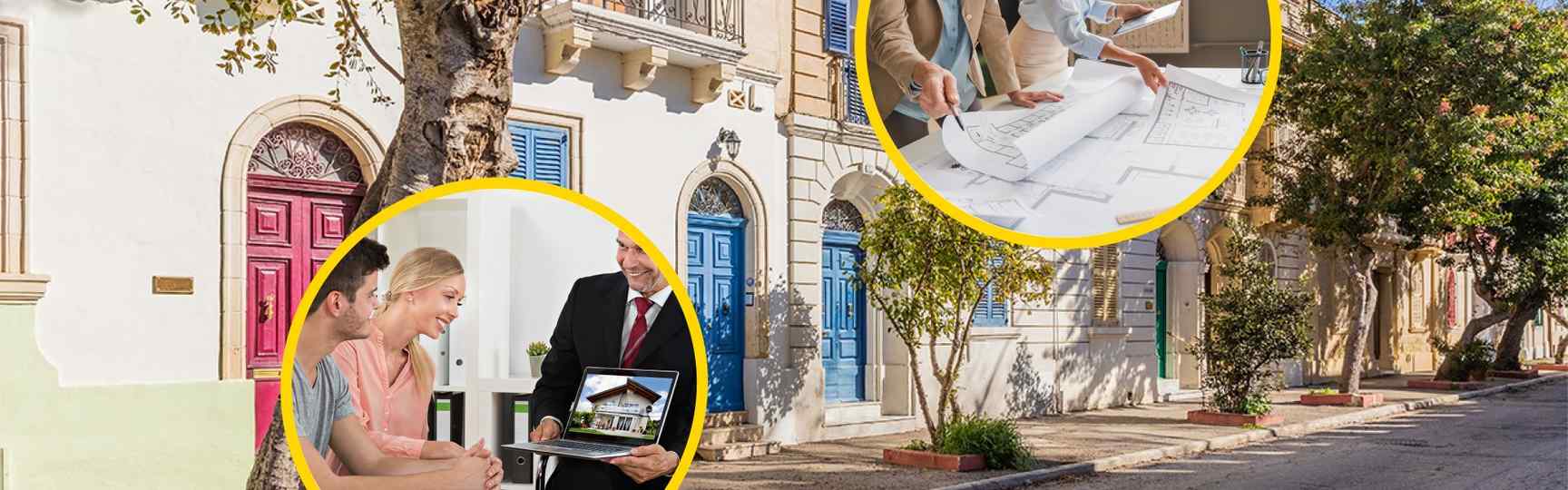
Buying a home is one of the biggest decisions most people will ever make. In Malta, the process involves a number of professionals, legal steps and practical considerations that go well beyond finding the right property and agreeing on a price. Whether you are a first-time buyer or upgrading to a larger home, knowing who you will need along the way and roughly what everything costs makes the whole process far less daunting.
Here is a complete guide to buying a home in Malta in 2026, from the legal professionals who will handle your purchase to the tradespeople who will help you turn it into the home you actually want.
The Malta Property Market in 2026

In 2026, the average asking price for an apartment sits at around €415,000, though entry-level one-bedroom apartments in areas like Gozo or the south of Malta can be found from €180,000 to €230,000. Prices in premium coastal areas such as Sliema and St Julian's can reach €4,500 to €6,500 per square metre. Year-on-year, prices have grown by an estimated 4–7%, driven by limited land supply, continued demand from both locals and foreign residents, and a strong economy growing at around 4% annually.
For buyers, the important thing to remember is that the purchase price is not the only figure that matters. On top of whatever you pay for the property itself, you should budget an additional 7–10% for taxes and fees before any renovation work is considered.
The Estate Agent

Most property searches in Malta begin with an estate agent. Since 2021, all agents operating in Malta must be qualified, licensed and registered, which offers buyers a greater degree of protection. A good agent will guide you through viewings, help you negotiate the asking price, and introduce you to the other professionals you will need. Estate agency fees in Malta are typically around 1% of the sale price plus 18% VAT, and are generally paid by the seller, though this can vary.
It is worth taking your time here. A reliable agent who knows their area well can save you considerable time and help you avoid properties with underlying issues.
The Notary
The notary is the central legal figure in any property purchase in Malta, and their involvement is a legal requirement. Once you have agreed a price with the seller, your notary will prepare and oversee the Promise of Sale, known locally as the Konvenju. This agreement legally binds both parties to the transaction and specifies the completion date. At this stage, a deposit of 10% of the agreed purchase price is typically paid.
During the Konvenju period, which usually lasts three to six months, the notary carries out detailed searches on the property to confirm legal title, check for any outstanding debts or hypothecs, and verify there are no planning irregularities. Once everything is in order, the Final Deed is signed and the property legally changes hands.
Notary fees in Malta are regulated and typically range from 1% to 2.5% of the property value, paid in two stages: approximately one third on signing the Konvenju and the remainder on the Final Deed. The notary also handles stamp duty on your behalf, which is charged at 5% of the property value. First-time buyers benefit from an exemption on the first €200,000 of the purchase price, a saving of up to €7,000.
The Architect or Surveyor

Before signing the Konvenju, it is well worth commissioning a structural survey of the property. In Malta, this is typically carried out by a qualified architect rather than a dedicated surveyor as in some other countries. They will assess the structural condition of the building, check for damp, cracks, waterproofing issues and any signs of work that may have been carried out without the proper permits.
An architect's inspection report typically costs a few hundred euros, and can be invaluable. If the survey flags significant issues, you may be able to renegotiate the price or ask the vendor to address the problems before completion. Skipping this step to save money can be a costly mistake later.
If you are planning a new build or substantial construction work rather than a straightforward purchase, your architect's role becomes even more central. See the construction section below for more on this.
The Bank

If you are not a cash buyer, your first step before even starting your property search should be to approach a bank and understand how much you can borrow. Mortgage rates in 2026 remain relatively affordable at around 2.25–3.6% pa, which has helped sustain demand despite rising property prices.
Banks in Malta will typically lend up to 80–90% of the property value for Maltese residents, and around 60–70% for non-residents, meaning you should have a clear picture of your deposit before committing to a search. Banks also require life insurance to cover the value of the loan, which adds to the overall cost of purchase. Shopping around and using a mortgage broker can make a meaningful difference to the rate and conditions you secure.
Construction Companies

For many people buying property in Malta, engaging a construction company is not optional; it is essential. Whether you are buying a plot to build on from scratch, purchasing a shell property, adding an extension, converting a garage, underpinning foundations or carrying out structural alterations, you will need a qualified construction company to carry out the work safely, correctly and in compliance with Maltese regulations.
Malta has a well-established and active construction sector. Construction companies here typically offer a broad range of services covering groundwork and excavation, concrete and block work, structural steel, roofing, waterproofing, internal partitioning, stonework and restoration, scaffolding and formwork. Many also handle site clearance, demolition and the management of sub-contractors across multiple trades.
If you are embarking on a new build or a major structural project, the process in Malta begins with your architect, who will design the project and submit a planning application to the Planning Authority, commonly known as the PA. Planning permission is required for most forms of significant construction work, and applications are assessed against Malta's development planning policies. The process can take anywhere from a few months for straightforward applications to considerably longer for larger or more complex projects. Your architect will guide you through this, but it is important to factor permit timelines into your overall project schedule before committing to a construction start date.
Once permits are in place, your construction company takes over on site. On larger projects, a project manager or site foreman will coordinate the programme, oversee quality, manage deliveries and ensure that the various trades work in the right sequence. Good project management is one of the most valuable things a construction company brings to a job of any size.
Construction costs in Malta vary considerably depending on the scope and specification of the work. A basic shell finish for a new apartment; structural walls, slab, roof, windows and external door might cost between €600 and €900 per square metre. A fully finished build to a good standard typically runs from €1,200 to €1,800 per square metre or more, depending on the quality of materials and finishes selected. Structural alterations to an existing property, such as opening up walls, adding a storey or extending outward, are priced per project and should always include a contingency for what is found once work begins.
When choosing a construction company, always verify that they are properly registered, ask to see examples of completed projects similar to yours, and check references from previous clients. Get a detailed written quotation that specifies the scope of work, materials, programme and payment schedule before any work begins.
Plumbers
Plumbing is almost always one of the first trades required once structural work is complete. In Malta, plumbing work typically covers water supply pipes, drainage systems, boilers, water heaters, bathroom fitting and kitchen plumbing. Older properties in particular may have outdated pipework that needs replacing entirely.
A straightforward bathroom installation might run from €2,000 to €5,000 depending on the fittings chosen, while a full replumb of an older home can cost significantly more. As with all trades, getting quotes from multiple plumbers and checking reviews is recommended.
Electricians
Electrical work is non-negotiable in any renovation or new build and must comply with Maltese regulations. Older properties in Malta often have wiring that is outdated and does not meet current safety standards, so rewiring can be a significant but essential cost. Electrical work typically includes consumer unit replacement, rewiring, socket and switch installation, lighting circuits and, increasingly, solar panel connections.
A full rewire of a typical Maltese apartment might cost anywhere from €3,000 to €8,000 depending on the size and complexity of the job. Always ensure your electrician is qualified and that all work is properly certified. Unregistered electrical work can cause problems when you come to sell or rent the property and poses a safety risk in the meantime.
Skip Hire and Waste Removal
Any construction or renovation project generates waste, and in Malta, skip hire is the most practical way to manage it. Whether you are clearing rubble after demolition, removing old plumbing and wiring, or disposing of mixed construction debris, having the right skip on site keeps your project clean, safe and compliant with local waste disposal regulations. Skip hire prices in Malta vary by size and type of waste.
Interior Finishers, Tilers and Painters

Once the structural, electrical and plumbing work is complete, the finishing trades bring everything together. Tilers, plasterers, painters and carpenters are all typically involved at this stage, and the quality of their work is what you will see and live with every day. This is not the place to cut corners.
Bespoke carpentry for fitted kitchens or wardrobes is priced per project and can vary widely. As with all trades, referrals and reviews are your most reliable guide to finding quality workmanship.
A Quick Guide to the Key Costs
To help you plan, here is a summary of the main costs to budget for when buying and building or renovating a home in Malta in 2026. Stamp duty is 5% of the property value, with first-time buyers exempt on the first €200,000. Notary fees typically run from 1% to 2.5% of the purchase price. An architect's inspection report costs around several hundred euros. A shell-finish new build typically costs €600–€900 per square metre. A fully finished new build runs from €1,200 to €1,800 per square metre or more. Light renovation work ranges from €5,000 to €15,000. A medium-scale renovation will typically cost €30,000 to €70,000. A full rewire generally runs €3,000 to €8,000. A bathroom installation falls in the €2,000 to €5,000 range. In total, buyers should budget an extra 7–10% on top of the purchase price for taxes and fees alone, and considerably more if construction or renovation work is required.
Finding the Right Professionals
Buying a home in Malta involves a team of people, each with a distinct and important role. The legal professionals handle the transaction and protect your interests. The construction company and tradespeople build or transform the property into the home you want. Finding reliable, qualified professionals at every step is as important as finding the right property in the first place.
Disclaimer: The price ranges and costs listed in this article are very rough estimates based on the current Maltese market in the first quarter of 2026. They will vary greatly based on various factors such as choice of professionals, property location, size, and work required, as well as various other factors.

About Matthew Gollcher
Hi, I'm Matthew, an SEO Specialist and Content Writer at Yellow Pages Malta. I'm passionate about creating meaningful content and exploring AI's creative possibilities. When I'm not working, I enjoy the gym, time with friends, watching series and reading, and playing guitar. I'm always eager to learn and grow both personally and professionally.