The Man Who May Have Invented Bitcoin ... Lives in Malta


The Man Who May Have Invented Bitcoin... Lives in Malta
On the 8th of April 2026, the New York Times published a year-long investigation that drew global attention to one of the most enduring mysteries in technology. Its conclusion: that the most likely candidate for Satoshi Nakamoto, the pseudonymous creator of Bitcoin, whose true identity has never been established, is a British cryptographer named Dr Adam Back, who is publicly listed as based in Sliema, Malta.
Back has flatly denied it. He has denied it before, and he denied it again within hours of the article going live. But the investigation, by Pulitzer Prize-winning journalist John Carreyrou, who became famous for exposing the Theranos fraud while at the Wall Street Journal, is one of the most detailed attempts yet to unmask the person behind one of the most consequential technological inventions of the 21st century.
Whether or not Adam Back is Satoshi Nakamoto, the story has placed Malta at the centre of a global conversation. Here is everything you need to know.
Who is Adam Back?

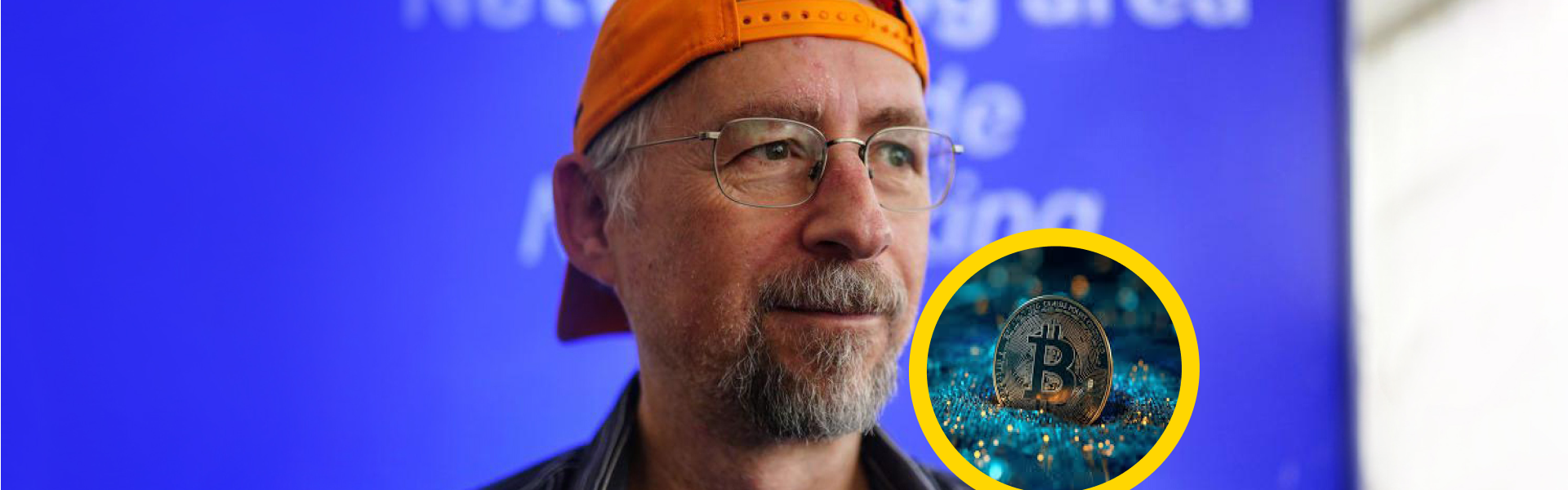
Caption: Dr Adam Back is a British cryptographer, co-founder and CEO of Blockstream, and inventor of Hashcash, the proof-of-work system directly cited in Satoshi Nakamoto's 2008 Bitcoin white paper. He is publicly listed on LinkedIn as based in Sliema, Malta.
Adam Back was born in London in July 1970. He has a PhD in computer science, with a focus on distributed systems, from the University of Exeter. He is a long-standing member of the cypherpunk movement, a loose community of cryptographers, privacy advocates and computer scientists who, from the early 1990s onwards, were working on ideas for digital cash and financial privacy that would eventually inform Bitcoin's design.
In 1997, Back invented Hashcash: a proof-of-work system originally designed to combat email spam by forcing senders to solve a small computational puzzle before an email could be sent. For a normal user sending one email, the computational cost was trivial. For a spammer sending millions, it became prohibitive. The underlying principle, that computational effort could serve as a verifiable, unforgeable cost, was directly adopted by Bitcoin's mining mechanism. When Satoshi Nakamoto published the Bitcoin white paper in October 2008, Hashcash was one of a small number of prior works explicitly cited by name.
Back has been publicly linked to Malta for a number of years. He is listed on LinkedIn as based in Sliema and has long been known within the Bitcoin community as Malta-based. He co-founded Blockstream in 2014, a major Bitcoin infrastructure company that employs a significant number of Bitcoin Core developers and has raised over a billion dollars in funding. He is today one of the most prominent and well-respected figures in the global Bitcoin community.
Who is Satoshi Nakamoto?

Satoshi Nakamoto is the name used by the person, or possibly group of people, who created Bitcoin. In October 2008, a white paper titled "Bitcoin: A Peer-to-Peer Electronic Cash System" was published under that name, laying out the technical design of a decentralised digital currency. In January 2009, the Bitcoin network went live. Satoshi remained active in early Bitcoin forums and email correspondence until April 2011, when he effectively vanished.
Satoshi's identity has never been established. The wallets attributed to him are estimated to contain approximately 1.1 million Bitcoin, worth around $79 billion at the time of the New York Times investigation, though Bitcoin's price moves constantly and this figure will have shifted since publication. Those coins have never moved. Satoshi has not been heard from in any verifiable way since 2011.
Over the years, several people have been named as candidates. In 2014, Newsweek wrongly identified a retired Japanese-American man named Dorian Nakamoto. A 2024 HBO documentary titled Money Electric: The Bitcoin Mystery pointed to Canadian software developer Peter Todd, who was 23 when the white paper was published, before that claim was widely rejected. Australian computer scientist Craig Wright spent years claiming to be Satoshi, a claim that was definitively rejected by a UK High Court judge in 2024, who found that Wright had forged documents on a grand scale and used the courts as a vehicle for fraud.
What Does the New York Times Investigation Actually Say?

The investigation, written by John Carreyrou and published on the 8th of April 2026, makes its case through several layers of evidence.
The central argument is stylometric: Carreyrou, working with AI expert Dylan Freedman and computational linguist Florian Cafiero, analysed a database of more than 134,000 archived posts from cypherpunk and cryptography mailing lists spanning the 1990s and 2000s. They compared the writing of hundreds of subscribers against all known Satoshi correspondence. Back was identified as the closest match in each of three independent analyses. Shared characteristics include consistent double-spacing after sentences, the use of British spellings, a specific hyphenation of "proof-of-work", and 67 shared hyphenation errors — nearly double those of the next closest candidate.
Beyond style, the investigation highlights technical lineage. Back's Hashcash is not merely cited in the Bitcoin white paper, it is the direct ancestor of Bitcoin's mining mechanism. The investigation argues that the conceptual leap from Hashcash to Bitcoin's architecture was not a jump for an outsider, but a logical next step for the person who built Hashcash in the first place.
The investigation also notes a conspicuous gap in Back's online activity: he was a prolific contributor to cypherpunk discussions about digital cash for years, then went quiet during precisely the period when Satoshi was active and made his first public comment about Bitcoin six weeks after Satoshi's final post in April 2011.
Carreyrou conducted a direct interview with Back in El Salvador, during which he found Back's demeanour suspicious. He also notes that Back declined to release email metadata that might have clarified the timeline of his early correspondence with Satoshi.
What are the Weaknesses of the Case?
The investigation is careful to acknowledge that it does not constitute proof. The only thing that would definitively settle the question would be a cryptographic signature using the private keys associated with Satoshi's original Bitcoin wallets, or a signed message verifiable against the genesis-era addresses. Nothing in the New York Times article provides that.
The stylometric analysis, while sophisticated, was described by Cafiero himself as inconclusive. He noted that Hal Finney, the late American cryptographer who was the first person to receive a Bitcoin transaction from Satoshi in January 2009, was nearly tied with Back for the top match. Finney died in 2014.
Critics in the Bitcoin community were blunt. Prominent Bitcoin developer Jameson Lopp said the investigation was painting an unnecessary target on Back with weak evidence. Alex Thorn of Galaxy Digital was similarly dismissive. Fortune magazine noted that the investigation's own logic could equally apply to Nick Szabo, the American cryptographer behind the pre-Bitcoin concept Bit Gold, who has long been considered a strong Satoshi candidate and has consistently denied it.
One particular objection stands out. Back and Satoshi corresponded by email in August 2008, before the white paper was published. Those emails were released into UK court records during the Craig Wright trial in 2024. In them, Back and Satoshi communicate as two distinct people. Carreyrou's explanation, that Back wrote those emails to himself as a deliberate cover story, is, as he acknowledges, speculation with no direct evidence to support it.
What has Adam Back said?
Back has denied it clearly, directly and repeatedly. In a post on X published on the 8th of April, he wrote: "I'm not Satoshi, but I was early in laser focus on the positive societal implications of cryptography, online privacy and electronic cash, hence my 1992 onwards active interest in applied research on ecash, privacy tech on cypherpunks list which led to hashcash and other ideas."
In the New York Times article itself, he told Carreyrou directly: "Ultimately, it doesn't prove anything. And I will reassure you, it's really not me." Blockstream also issued a formal statement: "Today's New York Times story is built on circumstantial interpretation of select details and speculation, not definitive cryptographic proof. Dr Adam Back has consistently stated that he is not Satoshi Nakamoto."
Back has been denying being Satoshi for years. He denied it in 2020 when a YouTube channel first made the claim. He denied it during the 2024 HBO documentary. He testified as a witness against Craig Wright in the UK court trial in February 2024, in which Wright's Satoshi claim was subsequently rejected. None of that proves he is not Satoshi, but it is consistent with a man who genuinely is not.
Why Does Any of this Matter for Malta?

The most immediate answer is that it is a remarkable story with a Maltese address at its heart. One of the most consequential figures in Bitcoin's history; a man whose 1997 invention of Hashcash provided a direct technical building block for the protocol, and who was among the very first people Satoshi Nakamoto contacted before Bitcoin launched, is publicly linked to Sliema.
Beyond that, Malta's connection to Bitcoin and the broader digital asset world is not incidental. The island was one of the first jurisdictions in the world to pass comprehensive blockchain legislation, doing so in 2018. That regulatory clarity has attracted global crypto businesses and talent, and Blockchain.com announced the opening of a new Malta office to anchor its European operations in March 2026, the latest example of that ongoing relationship. Back's presence here is part of a broader pattern.
Whether or not the mystery is ever definitively solved, the fact that one of the most prominent current Satoshi suspects is publicly associated with Malta is, at minimum, an extraordinary footnote to one of the most significant technological stories of our time.
The Mystery Remains Unsolved
After 17 years, the identity of Satoshi Nakamoto remains unknown. The New York Times investigation is one of the most rigorous attempts yet to answer the question, and Adam Back is among the most compelling suspects identified to date. But the crypto community is correct on one point: without a cryptographic signature from Satoshi's original wallets, nothing is proven.
For now, Adam Back is a British cryptographer who invented a foundational piece of Bitcoin's architecture, was one of the first people Satoshi contacted, and is publicly linked to Sliema. He says that is all he is. The investigation says otherwise. The truth, for the moment, remains locked, perhaps in a set of private cryptographic keys that have not moved in 15 years.

About Matthew Gollcher
Hi, I'm Matthew, an SEO Specialist and Content Writer at Yellow Pages Malta. I'm passionate about creating meaningful content and exploring AI's creative possibilities. When I'm not working, I enjoy the gym, time with friends, watching series and reading, and playing guitar. I'm always eager to learn and grow both personally and professionally.