The Stories Behind Malta's More Obscure Surnames


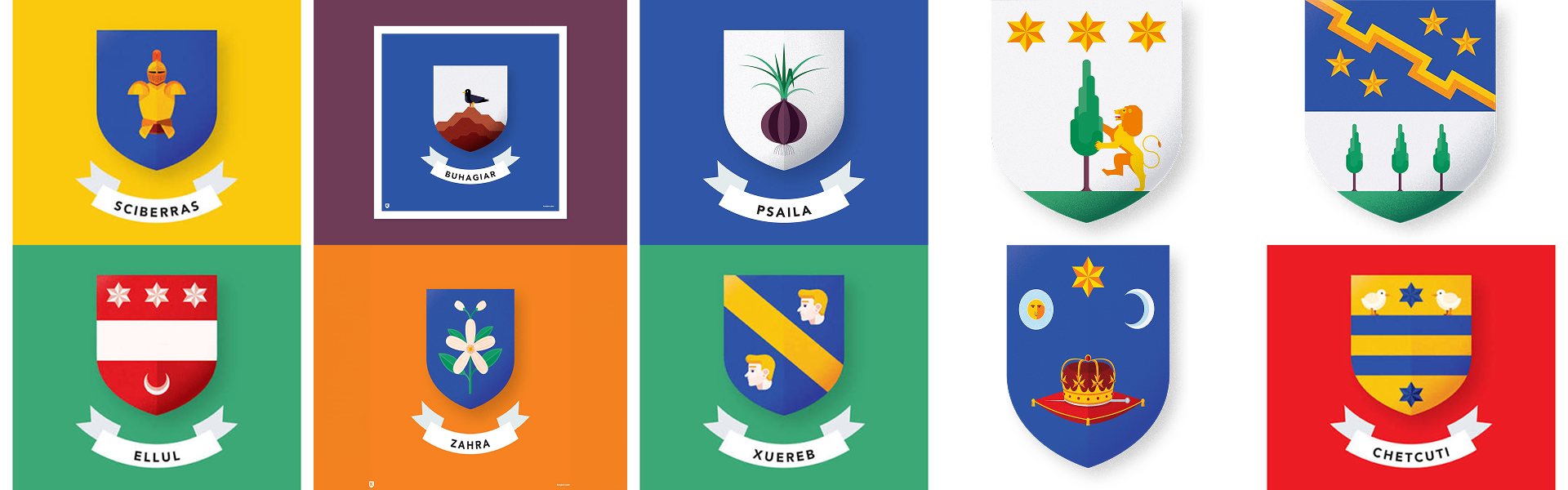
Over three previous articles, we have worked our way through the thirty most common surnames in Malta, from Borg, Camilleri and Vella at the very top, down through Sammut, Gatt, Portelli and Calleja. Between them, those names are shared by a huge proportion of the Maltese population.
You can view our previous compilation of surnames here:
You can find the next 10 most common surnames here:
You can find the following next 10 most common surnames here:
But some of the most fascinating Maltese surnames are not the common ones at all. They are the rarer, more unusual names, the ones you meet only now and then, whose meanings, once you uncover them, are absolutely unforgettable. A man with a moustache. A father of rocks. A young chicken. A grey head. An onion. A crescent moon. And a name meaning 'plucked' that one of Malta's greatest scholars traced back, through Norman Sicily, a thousand years.
As always, we rely on the foundational works of Maltese onomastics: Mario Cassar's The Surnames of the Maltese Islands (2003) and his academic papers; Godfrey Wettinger's studies of the Militia List of 1419/20; the etymological work of Professor Joseph Aquilina; Geoffrey Hull's research on late-medieval Maltese surnames; and the Dictionary of American Family Names (Oxford University Press). Where folk etymology and scholarship disagree, we go with the scholarship. Here are ten of Malta's more obscure surnames, and where they really come from.
1. Xuereb: 'The Man With the Moustache'

Xuereb is one of the great examples of the vivid, physical nicknames buried in Maltese surnames. According to both Mario Cassar and Geoffrey Hull, it derives from the Arabic abū šawārib, meaning 'a man with a moustache' šārib being the Arabic word for 'moustache' (and šawārib its plural). It is what scholars call a kunyah surname, an Arabic naming formation using abū ('father of' or 'man of').
This is one of a whole set of Maltese surnames that began as blunt, affectionate or teasing descriptions of a person's appearance or character. The same medieval Sicilian world gives us a parallel: a man recorded around 1183 as Bū al-Šawārib, 'the one with the moustache'. Remarkably, the same underlying idea surfaces at the other end of the Mediterranean in the Spanish surnames Suárez and Juárez and the Portuguese Soares. Malta simply kept the Arabic form. Interestingly, scholars note that Xuereb could have been translated into the Italian Mustacchio, which means exactly the same thing but the Maltese kept their own version, and the moustache lives on, in Semitic form, to this day.
2. Buhagiar: 'The Father of Rocks'

Buhagiar is a wonderfully Maltese-sounding surname, and its meaning is as solid as the islands themselves. It comes from the Arabic 'Abūhag̥ar, from abū, 'father' or 'holder', and ħaģar, meaning 'stones' or 'rocks' (the same word survives in modern Maltese as ħaġar, stone). Literally, then, Buhagiar means something like 'father of rocks'.
Mario Cassar suggests that if the abū element here carries the sense of 'holder' or 'possessor', the surname might originally have denoted a prosperous landlord, or the proprietor of a stone quarry, which, on an island built entirely of its own honey-coloured limestone, would have been a substantial and respectable trade indeed. It is one of the surnames listed by scholars as a clearly Semitic name that survived in Latinised form after the medieval period. There could hardly be a more appropriate surname for a people whose entire built heritage; temples, cities, churches and homes is quarried from the living rock.
3. Chetcuti: 'The Young Chicken'

Chetcuti is one of several Maltese surnames drawn from the farmyard and a reminder that our ancestors were not sentimental about where names came from. It derives from the Arabic katkūt, meaning 'a young chicken' or 'newborn chick'. As a nickname it might have described a small or young person, or someone in the poultry trade, or simply been an affectionate label that stuck and became hereditary.
Chetcuti sits within a curious little cluster of Maltese 'poultry' surnames. The far more common Farrugia comes from the Arabic farrūģ, 'chicken' or 'cockerel'; Buttigieg (from bu t-tiġieġ) means 'father of chickens', a poulterer. And there is a lovely scholarly detail here: the Italian-origin Maltese surname Pullicino (from the Italian for 'little chicken') may actually be a straight translation, a calque, of Chetcuti, an attempt to render the old Arabic nickname into respectable Italian. The chicken, it seems, was determined to survive in Maltese naming one way or another.
4. Sciberras: 'The Grey Head'

Anyone who has spent time in Malta knows the Sciberras name, it is even attached to the peninsula on which Valletta was built, Mount Sciberras. Yet its meaning is rarely known. According to Mario Cassar, Sciberras derives from the Arabic xahāb er-rās (or šahāb ar-ra's), literally 'the ash-colour of the head', in other words, a nickname for a grey-haired or grizzled man.
It is a beautifully precise little portrait: some distant ancestor, distinctive enough for his silver-grey head of hair to become the name by which his whole line would be known for the next seven or eight centuries. The name is written using Maltese spelling conventions (the sci- representing the sound written x in modern Maltese), and it is one more entry in the rich catalogue of Maltese surnames that are, in effect, tiny physical descriptions of medieval people; the moustache of Xuereb, the grey head of Sciberras, the bald head recorded in the old surname Fartas, and so on.
5. Psaila: 'The Onion' (Most Likely)

Psaila is one of those surnames whose most likely meaning makes people laugh out loud when they first hear it. The most straightforward derivation, given in the Dictionary of American Family Names, is from the Maltese word basla, meaning 'onion' (itself from the Arabic baṣal). As a nickname, it might have attached to an onion-grower, an onion-seller, or who knows someone whose temperament or appearance somehow suggested the vegetable.
In fairness, the scholarship here is not unanimous, and Psaila is genuinely debated. Mario Cassar considers it probably Siculo-Arabic, and offers alternative derivations: from an Arabic 'Abū Sala (connected to old Sicilian place-names), or from Abū Sayāl, whose second element may relate to a word for 'a milky thorn-plant' or for 'flowing water', a 'mountain current'. There is even a medieval Maltese figure, one Arnaten Pousalè, who signed his name in Greek script and whose surname may be linked to today's Psaila. The onion is the crowd-pleasing theory; the truth may be a little waterier. But 'the onion' has the better claim to the modern name, and it is hard not to love it.
6. Sultana: 'The Wife of a Sultan'

Here is a surname that sounds grand and, delightfully, was probably meant to be taken down a peg. Sultana comes from the Arabic sulṭāna, 'the wife of a sultan', the feminine of sulṭān. But as a Maltese and Sicilian surname it was, according to the Dictionary of American Family Names, most likely applied as a nickname for someone who behaved in an 'outlandish or autocratic manner'. In other words, somebody who carried on as though they were royalty.
One can picture the original bearer perfectly: some imperious neighbour, centuries ago, who put on such airs that the whole village started calling them 'the Sultana' and the joke, as jokes so often do in the world of surnames, outlived everyone who was in on it and became a respectable family name. It is a reminder that a great many surnames began not as compliments but as the gentle mockery of a small community.
7. Ellul: 'The Madman' or 'The Crescent Moon'

Ellul is a distinctively Maltese surname with two competing derivations, one alarming and one rather beautiful. The Dictionary of American Family Names records it as 'probably a nickname from Arabic ahlūl "madman, lunatic" or, more romantically, 'perhaps from hilāl "crescent moon"'.
It is a striking pair of possibilities: your Ellul ancestor was either the village eccentric, or was named for the delicate crescent of the new moon the same crescent that features across the Islamic world. (There is also a Hebrew month named Elul, and some have wondered about a connection there, given Malta's medieval Jewish community, though the Arabic derivations are the ones the dictionaries favour.) Whichever is correct, Ellul is a good example of how the meaning of even a well-known Maltese surname can hang, unresolved, between two very different stories and how honest scholarship leaves the question open rather than inventing a tidy answer.
8. Mintoff: 'The Plucked One', Traced Across a Thousand Years

Of all the surnames in this article, none has a more extraordinary documented history than Mintoff a name known worldwide because of Malta's formidable Labour prime minister, Dom Mintoff (1916–2012).
The great historian Godfrey Wettinger made a special study of this surname, and what he found is remarkable. The name's original and proper form was Mintuf, and it comes from a word meaning 'plucked' as in plucked hair or feathers. (As Wettinger drily observed, a person can hardly be plucked except metaphorically, so this too began as some now-lost nickname.) He traced the Maltese Mintuf family to a small area of Gozo, in the neighbourhood of Għasri, between Għarb and Żebbuġ, where it was firmly established by the late fifteenth century.
But the trail runs further back still. The same name is recorded in Norman Sicily, in Arabic and Greek transliteration, as Iben el-Mentouf borne by a serf on the estate of the great monastery of Monreale. And Wettinger argued that the surname's ultimate roots reach back, astonishingly, towards the medieval Arab East. It is one of the most powerful illustrations we have of the sheer time-depth of the Maltese surname pool: a name still carried by Maltese families today.
9. Saliba: 'The Cross'

Saliba is a surname that carries its history in a single, powerful image. It is, according to Mario Cassar, an apocopated (shortened) form of the medieval Maltese surname Busalib(e), most often linked with the Arabic Abū 'l-Ṣalībī, meaning 'the crusader' — from ṣalīb, the Arabic word for 'cross' (and also 'intersection' or 'crossroads').
There is a second, quieter possibility that is just as evocative: that the name simply referred to a Christian living within a Muslim community — the cross being the emblem of his faith, the thing that marked him out. Either way, Saliba is a linguistic fossil of one of the most important facts about medieval Malta: that it was a place where Arabic was the spoken language even among Christians, so that a Maltese Christian family took its very name for 'the cross' from Arabic, not Latin. The surname is, fittingly, still borne by Christian communities across the region today. The final -a that we see in the modern spelling reflects the later influence of Romance (Italian) grammar on the older Arabic form — the two great linguistic layers of Malta, fused into a single name.
10. Zahra: 'The Blossom'

We end with one of the most beautiful of all the obscure Maltese surnames. Zahra comes from the Arabic Zahrā', the feminine form of Azhar, meaning 'bright', 'brilliant', or 'blooming' and, as a Maltese word, it still means 'flower' or 'blossom' today.
The name carries a special resonance in the Arabic world: az-Zahrā', 'the Shining One' or 'the Radiant', is a traditional epithet of Fatima, the daughter of the Prophet Muhammad. In Malta the surname most likely began, like so many, as a personal name a girl named for a flower or for radiance which then passed down the generations as a family name. It is a fitting note to end on: after the moustaches and the grey heads, the chickens and the onions and the madmen, a surname that simply means 'blossom' a small piece of the Arabic language surviving, quietly and beautifully, in the family names of a Christian Mediterranean island.
What the Obscure Names Reveal
If the common Maltese surnames tell the broad story of the island's past, the obscure ones tell it in close-up, and often in the most human way possible. Because so many of these rarer names began as nicknames, they preserve tiny, vivid snapshots of individual medieval people who would otherwise be utterly lost to history: the man known for his moustache, the one with the grey head, the person who behaved like royalty, the village 'madman', the family known for reasons we will never now recover as 'the plucked'.
They also reveal, even more clearly than the common surnames do, just how deep the Arabic layer runs in the Maltese identity. Xuereb, Buhagiar, Chetcuti, Sciberras, Psaila, Sultana, Ellul, Mintoff, Saliba, Zahra; nearly every name in this article is, at root, a fragment of medieval Arabic, carried down through eight or nine centuries by families who became, and remain, thoroughly Maltese and overwhelmingly Christian. The Arabic did not survive as religion; it survived, hidden in plain sight, in the everyday words that are these people's names.
That is perhaps the deepest lesson of the whole series. A Maltese surname is not just a label. It is a little sealed capsule of history of a language, a moment, a person, a joke, a trade, a physical quirk sealed centuries ago and carried, unopened, into the present. Every time a Xuereb or a Buhagiar or a Zahra signs their name, they are speaking a word first spoken about an ancestor the better part of a thousand years ago. There are few richer archives of Maltese history than the phone book.
All coat of arms for this article have been taken from Kunjom. For more information visit their website.

About Matthew Gollcher
Hi, I'm Matthew, an SEO Specialist and Content Writer at Yellow Pages Malta. I'm passionate about creating meaningful content and exploring AI's creative possibilities. When I'm not working, I enjoy the gym, time with friends, watching series and reading, and playing guitar. I'm always eager to learn and grow both personally and professionally.