The Top 10 Maltese Surnames: Where Each One Actually Comes From


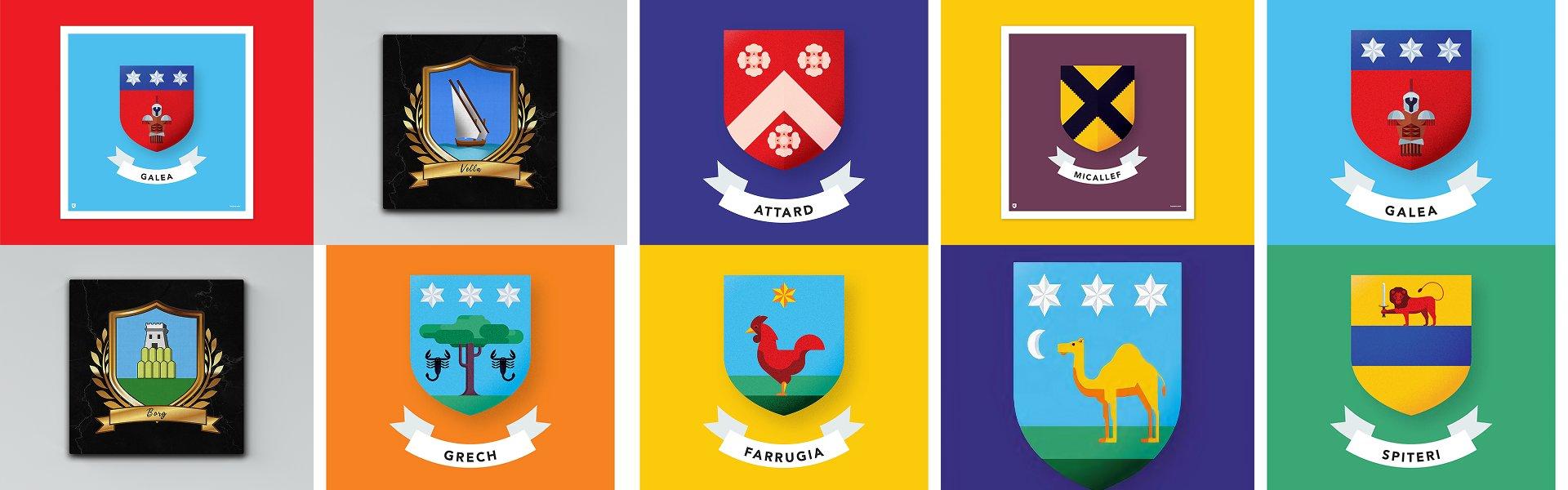
Roughly 100,000 people in Malta share the same ten surnames.
The 2011 Census of Population and Housing recorded 19,104 surnames in Malta. At the top of the list were Borg, Camilleri, Vella, Farrugia, Zammit, Galea, Micallef, Grech, Attard and Spiteri. Together, they accounted for roughly a quarter of Malta's population. In Mario Cassar's 2005-based analysis, the same top ten surnames were borne by 99,516 people, or 24.57% of the population.
These are not random names. They are the linguistic fossil record of every people who ever ruled Malta, every people who ever traded with it, and every people who ever settled there. Some are Arabic, surviving from the Saracen period of 870–1091. Some are Sicilian, brought by the soldiers and settlers of the Norman, Aragonese and Spanish periods. Some are Greek or Greek-influenced, including names already present before the Knights and others later associated with the Rhodiots. Some are Catalan. Some are Germanic. Some, despite popular folklore, are not what most Maltese people think they are.
This article tells you what each of the top ten names actually means, drawing on the academic record assembled by Godfrey Wettinger, Joseph Aquilina, Giuseppe Brincat, Geoffrey Hull and Mario Cassar, scholars who spent careers reconstructing Malta's family-name history from medieval militia rolls, diocesan censuses, parish registers and Sicilian onomastic dictionaries.
These are also not the only Maltese surnames. After the top ten come Azzopardi, Cassar, Mifsud, Caruana, Muscat, Agius, Schembri, Abela, Fenech and Pace, and after them another 19,000 surnames recorded in the 2011 Census. If your surname is not in the top ten, it is not because your family has been any less Maltese than anyone else's. It is simply because there are 19,000 different ways to be Maltese.
But these are the ten that almost every Maltese person knows.
1. Borg: 'The Tower'

Borg was already in the lead position in the Status Animarum of 1687 (Malta's detailed diocesan census), which recorded 1,629 Borgs across the island. It has held first place ever since.
The name is Semitic in origin. The earliest recorded form in Sicily dates to 1178, when a Muslim serf named al-Burgī is documented in Salvatore Cusa's I diplomi greci ed arabi di Sicilia. The Arabic root is burj, a word that primarily means 'cairn' or 'pile of stones heaped up as a memorial, tomb or landmark,' and by extension 'bastion,' 'tower,' or 'fortified country house.' The word belongs to a wider Mediterranean and European family of terms connected with fortified places, including Greek pyrgos, Latin or medieval burgus, Italian borgo, Germanic burg and English borough. The Maltese surname Borg, however, is usually treated in Maltese onomastic literature as Semitic or Siculo-Arabic in origin. It should not be confused with the Scandinavian Borg, a different surname from Old Norse, as in the case of the international tennis player Björn Borg. In all likelihood, the original bearers of the surname were people who came from a borgo, a walled town, or who lived near a fortification or a notable pile of stones. The geographer Geoffrey Hull also suggests it could derive from the Sicilian town of Burgio near Agrigento, itself probably from Greek pyrgos.
In modern Malta, Borg is the top-ranking surname in Birkirkara (10.4% of all Borgs live there), Attard, Balzan, Lija, Ħamrun, Pietà, Msida, Gżira, San Ġwann, St Julian's, Swieqi, Qormi, Żebbuġ, Valletta and several others. It also forms a long list of double-barrelled surnames, including Borg Olivier (the family of Malta's independence-era prime minister Dr George Borg Olivier), Borg Costanzi, Borg Cardona, Borg Barthet, Borg Bonaci, Borg Carabott and many more.
2. Camilleri: 'The Camel Driver'

The name comes from the Latin camelarius, 'camel driver', via the Sicilian-Arabic al-qāmīllārī and the medieval Greek kamēlarios. This etymology is supported by every major academic source, the Dictionary of American Family Names, the Oxford Dictionary of Family Names in Britain and Ireland, and Cassar's University of Malta paper.
Camilleri was not among the leading surnames in the Militia List of 1419/20, making its later rise especially striking. By the Status Animarum of 1687, however, it had climbed to third place, with 1,083 Camilleris recorded. This dramatic rise is one of the great open questions of Maltese onomastics. The most likely explanation is that the surname was either underrepresented in the 1419 list (which only recorded males of militia age) or that it arrived in significant numbers from Sicily during the late 15th and 16th centuries, possibly with the establishment of the Knights of St John in 1530.
The surname is massively concentrated in Sicily, where it occurs in 128 communes, particularly Palermo, Agrigento, Caltanissetta and Catania. The connection to Sicily is so strong that the most internationally famous Camilleri is not Maltese at all but Sicilian: Andrea Camilleri (1925–2019), the writer who created Inspector Montalbano.
In Malta, Camilleri is the top-ranking surname in Mosta (where 6.2% of the population shares it), Naxxar, Marsa, Luqa, Sliema, Żabbar and Nadur in Gozo. It is the second most common name in Malta and the third most common in Gozo.
3. Vella: 'The Old One' (Not Sail)

Vella was probably the most widespread surname in Malta in the late Middle Ages, ranking first in the Militia List of 1419/20 with 47 recorded bearers (around 3% of all males of militia age). By 1687 it had slipped to fifth, and today it stands at third.
Here is where the academic record contradicts a piece of widely-believed folklore. Vella does NOT mean 'sail' from Italian vela. The great Maltese historian Godfrey Wettinger wrote of this folk etymology that it 'seems particularly pointless'. The actual derivation is from Catalan or Sicilian vella, the feminine form of the word for 'old'. Wettinger's hypothesis is that it may have replaced an original Arabic nickname xiħ ('old', masculine), with the final -a being a common surname ending in Sicilian/Italian. The surname is not of Arabic origin, which makes it one of the few among Malta's top ten with a purely Romance derivation.
In Italy, Vella appears in 535 communes, the most widespread of any Maltese surname, with strong clusters in southern and western Sicily, particularly Agrigento, but also in Tuscany and Lombardy.
In Malta, Vella is the top-ranking surname in Mellieħa (where 6.8% of all Vellas live), Mġarr (Malta), St Paul's Bay, and Paola. It is also the most common surname in Gozo, where it dominates Xewkija, and is second-most-common in Rabat (Gozo), Munxar, Sannat and Kerċem. Around 36.6% of all Vellas live in the Northern District or in Gozo.
4. Farrugia: 'The Chicken'

Farrugia was ranked third in the Militia List of 1419/20 and second in the Status Animarum of 1687, making it one of the most consistently common surnames in Maltese history.
The name is Arabic in origin, from farrūj (فَرُّوج), meaning 'a young chicken' or 'cockerel'. The earliest bearers were almost certainly poultry-keepers or had been so nicknamed. The Maltese village of Ħal Farruġ, located where Malta International Airport now stands, carries the same root and probably referred originally to a settlement associated with the Farrugia family.
There is a competing theory, sometimes given on popular sites, that Farrugia derives from the Latin ferrarius ('blacksmith') via Sicilian. This is not supported by the academic literature, Wettinger, Cassar, and the Oxford Dictionary of Family Names all reject it in favour of the Arabic etymology. The chicken explanation is the linguistically correct one. The final -a ending probably reflects an attempt by medieval Latin notaries to make the Arabic form fit Romance morphology, just as happened with Saliba (from Arabic salib, 'cross').
In Italy, the cognate form Farruggia appears in 160 communes, mainly in Sicily (Palermo, Agrigento, Caltanissetta). In Malta, Farrugia is the top-ranking surname in Vittoriosa, Cospicua, Fgura, Gudja, Santa Lucija, Żurrieq, Mqabba, Qrendi and Kirkop. The personalised Farrugia coat of arms is a canting shield, a heraldic device that visually puns on the surname, featuring a rooster.
5. Zammit: 'The Dignified One'

Zammit ranked second in the Militia List of 1419/20 (with 32 bearers) and sixth in the Status Animarum of 1687. It is the fifth-commonest surname today.
The name is Siculo-Arabic, first recorded in Sicily in 1183 as a Muslim serf name. The standard academic etymology, from the Dictionary of American Family Names and Cassar's Vestiges of Arabic Nomenclature, is from Arabic zamīt, meaning 'of serious disposition, grave, dignified'. An alternative theory, advanced by some scholars, links it to a Sicilian-Arabic occupational or status nickname zammitu ('a man of high rank'), although Stanley Fiorini has questioned this derivation.
Italian variants include Zammitti (37 communes, particularly Syracuse), Zammitto (12 communes), and the related Zambito (96 communes, mainly around Agrigento), the same Sicilian-Arabic root, taking different forms in different localities.
In Malta, Zammit is the top-ranking surname in Tarxien, Santa Venera, Ta' Xbiex, Pembroke and Safi. The most internationally famous Zammit is Sir Themistocles 'Temi' Zammit (1864–1935), the archaeologist who excavated the Ħal Saflieni Hypogeum and the Tarxien Temples and identified the cause of Malta Fever (brucellosis) in 1905, work for which he was knighted.
6. Galea: The 'Helmet' or 'Galley'
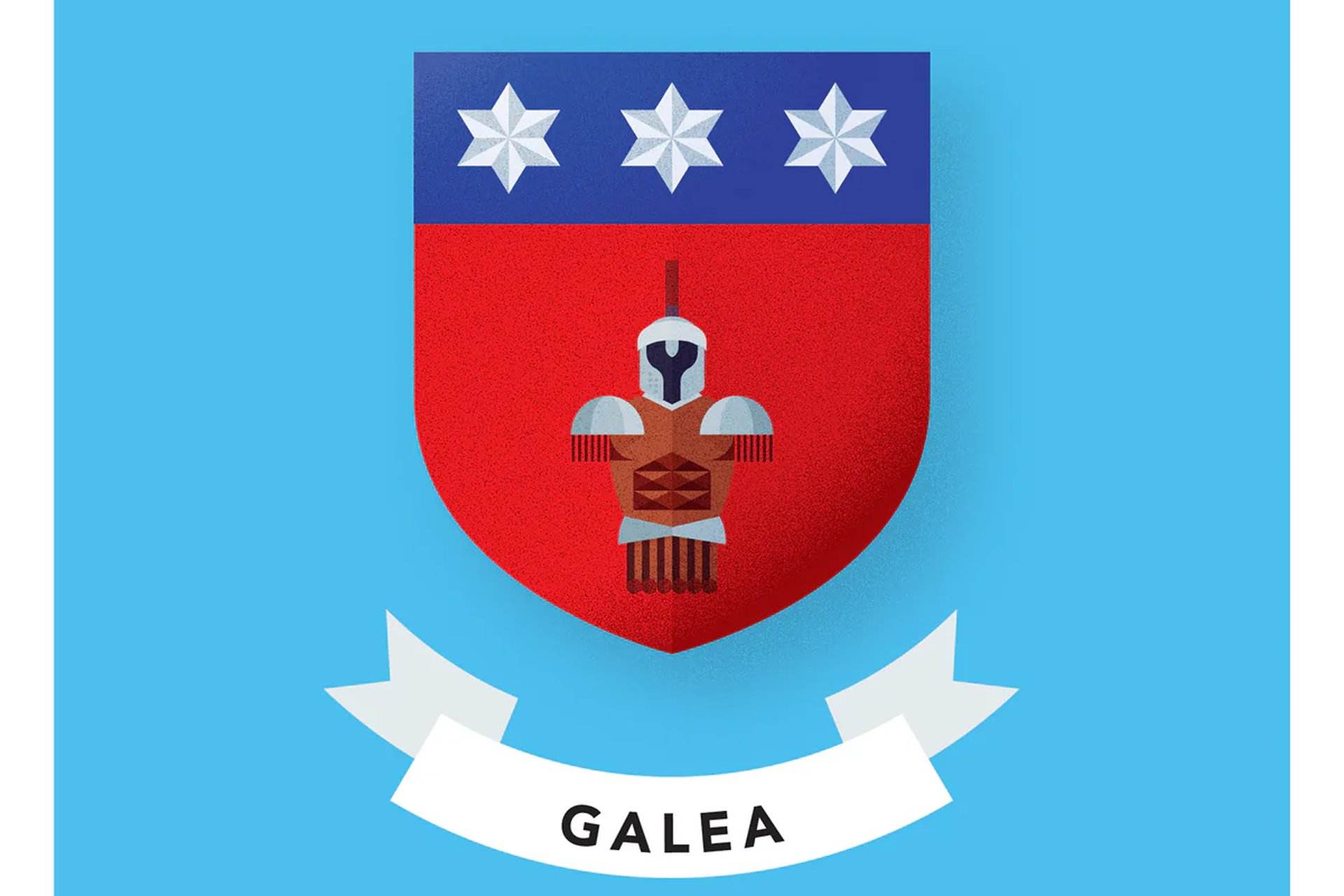
The Status Animarum of 1687 showed that 23.5% of all Galeas lived in Mosta. Today it ranks sixth.
The etymology has two competing scholarly explanations. The first derives Galea from Latin galea, meaning 'helmet', the kind of leather or metal helmet worn by Roman soldiers. The second derives it from medieval Latin or Greek galea / galaia, meaning 'galley' (a type of warship). Both etymologies converge on an occupational or descriptive surname, referring to either a soldier, a helmet-maker, a galley-rower, a galley-captain or a shipbuilder. The earliest recorded form is in Sicily in 1178 as a Muslim serf, though in this case the spelling is the same as the Romance forms, so direct continuity is debated.
In Italy, Galea appears in 58 communes; the primary cluster is in Calabria, suggesting at least some of the Maltese Galeas may trace to settlers from the Italian mainland's southern toe. The surname is also found in Spain. In modern Malta, Galea is second-ranking in Rabat (Malta) and Mtarfa. Double-barrelled forms include Galea Curmi, Galea Debono, Galea Cavallazzi, Galea Naudi, Galea Pace, Galea Testaferrata and Galea Souchet, the last few reflecting the surname's long presence among Maltese noble families.
7. Micallef: 'The Judge'

Micallef was the fifth most common surname in 1419/20 (27 bearers in the Militia List), but had slipped to 13th by 1687. It has since climbed back to seventh place.
The name is Arabic in origin, from mħallef (Maltese, from Arabic muḥallif), meaning 'judge' or 'justice of the peace'. The same Arabic root produced the modern Maltese word for judge. Like Mifsud and a small number of other surnames, Micallef appears to be a local Maltese formation rather than a name imported from Sicily. The Status Animarum of 1687 recorded that 32.6% of all Micallefs lived in Birkirkara, the original family seat appears to have been there.
Today, Micallef is the top-ranking surname in Floriana, Dingli and Rabat (Malta), and second-ranking in Mdina, Msida, San Ġwann, Xgħajra and Iklin. The double-barrelled forms include Micallef Attard, Micallef Decesare, Micallef Borg, Micallef Engerer, Micallef Eynaud, Micallef Grimaud, Micallef Trigona and Micallef Stafrace, a substantial number reflecting the surname's long history among Malta's legal and administrative families.
8. Grech: 'The Greek'

Grech ranked fourth in the Status Animarum of 1687 and is the eighth most common surname today.
The etymology is straightforward: Grech is from Italian Greco, 'Greek', an ethnonymic surname identifying someone of Greek origin or descent. It is one of Malta's oldest documented surnames, first recorded in 1277 as Nicolaus Grecus, during the Angevin period of Sicilian rule (1266–1283), well before the arrival of the Knights of St John.
The original Grechs were probably from Magna Graecia, the Greek-speaking communities of southern Italy and Sicily that had survived since classical times, or from the Greek diaspora in Sicily under Byzantine and Norman rule. A second wave of Greek-origin names arrived with the Rhodiots. By 1687, these later Greek-descent surnames were heavily concentrated in the Three Cities (Vittoriosa, Senglea, Cospicua) and in Valletta.
In Italy, Greco is the tenth most common surname overall, present in 2,227 communes. In Malta, Grech is the fourth most common name in Gozo, where it is the top-ranking surname in Rabat (Gozo) and Kerċem and second-ranking in Għajnsielem and Għarb.
9. Attard: A Germanic Personal Name

Attard barely made the top twenty in 1687 but has since climbed to ninth place.
Attard is not Phoenician, despite occasional folklore to the contrary. According to the academic record, it is a Germanic personal name, patronymic in origin, the surname is identical to a Germanic given name containing the element -hard (meaning 'strong, brave'), which appears in many medieval Germanic and Norman names (Bernhard, Gerhard, Eberhard). The surname likely arrived in Malta during the Norman period (1091–1194) or shortly afterwards, possibly with the Norman-Sicilian aristocracy or with mercenaries serving them. Wettinger groups it with other patronymic surnames in Malta derived from foreign Christian names introduced by Norman, Aragonese and Castilian rulers.
Attard is one of the oldest documented surnames in Malta, first recorded in 1299 as Tristanus de Actardo, a witness to a Gozitan will. By 1361, Melite Francesco Attardo was created Barone di Ginelfare, Migulup e Saggajja, founding one of Malta's noble families.
In Italy, Attard appears in 20 communes, but the fuller forms Attardo (120 communes) and Attardi (132 communes) are much more numerous and overwhelmingly Sicilian.
In Malta, Attard is the top-ranking surname in Mdina, the old capital and the seat of Maltese nobility, fitting for a surname that founded a barony in 1361. It is also the second-most-common name in Gozo (after Vella), where it is dominant in Fontana, Xewkija and Xagħra.
10. Spiteri: The 'Hospital Worker'
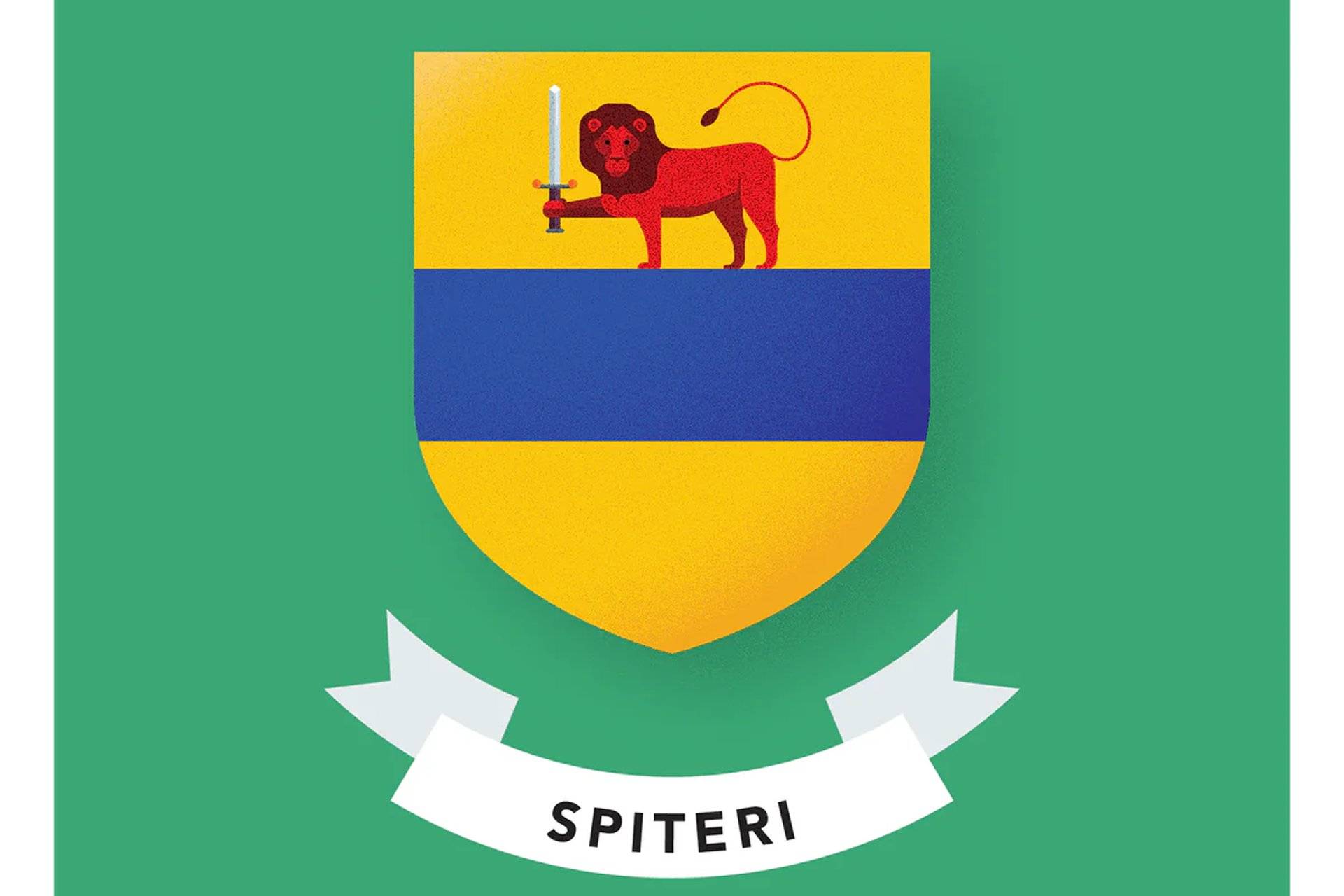
Spiteri's rise has been remarkable: it was not in the top twenty in 1687, but has climbed to tenth place today, the only top ten surname (along with Abela) that was not already in the top twenty in 1687.
The etymology is from Sicilian spitaleri / Latin hospitalarius, meaning 'a hospital worker', 'a servant of a hospital', or by extension 'a Knight Hospitaller'. The first recorded form in Malta dates to 1365, 165 years before the Knights of St John arrived. This means the popular folk etymology that Spiteri denotes the illegitimate children of Knights and women working in the Knights' hospital is incorrect, the surname existed in Malta for nearly two centuries before the Knights got there.
The original bearers were almost certainly servants, employees or attendants of medieval hospitals, religious houses, or pilgrim hospices, institutions which were widespread in Norman and Aragonese Sicily and Malta, often run by religious orders including the Knights of St John of Jerusalem (the original Hospitallers, founded in the 11th century, well before they came to Malta). The Maltese word spiteru ('spice merchant' or 'grocer') is sometimes given as an alternative etymology, but the academic consensus is that Spiteri shares the Sicilian root Spitaleri, from the institution of the medieval hospital.
In Italy, Spitaleri appears in 221 communes, with strong concentration in eastern and southern Sicily.
In Malta, Spiteri is most concentrated in the Żejtun–Għaxaq area and around Luqa and Marsa. Double-barrelled forms include Spiteri Bailey, Spiteri Fiteni, Spiteri Cremona, Spiteri Debono, Spiteri Gonzi, Spiteri Maempel, Spiteri Sacco, Spiteri Shaw and Spiteri Staines. Recent prominent Spiteris include Myriam Spiteri Debono, who became the President of Malta in April 2024.
What The 10 Surnames Tell Us
The pattern across these ten names is one of the clearest possible records of who Malta has been.
Of the top ten, four are clearly Semitic or Arabic-derived: Borg, Farrugia, Zammit and Micallef. Galea is more uncertain, but the stronger explanations treated here are Latin, Greek or Romance rather than straightforwardly Arabic. The remaining five reflect other layers of Malta's history: Camilleri and Vella through Romance/Sicilian channels, Grech through Greek identity as mediated by Italian Greco, Attard through a Germanic personal name, and Spiteri through a medieval Latin/Sicilian institutional term.
The Militia List of 1419/20 and the Status Animarum of 1687 are both visible to academic researchers today; Cassar's work draws on both. Most of the top ten were also recorded in Sicily during the Norman period (12th century), which strongly suggests they reached Malta through the same broad demographic flow that brought the Maltese language itself, medieval Maghrebin Arabic with subsequent Sicilian, Italian, Spanish, Greek and Norman additions.
If you carry one of these surnames, you are carrying with you a fragment of language that was spoken in 870, or 1090, or 1419, or 1530. Most people don't know what their surname means or where it came from. You now do.
All coat of arms for this article have been taken from Kunjom. For more information visit their website.

About Matthew Gollcher
Hi, I'm Matthew, an SEO Specialist and Content Writer at Yellow Pages Malta. I'm passionate about creating meaningful content and exploring AI's creative possibilities. When I'm not working, I enjoy the gym, time with friends, watching series and reading, and playing guitar. I'm always eager to learn and grow both personally and professionally.