The Maltese Falcon: The Real Story Behind the Annual Tribute


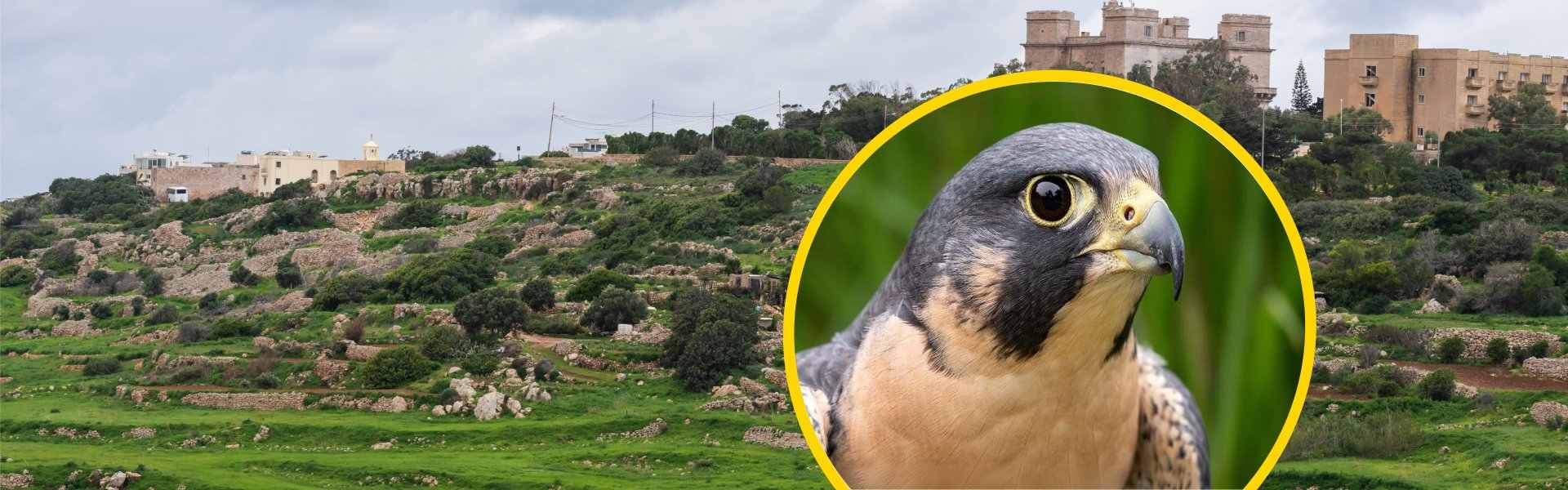
If you had to bet on the single phrase that most international audiences associate with Malta, 'the Maltese Falcon' would have a strong claim to the title. The novel by Dashiell Hammett, first serialised in Black Mask magazine in 1929 and published as a book in 1930, established an entire genre of hard-boiled American detective fiction. The 1941 film adaptation directed by John Huston, with Humphrey Bogart, Mary Astor, Peter Lorre and Sydney Greenstreet, gave Hollywood one of its most enduring icons: a small, dark statuette of a bird, gold and jewels under its enamel coating, around which men kill and lie and die.

Almost none of that is the true story.
The fictional jewelled falcon, the 'Black Bird' of Hammett's San Francisco, is an invention. The Encyclopaedia Britannica says it plainly: 'As for the "Golden Falcon encrusted from beak to claw with rarest jewels", well, Hammett made that part up.' But Hammett was building his fiction on a real foundation. The Maltese Falcon really was a tribute. It was really paid by the Knights of Malta to a king. It really continued for centuries. And the actual story, a live bird, presented every year on the first day of November to the Viceroy of Sicily, for 268 unbroken years, is, on examination, considerably stranger and considerably more interesting than the Hollywood version that descends from it.
This is the real story of the Maltese Falcon.
Before the Tribute: Falconry in Malta before the Knights
To understand why the Holy Roman Emperor would choose a falcon as the annual rent for an entire archipelago, you have to know that Maltese falcons were already famous before the Knights ever arrived.

Maltese falconry; the trapping, training and use of the peregrine falcon for hunting, was well established on the islands by the early thirteenth century. The Maltese ornithologist and academic Dr Natalino Fenech, in his peer-reviewed paper Raptors and Falconry in Malta: Culture, History and Conservation (2015), traces the documentary evidence back at least to 1239. A year later, in 1240, Emperor Frederick II of the Holy Roman Empire, the so-called stupor mundi, himself one of the great medieval authorities on falconry, 'sent a team of at least 39 men with horses to Malta for two whole months to trap falcons for him'. That single sentence tells you everything about the status the Maltese falcon already enjoyed in the medieval Mediterranean: an emperor was prepared to commission an entire two-month expedition, with skilled men and equipment, to bring Maltese birds back to Italy.
The Maltese name for the bird, seqer, is of clear Semitic origin, as are several other Maltese names for birds of prey, evidence of a tradition that pre-dates even Frederick's expedition. Fenech's research demonstrates that falconers in medieval Malta were well paid and enjoyed several privileges, and that the appointment of falconers was, by the late Middle Ages, an item of some political importance.
By the time the Knights of St John arrived in 1530, in other words, Malta's reputation as a source of fine falcons was already three centuries old. The bird the Emperor demanded as rent was not a random choice. It was, in his eyes, one of the most distinctive products the islands had to offer.
Homeless Knights: The Road from Rhodes
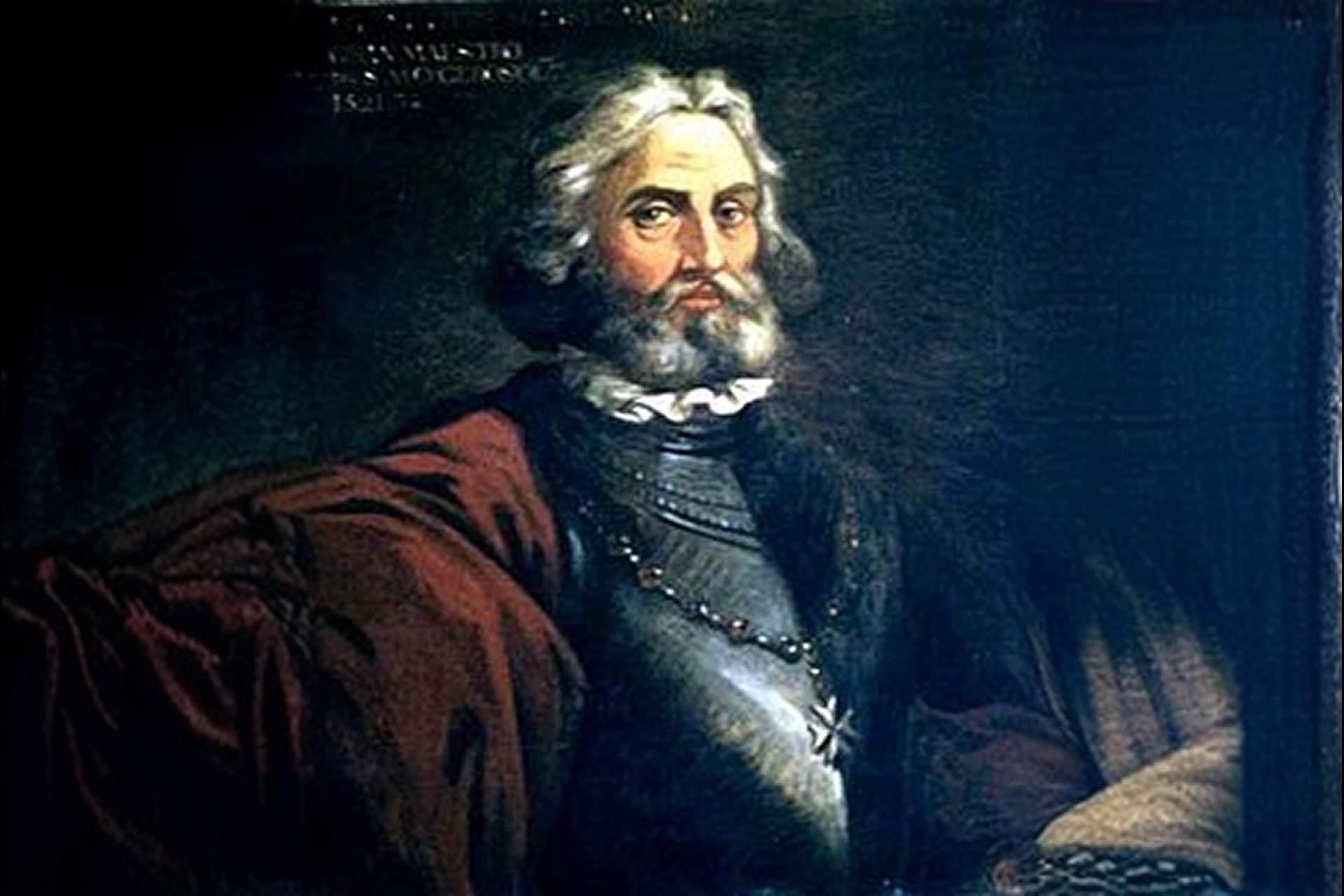
The Knights of St John of Jerusalem, a religious-military order founded in the eleventh century to care for sick pilgrims in the Holy Land, and later one of the great military forces of the Crusades, had been based on the island of Rhodes since 1310. There, for over two hundred years, they had ruled as a sovereign Christian power on the eastern edge of the Mediterranean, fighting an effectively continuous naval war against the Ottoman Empire.
That ended in the winter of 1522. After a six-month siege, the Knights surrendered Rhodes to the forces of Sultan Suleiman the Magnificent on 22 December 1522. Their Grand Master, Philippe Villiers de L'Isle-Adam (1464–1534), had led the defence with such skill and courage that even Suleiman is said to have admired him; the Knights were permitted to leave Rhodes with honour, sailing for Crete on 1 January 1523 with the surviving 180 brothers and their dependents. Pope Adrian VI proclaimed Villiers a 'Defender of the Faith'.
But the Order was now homeless. For the next seven years, Villiers and his Knights wandered, to Viterbo in the Papal States, to Nice under the protection of the Duke of Savoy, to Sicily, trying to find a permanent base. Various possible territories were proposed and rejected. Without a sovereign territory of their own, the Order risked dissolving entirely.
The breakthrough came through Pope Clement VII, himself a Knight of the Order, who began negotiations with the most powerful man in Europe: the Habsburg ruler Charles V, simultaneously Holy Roman Emperor, King of Spain, King of Sicily, King of Naples, King of Aragon and of the Two Sicilies and Jerusalem and many other realms. Charles had a problem of his own: he ruled Sicily, but his southern flank was exposed to Ottoman naval power, and the recently-fallen Rhodes had been the eastern Mediterranean's most effective Christian bulwark against precisely that threat. A homeless military order with two centuries of anti-Ottoman experience was exactly what he needed.
The deal eventually struck was elegant. Charles would grant the Knights three territories, the islands of Malta and Gozo, and the North African port of Tripoli, in perpetual fief. The Knights would garrison and defend them, especially against the Ottomans. They would acknowledge Charles's overlordship as King of Sicily. And, every year, they would pay an annual tribute of one falcon.
The Deed of the 23rd of March 1530
The grant was made by formal deed of donation on the 23rd of March 1530, at Castelfranco Emilia in northern Italy, where Charles V was then residing on his way to his coronation by Pope Clement VII in Bologna. The deed was issued by Charles jointly with his mother Queen Joanna of Castile ('Joanna the Mad'), in their capacity as monarchs of Sicily, since it was Sicily, not the Empire as such, that held overlordship of Malta.
The wording of the deed is precisely dated in the formal style of the period: 'the 23rd day of the month of March, Third Indiction, in the Year of Our Lord 1530; in the 10th year of our reign as Emperor, the 27th as King of Castile, Granada etc., the 16th of Navarre, the 15th of Aragon, the Two Sicilies, Jerusalem and all our other realms.' The substantive grant reads: 'we grant, and of our liberality we bountifully bestow upon the aforesaid Very Reverend Grand Master of the Religion and Order of Saint John of Jerusalem, in feudal perpetuity, noble, free and unencumbered, our cities, castles, places and islands' of Tripoli, Malta and Gozo.
The deed attached conditions, and they tell you what the Emperor was actually trying to achieve. The Order would have to acknowledge Charles's suzerainty as King of Sicily; it could not harbour fugitives from Sicilian justice; it could not act against Sicilian interests; it owed mutual defence to Sicily in case of external attack. None of these were minor clauses. The point of the entire arrangement, from Charles's side, was to plant a loyal Christian military power on Malta without losing his own sovereign authority over the islands. The Order would be, in modern legal terms, a sovereign vassal: free to govern Malta internally, but tied to the Empire through ties of feudal allegiance.
And every year, as the formal acknowledgement of that vassalage, one falcon, on All Saints' Day.
November 1530: Villiers takes Possession
The Knights took possession of their new home on the 26th of October 1530, when Grand Master Villiers de L'Isle-Adam sailed into the Grand Harbour aboard the Order's flagship, the carrack Santa Anna. He formally entered the medieval capital of Mdina on the 13th of November 1530, a ceremony preserved in the iconic painting Grand Master Philippe Villiers de l'Isle Adam Taking Possession of Mdina, a circa-1750 work by the French artist Antoine de Favray, which today hangs in the Grandmaster's Palace in Valletta. The ceremony, known as the possesso, was organised by the Università, the municipal council of the Maltese nobility, in part to manage the inevitable tensions between the local elite and the newly-arrived Knights. The focal point of the ritual was the granting of the silver key of Mdina to the Grand Master, an act intended to create a reciprocal obligation: in accepting the key, Villiers accepted the duty to protect the city and its people. The pattern, the formal possesso of an incoming Grand Master, would be repeated on the election of every new Grand Master for the next 268 years.
The population of Malta at the time was around 12,000 people. The islands' administrative capital was Mdina, well inland and high; the harbour towns were minor settlements; Valletta did not yet exist. The Knights would, over the next two and a half centuries, transform all of that, fortifying the harbour, building the new city of Valletta from 1566, surviving the Great Siege of 1565, establishing the great hospital of the Sacra Infermeria, and turning Malta into one of the most heavily-fortified small territories in Europe.
Villiers himself did not live long to enjoy his new fief. He died at Rabat on the 21st of August 1534, aged about 70, and was buried in the Chapel of St Anne at Fort St Angelo in Birgu (later reburied at St John's Co-Cathedral in Valletta). The first falcon tribute had been paid within his lifetime; the routine that would last 268 years had begun.
How the Tribute Actually Worked
The mechanics of the Tribute of the Maltese Falcon, the actual annual transaction, are documented through Sicilian and Maltese archival correspondence preserved across the centuries.
Each year, on or around the 1st of November, the Feast of All Saints, the Order would deliver one live falcon to the Viceroy of Sicily, in his capacity as the local representative of the King of Sicily (who was simultaneously Charles V and, after his abdication in 1556, his Spanish Habsburg successors). The bird was a peregrine falcon, the species native to Malta, the same species that Frederick II had sent his expedition to trap three centuries earlier.
(A small but persistent textual confusion: the main Wikipedia entry on the tribute, and most secondary sources, say the bird was delivered on the Feast of All Saints, the 1st of November. The Knights Hospitaller more broadly says All Souls' Day, the 2nd of November. The overwhelming weight of the sources, and most scholarly commentaries, give the 1st of November.
Delivery was, in practice, often handled through intermediaries rather than the Grand Master in person. The short sea voyage from Malta to Sicily, to Messina or Palermo, where the Viceroy held court, made this practical. Local Sicilian agents and Order representatives in those cities would receive the bird from the Maltese delegation and make the formal presentation to the Viceroy. Surviving correspondence in Sicilian and Maltese archives documents consistent compliance: the deliveries were made, year after year, with no recorded lapses, under Grand Masters from Piero de Ponte (1534–1535) in the immediate aftermath of Villiers, all the way through to the final Grand Master of the Order in Malta, Ferdinand von Hompesch, in the 1790s.
It is worth being clear about what the tribute was, in feudal terms. Modern historians interpret the annual falcon as a conventional feudal acknowledgment of suzerainty, a token of vassalage. It was emphatically not an attempt at fiscal extraction. The Order paid no land tax to the Crown; no soldiers were levied; no monetary tribute beyond the bird itself was demanded. The single falcon was a symbol: an annual reminder that, however much practical autonomy the Order enjoyed on its islands, the ultimate sovereign over Malta was the King of Sicily, the Emperor, and after him the Spanish Habsburgs, and after them the Spanish Bourbons. The token mattered because of what it represented, not what it was worth.
The End of the Tribute: Napoleon and 1798
The Tribute of the Maltese Falcon continued unbroken for 268 years, from the first delivery in the early 1530s to its final payment in the late 1790s. Through the Great Siege of 1565, through the building of Valletta, through the plague years and the Maltese Corso, through the Sun King and the Treaty of Utrecht and the slow decline of Spanish power, through the wars of the eighteenth century, every year, on the 1st of November, the falcon went from Malta to Sicily, and the Order's allegiance was formally renewed.
It ended in 1798.
In June of that year, a young French general named Napoleon Bonaparte, then on his way from France to Egypt at the head of an enormous military expedition, stopped at Malta. The Order, under Grand Master Ferdinand von Hompesch zu Bolheim, surrendered Valletta with almost no resistance over the course of a few days in June 1798. Napoleon abolished the Order's rule of the islands and seized vast quantities of treasure from the Knights' churches and palaces. By the end of June, the Order's 268-year tenure in Malta was over. The falcon for All Saints' Day 1798 was never delivered.

The Maltese themselves rose against the French occupation within months; the British were called in to help, and by 1800 Malta was effectively under British protection, a status formalised by the Treaty of Paris in 1814, by which Malta became a British Crown Colony. The Order of St John retreated into a long period of homelessness once again, eventually re-establishing itself in Rome where, as the Sovereign Military Order of Malta, it continues to exist today as a non-territorial sovereign entity recognised in international law.
The tribute, however, was gone. There was no Sicilian Viceroy left to receive it, the Kingdom of Sicily itself was abolished in 1816, and there was no Order in Malta to deliver it. After 268 years, the annual falcon flew for the last time.
How Hammett Made It Golden
Almost 130 years later, in 1929, an American novelist and former Pinkerton detective named Dashiell Hammett began publishing a story in five serial installments in Black Mask magazine. It came out as a single-volume novel in February 1930, published by Alfred A. Knopf. Hammett called it The Maltese Falcon.
In Hammett's fiction, the historical tribute is the kernel of a baroque invented history. In the sixteenth century, the Knights of Malta supposedly created not a live falcon but a gold-and-jewels statuette of a falcon as a once-and-for-all gift for the King of Spain. The statuette never reached its destination: it was intercepted by pirates en route, passed through many hands across the centuries, and was eventually disguised under a coating of black enamel to conceal its true value from would-be thieves. By the time Hammett's novel opens, the Falcon has been missing for so long that it has become legendary, and a small cast of murderous adventurers, Casper Gutman, Joel Cairo, Brigid O'Shaughnessy, are willing to kill for it. Sam Spade, the private detective at the centre of the novel, gets pulled into their pursuit.
It is essential to be clear about what is fictional here. The real Knights did not make a gold-and-jewels statue. The real tribute was always a live bird, not a metal object. There is no surviving 'Maltese Falcon' of the kind Hammett describes, because no such object ever existed. The black-enamelled treasure of the novel is, as Britannica's editors politely put it, something Hammett 'made up'.
Hammett may have known some of the real history (he was a well-read man) and may have been spinning his fiction directly from the documented tribute, or he may have picked the phrase up from popular culture and embroidered freely. Either way, what he produced was a piece of fiction sturdy enough to outlive its creator and to colonise the world's imagination of Malta itself. Three film adaptations followed in the 1930s and early 1940s, culminating in the 1941 John Huston film with Humphrey Bogart, which is now widely considered one of the founding works of American film noir.
The result is that, today, most people who use the phrase 'the Maltese Falcon' think of a small dark statuette in San Francisco, and have no idea that it was originally a live bird presented every year to a Sicilian Viceroy by the Grand Master of an obscure but very real religious-military order.
Why It Mattered: A Small Bird, A Big Idea
Set aside the Hollywood version, and the historical Tribute of the Maltese Falcon turns out to be a genuinely revealing piece of European history. Three things stand out.
First, the tribute is an almost perfect illustration of how feudalism actually worked in late-Renaissance Europe. An emperor needed a strategic territory garrisoned by a reliable military power. A homeless military order needed a sovereign home. The deal was sealed not with money but with a token, a single bird, exchanged once a year, because the value of the arrangement to both sides was political, not financial. The falcon was both rent and ritual: the annual confirmation that Malta belonged to the Crown of Sicily but was governed by the Order. That was the whole point.
Second, the tribute is a quiet reminder of how long these arrangements actually lasted. 268 years is a very long time. The Knights paid the falcon under Charles V, under Philip II, under Philip III and IV, under Charles II of Spain (the last Habsburg), under Philip V (the first Bourbon), under the Spanish Bourbons of the eighteenth century. Each year, with each new Habsburg or Bourbon king, the Order's annual delivery of one bird quietly confirmed that the deal originally struck at Castelfranco Emilia in March 1530 was still in force. It is the kind of institutional continuity that simply does not exist in modern political life.
Third, the tribute is one of the few cases in European history in which a piece of feudal accounting has become a global pop-culture phrase. Most other annual tributes, a pair of spurs, a falcon for the Coronation of the English King, a pound of cinnamon, two bunches of flowers, are forgotten outside the specialist literature. The Maltese Falcon is not, because Hammett wrote a novel and Huston made a film and Bogart played Spade, and the phrase entered the language. There is something appropriate, given Malta's long history at the meeting point of larger civilisations, that one of the country's minor administrative obligations should have ended up as one of the most recognisable phrases in twentieth-century English.
The fictional bird is famous around the world. The real bird, on the historical record, is more interesting still: a live peregrine falcon, delivered each 1st of November, on the road from Malta to Sicily, for 268 unbroken years, as the rent for an entire archipelago. It is the kind of arrangement that human beings used to be able to organise, and which, in the modern world, we would no longer know how to invent.

About Dr Hillary Hopkins
Dr Hopkins is a Maltese lawyer, with a love for Malta's historic stories, forgotten corners, and little cultural rabbit holes.