The Great Siege of 1565: What Happened, Why It Matters, and What's Left Today


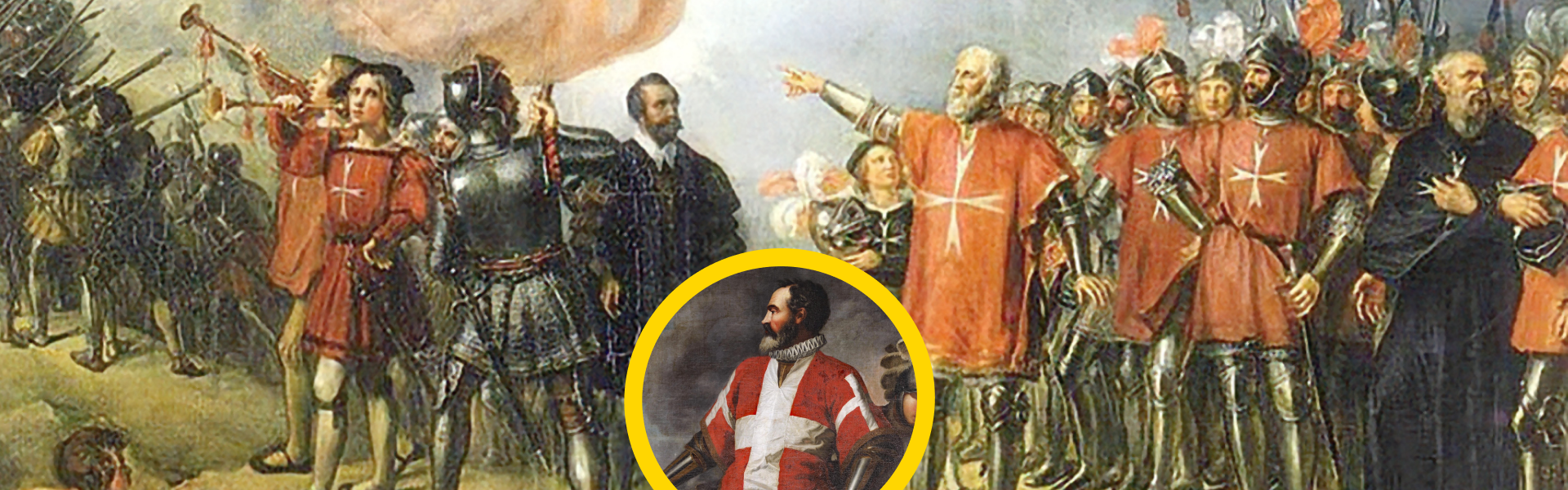
The Great Siege of 1565: What Happened, Why It Matters, and What's Left Today
In the early hours of 18th May 1565, an Ottoman fleet appeared off the coast of Malta. Early accounts put it at roughly 180 to 200 ships; it had sailed from Constantinople nearly two months earlier, carrying perhaps 30,000 men, though estimates in the historical record vary. Its mission was simple: to destroy the Knights of St John, seize the island, and open the western Mediterranean to Ottoman expansion.
What followed was nearly four months of siege warfare so savage, so unrelenting, and so consequential that Voltaire would later write: "Nothing is better known than the siege of Malta." The Knights, outnumbered many times over, held on. And from the rubble of that defence, the city of Valletta was born.
This is the full story; what happened, why it still matters, and where you can see it for yourself.
Who were the Knights, and why did the Ottomans want Malta?

Caption: The Knights of St John, also known as the Knights Hospitaller, had been based in Malta since 1530, after being expelled from Rhodes by the Ottomans eight years earlier. Their headquarters were at Birgu, on the southern shore of the Grand Harbour.
The Knights of St John, formally the Order of the Hospital of St John of Jerusalem, and often called the Knights Hospitaller, were a religious and military order with centuries of experience fighting Ottoman forces. In 1522, after a six-month siege, they had been expelled from their base at Rhodes by Sultan Suleiman the Magnificent. They spent the following eight years without a permanent home, until 1530, when Holy Roman Emperor Charles V granted them the islands of Malta and Gozo. The payment was a single Maltese falcon, delivered annually to the Viceroy of Sicily.
Malta was nobody's idea of a prize. The island was rocky, poor, and largely barren. But its position, roughly in the centre of the Mediterranean, 60 miles south of Sicily, was strategically enormous. Whoever held Malta controlled the sea lanes between the eastern and western Mediterranean. For the Ottomans, who had been steadily expanding westward, the Knights on Malta were both an obstacle and an irritant: their galleys raided Ottoman shipping constantly, and those raids provided the Order with much of its income.
By 1564, Suleiman had resolved to be rid of them once and for all. The invasion fleet left Constantinople on the 22nd of March 1565.
The Man who Defended Malta: Jean Parisot de Valette
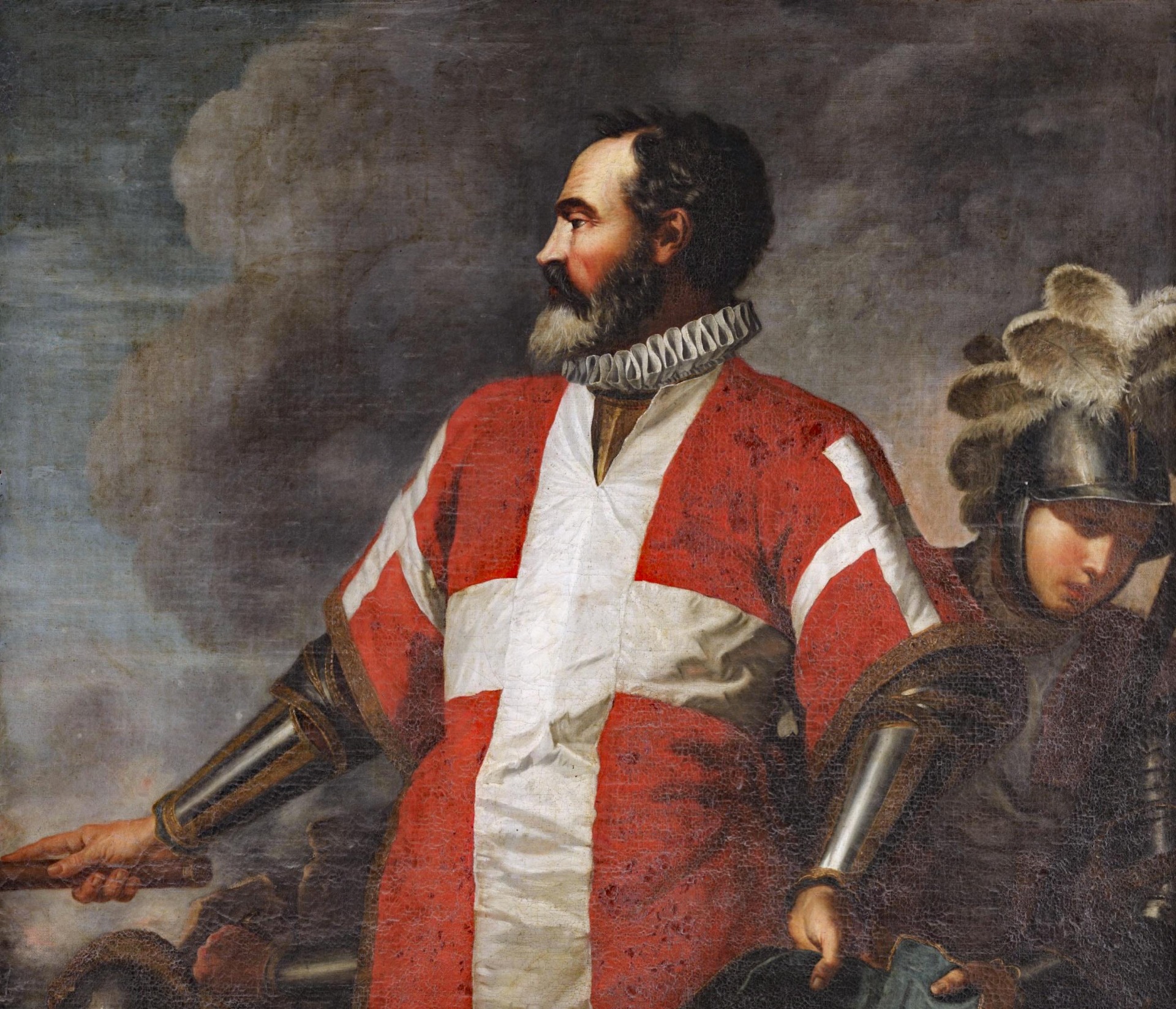
Caption: Grand Master Jean Parisot de Valette was approximately 70 years old at the time of the siege. A French nobleman born around 1495, he had spent decades fighting the Ottomans and had himself once been a galley slave, captured by Barbary pirates. Valletta was named in his honour.
The man tasked with defending Malta was Grand Master Jean Parisot de Valette, a French nobleman born around 1495, making him approximately 70 years old at the time of the siege. He had been elected Grand Master in 1557 and was considered one of the most formidable military commanders in Europe.
De Valette knew his enemy intimately. Earlier in his career he had been captured by Barbary pirates and spent a year as a galley slave, an experience that gave him a personal understanding of Ottoman military culture that few European commanders possessed. When his spies in Constantinople confirmed that the invasion was coming, he set about preparing Malta with complete focus: strengthening the forts, laying in supplies, poisoning wells that could not be defended, and stripping the fields of crops to deny the attackers any local food source.
He had around 500 knights and approximately 6,000 soldiers: Maltese militia, Spanish troops, and mercenaries. Against them, the Ottomans would bring an army many times their size.
The Fall of Fort St. Elmo

Caption: Fort St Elmo stands at the tip of the Sciberras Peninsula, commanding the entrance to both Grand Harbour and Marsamxett Harbour. In 1565, Ottoman engineers estimated it would fall within three days. It held for 28 days.
The Ottoman fleet anchored at Marsaxlokk Bay and the army came ashore on 19th of May. A dispute immediately broke out between the two Ottoman commanders: Mustafa Pasha, who led the land forces, and Piyale Pasha, the naval admiral. Mustafa wanted to strike inland towards the lightly defended old capital Mdina, then attack the main fortresses from the rear. Piyale insisted on securing Marsamxett Harbour first for the fleet, which meant taking Fort St Elmo, the small star-shaped fort at the tip of the Sciberras Peninsula.
Piyale won the argument. Ottoman engineers calculated that Fort St Elmo, with its initial garrison of around 150 knights, 600 soldiers and 60 armed galley slaves, would fall in three days. A massive bombardment began on the 27th of May.
It lasted 28 days.
The fort was reinforced by boat from Fort St Angelo across the harbour, and the defenders held on through artillery barrages, repeated assaults, and appalling casualties. The turning point, for the Ottomans as much as the defenders, came on the 18th of June, when Dragut, the greatest Ottoman corsair commander of his age and the man whose tactical authority superseded both Mustafa and Piyale, was mortally wounded by cannon fire while inspecting a trench emplacement. He died days later. Fort St Elmo fell on the 23rd of June.
The fort's defenders were almost entirely wiped out; a very small number escaped by swimming across the harbour to Fort St Angelo. The fall of St Elmo is estimated to have cost the Ottomans around 6,000 men. As Mustafa Pasha surveyed the rubble, he is said to have looked across the harbour at the far larger fortresses of Birgu and Senglea and asked: "If so small a son has cost us so dear, what price shall we pay for so large a father?"
What followed St Elmo's fall was grim. Mustafa ordered the bodies of the dead knights to be decapitated, fixed to crosses, and floated across the harbour towards Fort St Angelo. De Valette's response was immediate: he executed the Turkish prisoners held in Birgu and fired their severed heads back across the harbour from the fort's cannon.
Each parish church is also far more than a building for Sunday Mass. It is the physical and symbolic centre of the village. Births, marriages and deaths all pass through it. Generations of families have their history written in its baptism records and memorial plaques. The church square is where people gather, where children play, where old men sit in the evenings. Remove the church and you would not just lose a building, you would lose the entire organising principle of the community.
The Siege of Birgu and Senglea

Caption: Birgu, also known as Vittoriosa, was the headquarters of the Knights of St John during the siege. Its medieval streets remain largely unchanged today, and Fort St Angelo, which anchored the defence throughout, is open to visitors.
Through July and August, the Ottomans turned their full force on Birgu and Senglea. The bombardments were intense enough to be heard at considerable distance across the island. Major assaults were launched on the 15th of July, the 7th of August, and between the 18th and 21st of August. On each occasion the defenders held, though at tremendous cost. At one desperate moment in late August, the Order's senior council proposed abandoning Birgu and retreating to Fort St Angelo. De Valette refused. He went to the breach himself, pike in hand, fighting alongside his knights. His presence on the walls held the line.
Two incidents from this phase of the siege became part of Malta's enduring historical memory. The first was a tactical masterstroke at Mdina. The old capital, in the centre of the island, was lightly held and poorly supplied. When Ottoman cavalry approached to reconnoitre it, the governor dressed his small civilian population as soldiers, placed them on the ramparts, and fired all available cannon at pointlessly long range. The Ottomans, interpreting this as a sign of a strong garrison and ample ammunition, turned back.
Maltese tradition also remembers Toni Bajada, a native of Naxxar who is said to have learnt Turkish during a period of captivity and to have passed through Ottoman lines at night, carrying intelligence between the besieged garrison and the outside. His story has become one of the celebrated elements of Maltese memory of the siege, though the historical record for individuals of his kind is inevitably sparse.
The Grande Soccorso and the End of the Siege
By early September, the Ottomans were exhausted. Disease had swept the camp. Food and gunpowder were running low. Morale, which had never fully recovered from the losses at Fort St Elmo or the death of Dragut, was faltering.
On the 7th of September, the Grande Soccorso, the "great relief", landed at St Paul's Bay on the north of the island. Around 8,000 Spanish and Italian soldiers, sent by the Viceroy of Sicily Don García Álvarez de Toledo, had finally arrived. The Ottoman commanders initially retreated towards their ships, then attempted to engage the relief force when they realised how small it was. In the skirmishes that followed, the Ottomans were routed.
On 8 September 1565, the Ottomans began their withdrawal. The siege was over. After nearly four months of fighting, the island had held.
The human cost on both sides was severe. Ottoman losses have been estimated at perhaps a third of the original force, likely more than 20,000 men dead from fighting and disease. The Knights and Maltese defenders were reduced to a fraction of their original strength. The island was devastated.
Why Does it Still Matter?

The most immediate consequence of the siege was Valletta. De Valette understood that Malta's existing fortifications, centred on Birgu and the promontory opposite, were no longer adequate. He chose the Sciberras Peninsula, the same hill from which the Ottomans had bombarded Fort St Elmo, as the site for a new fortified city. The foundation stone was laid on the 28th of March 1566, just six months after the Ottomans sailed away. The city was designed by Francesco Laparelli, an Italian military engineer sent by Pope Pius V, with the Maltese architect Girolamo Cassar playing a central role in executing the project and designing many of its principal buildings. De Valette himself died in 1568, before he could see it finished. The city bore his name: Valletta.
Beyond Malta, the siege resonated across Europe. Christian courts sent congratulations and funds. The pope offered de Valette a cardinal's hat, which he declined. The victory gave European powers renewed confidence that the Ottomans could be checked, a conviction that would be tested again six years later at the Battle of Lepanto in 1571.
It is worth noting, as historians have, that the siege did not mark the decline of the Ottoman Empire. The Ottomans continued to expand: they took Cyprus in 1570, raided the Adriatic in 1566, and remained a dominant Mediterranean power for generations. But for Malta specifically, and for the European perception of Ottoman invincibility more broadly, 1565 was a genuine turning point.
What's Left today: Where To See the Siege

Caption: The Grandmaster's Palace in Valletta houses a 12-panel cycle of frescoes depicting the Great Siege, painted by Matteo Perez d'Aleccio in the late 1570s to 1581. They are among the finest near-contemporary records of the siege in existence.
The landscape of the Great Siege is still largely intact. Almost every significant location from 1565 can still be visited.
Fort St Elmo, rebuilt after the siege and standing at the tip of Valletta's peninsula, now houses the National War Museum, which covers both the Great Siege and Malta's Second World War history. Fort St Angelo in Birgu, the anchor of the entire defence, from which de Valette directed the siege, is open to visitors and managed by Heritage Malta. The medieval streets of Birgu, now known as Vittoriosa, remain largely unchanged.
In Valletta, the Grandmaster's Palace on Republic Street contains a 12-panel cycle of frescoes depicting the siege in near-contemporary detail, painted by Matteo Perez d'Aleccio in the late 1570s to 1581. D'Aleccio was commissioned by Grand Master Jean de Cassiere, who had himself fought in the siege. The frescoes record every major episode: the bombardment of St Elmo, the assault on Senglea, the arrival of the Grande Soccorso, and the final Ottoman withdrawal. The Great Siege Monument, near the Law Courts in Valletta, commemorates the defenders.
And then there is the city itself. Valletta, every street, every bastion, every church, exists because of what happened in 1565. Walking its grid of limestone streets is, in a very real sense, walking through the aftermath of the siege.
Victory Day: 8th September.
Every year on the 8th of September, Malta marks Victory Day, Jum il-Vitorja, a national public holiday that commemorates the end of the Great Siege in 1565, alongside two other victories: the end of the French occupation in 1800 and the conclusion of Malta's Second World War siege in 1943. The date also coincides with the Catholic feast of the Nativity of the Virgin Mary, known locally as il-Bambina, and the religious and civic dimensions of the day are deeply intertwined in Maltese culture.
Celebrations traditionally include official commemorations in Valletta, a wreath-laying at the Great Siege Monument, and the regatta, the traditional boat race in the Grand Harbour between crews from the surrounding cities that is one of the great annual spectacles of Maltese life. Heritage Malta typically organises historical re-enactments and open days at Fort St Angelo, and village festas in Senglea, Naxxar, Mellieha and Xaghra mark the day with their own processions. The exact programme varies from year to year, so it is worth checking local listings ahead of the date.
It is one of the most distinctly Maltese days of the year: a layered celebration of military survival, religious devotion, and island identity, all rooted in a four-month battle fought nearly five centuries ago.
An Island that Held
The Great Siege of 1565 is one of the most remarkable stories of military resistance in recorded history. A small, rocky island with a garrison of a few thousand men withstood the full force of one of the most powerful empires on earth for nearly four months. The men who died in Fort St Elmo bought time that saved the island. The man who refused to abandon Birgu gave his name to a capital city. And the battle that was fought across these harbours and peninsulas left behind a landscape that is still, 460 years later, almost entirely visible.
You can stand on the walls of Fort St Elmo and look across to Fort St Angelo. You can walk the streets of Birgu that the knights walked. You can look up at the frescoes in the Grandmaster's Palace and see the siege as those who fought in it chose to remember it. The stones are all still here.

About Matthew Gollcher
Hi, I'm Matthew, an SEO Specialist and Content Writer at Yellow Pages Malta. I'm passionate about creating meaningful content and exploring AI's creative possibilities. When I'm not working, I enjoy the gym, time with friends, watching series and reading, and playing guitar. I'm always eager to learn and grow both personally and professionally.