Maltese Traditions That Still Exist Today


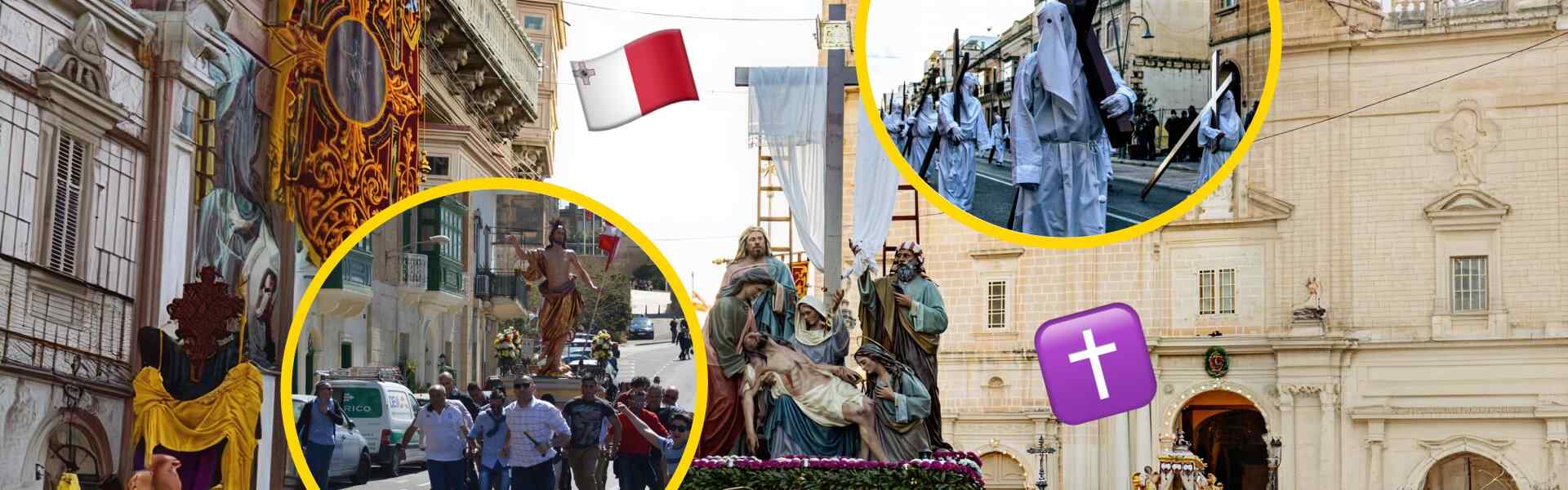
In Malta, tradition is not something that exists only in museums or old photographs. It is still visible in village streets, parish churches, seasonal celebrations, music, and even in the food people eat every day. While modern life has changed the islands in many ways, a number of customs remain deeply rooted in community life and continue to be passed on from one generation to the next.
Some of these traditions are religious, others are cultural, and some are simply part of everyday Maltese identity. Together, they help explain why Malta still feels so strongly connected to its past, even as it continues to evolve.
Holy Week and Good Friday Processions

One of the clearest examples of tradition still alive in Malta can be seen during Holy Week. During this period, parishes across the islands hold Lenten sermons, churches display statues depicting scenes from the Passion, and processions take place in a number of localities. Moreover, the Good Friday procession tradition in Malta back to the late 16th century, showing just how deeply rooted these observances are.
What makes these traditions especially striking is that they are still lived publicly and communally. Streets fill with statues, devotional music and participants, and village centres take on a very different atmosphere from the rest of the year. Even for people who are not especially religious, Holy Week remains one of the moments when Malta's older traditions are most clearly visible.
The Easter Sunday Run with the Statue of the Risen Christ

As Easter Sunday approaches, another tradition that still survives in some Maltese localities is the running with the statue of the Risen Christ. Easter is marked by a much more joyful atmosphere than the solemnity of Good Friday, and in some places, men carrying the statue break into a run through the streets as church bells ring and crowds gather around them.
This tradition is one of the most dramatic examples of how faith and celebration come together in Malta. It is not simply a symbolic ritual performed quietly inside a church. It is energetic, public and deeply emotional, and it remains one of those customs that feels immediately and unmistakably Maltese.
Village Festas still Define Community Life
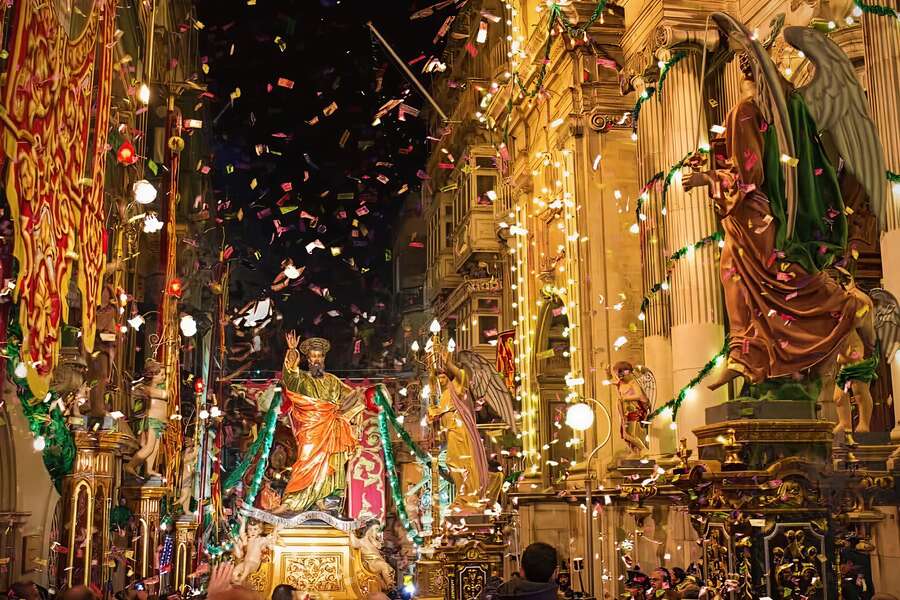
Another major tradition that remains central to life in Malta is the village festa. Held in towns and villages across Malta and Gozo, these annual celebrations are marked by decorated streets, marching bands, fireworks, church services and community gatherings that often last for days. UNESCO has also formally inscribed the Maltese Village Festa on the Representative List of the Intangible Cultural Heritage of Humanity, recognising it as a living community celebration rather than a custom of the past.
What makes the festa so important is that it continues to shape local identity. Each village takes pride in its own patron saint, church decorations, band clubs and celebrations. It is one of the traditions that most clearly shows how community life still works in Malta: around the parish, around the village, and around customs that people continue to actively organise and celebrate every year.
L-Għana Remains a Living Folk Singing Tradition

Malta's traditions are not only religious. One of the most important cultural traditions still alive today is L-Għana, the Maltese folksong tradition. UNESCO inscribed L-Għana on its Representative List in 2021 and describes it as involving three related forms of rhymed folksong, including the well-known quick-wit style based on improvisation, rhyme and witty verbal exchange. UNESCO also notes that għana sessions are held year-round in public and private venues, as well as during festivals and celebrations.
This makes L-Għana especially interesting because it shows a different side of Maltese tradition. It is not about processions or church bells, but about language, memory, performance and community. It also plays an important role in preserving the distinct character of the Maltese language, making it one of the clearest examples of intangible heritage still being practised today rather than simply remembered.
Il-Ftira Remains Part of Everyday Maltese Food Culture
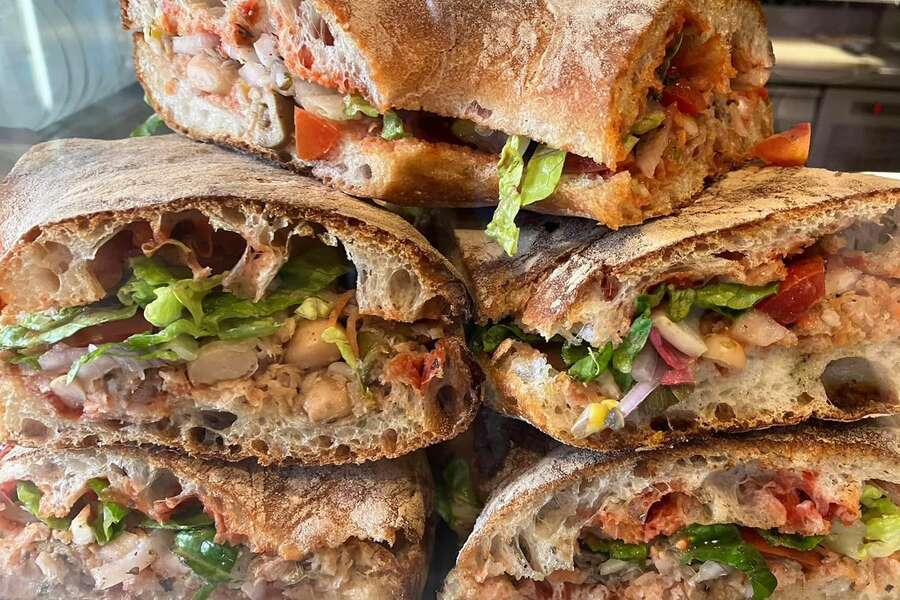
Another tradition that is still firmly part of daily life in Malta is Il-Ftira. UNESCO describes it as a key part of the cultural heritage of the inhabitants of the Maltese archipelago and notes that it is not just a recipe, but a culinary practice linked to preparation, sharing and everyday eating. UNESCO's nomination material also explains that Maltese people eat filled ftira regularly as a daily snack, light meal or appetiser.
This makes ftira particularly useful as an example of living tradition because it is not limited to feast days or special occasions. It shows that Maltese heritage is also carried through ordinary routines, family habits and the kind of food that remains familiar across generations. In that sense, tradition in Malta is not only something performed during festivals, but something people continue to taste and share in everyday life.
Discovering Malta's Natural Beauty
What ties all these customs together is that they are still active parts of life rather than symbols preserved only for visitors. Whether it is a Good Friday procession, an Easter Sunday run, a summer festa, a folk singing session or a ftira shared at lunch, these traditions continue to shape how communities gather, celebrate and recognise themselves.
That is perhaps what makes Malta so distinctive. Its traditions are not only remembered; many of them are still lived. And in a country where history is visible almost everywhere, that continuing connection between past and present remains one of the most remarkable parts of Maltese identity.

About Matthew Gollcher
Hi, I'm Matthew, an SEO Specialist and Content Writer at Yellow Pages Malta. I'm passionate about creating meaningful content and exploring AI's creative possibilities. When I'm not working, I enjoy the gym, time with friends, watching series and reading, and playing guitar. I'm always eager to learn and grow both personally and professionally.