The Day Malta Nearly Became Part of the United Kingdom


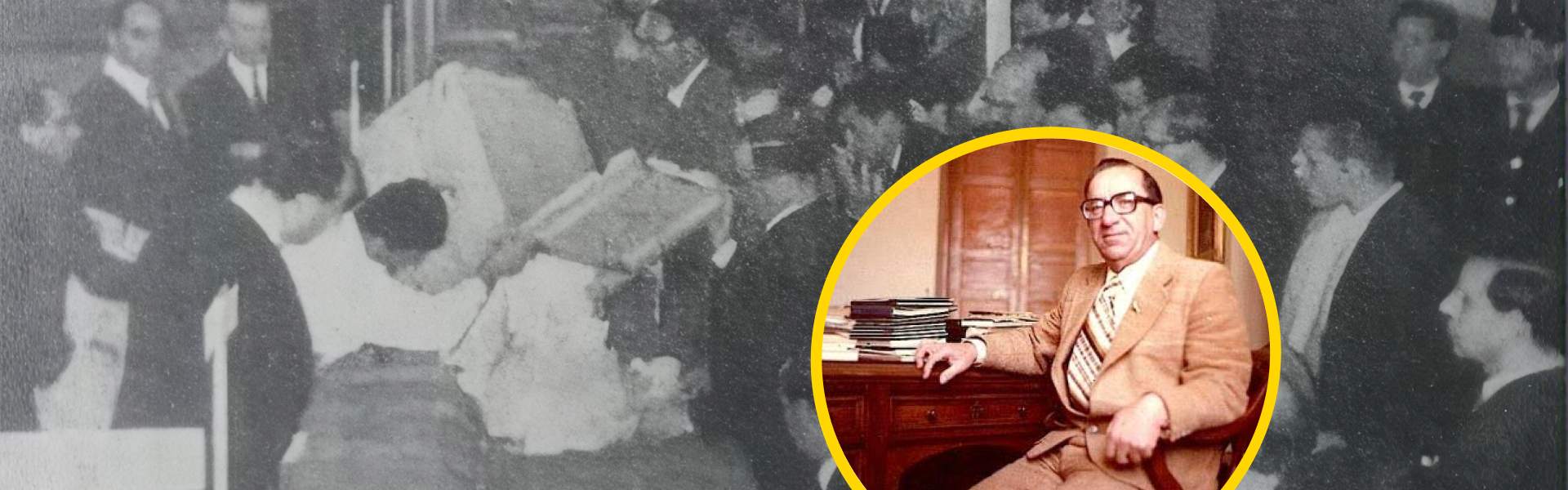
Here is one of the strangest and most tantalising facts in all of Maltese history. In the 1950s, at the very moment when colony after colony across the world was struggling to break free of the British Empire, Malta did something almost nobody else did. It asked to go the other way. It asked not to leave Britain, but to join it, to stop being a colony and become an actual, integral part of the United Kingdom, with Maltese Members of Parliament sitting in the House of Commons in London.
And in February 1956, the Maltese people voted yes.
For a brief, extraordinary moment, it looked as though it might really happen: that Malta would be to Britain what Scotland or Wales was, not an overseas possession, but a piece of the country itself, its citizens full British citizens, its towns represented at Westminster. One historian has called the episode genuinely unique in the entire history of British decolonisation. And then it all fell apart.
This is the story of the day Malta nearly became part of the United Kingdom; how the idea arose, how close it came, and why, in the end, it collapsed into riots, resignation and a road that led instead to full independence. It is a tale of politics, religion and money, and we have tried to tell it fairly to everyone involved. For the wider story of how Malta eventually became independent in 1964, see our separate article; here we focus on the integration episode itself.
Why Join Britain? Malta in the 1950s
To understand why Malta would want to become part of Britain, you have to understand the Malta of the early 1950s: a small, proud, devoutly Catholic island, physically shattered by the Second World War, and economically dependent, almost entirely, on British military spending.
Malta had earned extraordinary prestige in the war, its whole population awarded the George Cross in 1942 for its endurance under bombardment. But prestige did not pay wages. The islands' economy revolved around the Royal Navy dockyard and the British bases; there was little else. As Britain began, after the war, to wind down its empire and its armed forces, a terrifying question hung over Malta: what would happen to the island, and to the thousands of families who depended on the dockyard, when the British reduced their presence, or left altogether?
Two very different answers emerged, and they would define Maltese politics for a generation. One was independence: Malta as a small sovereign state, standing on its own. The other was the bold, unconventional idea that would dominate the mid-1950s: integration, binding Malta so tightly to Britain that the British could never simply walk away, and that ordinary Maltese would enjoy the same wages, pensions and social services as people in Birmingham or Manchester.
Mintoff's Big Idea
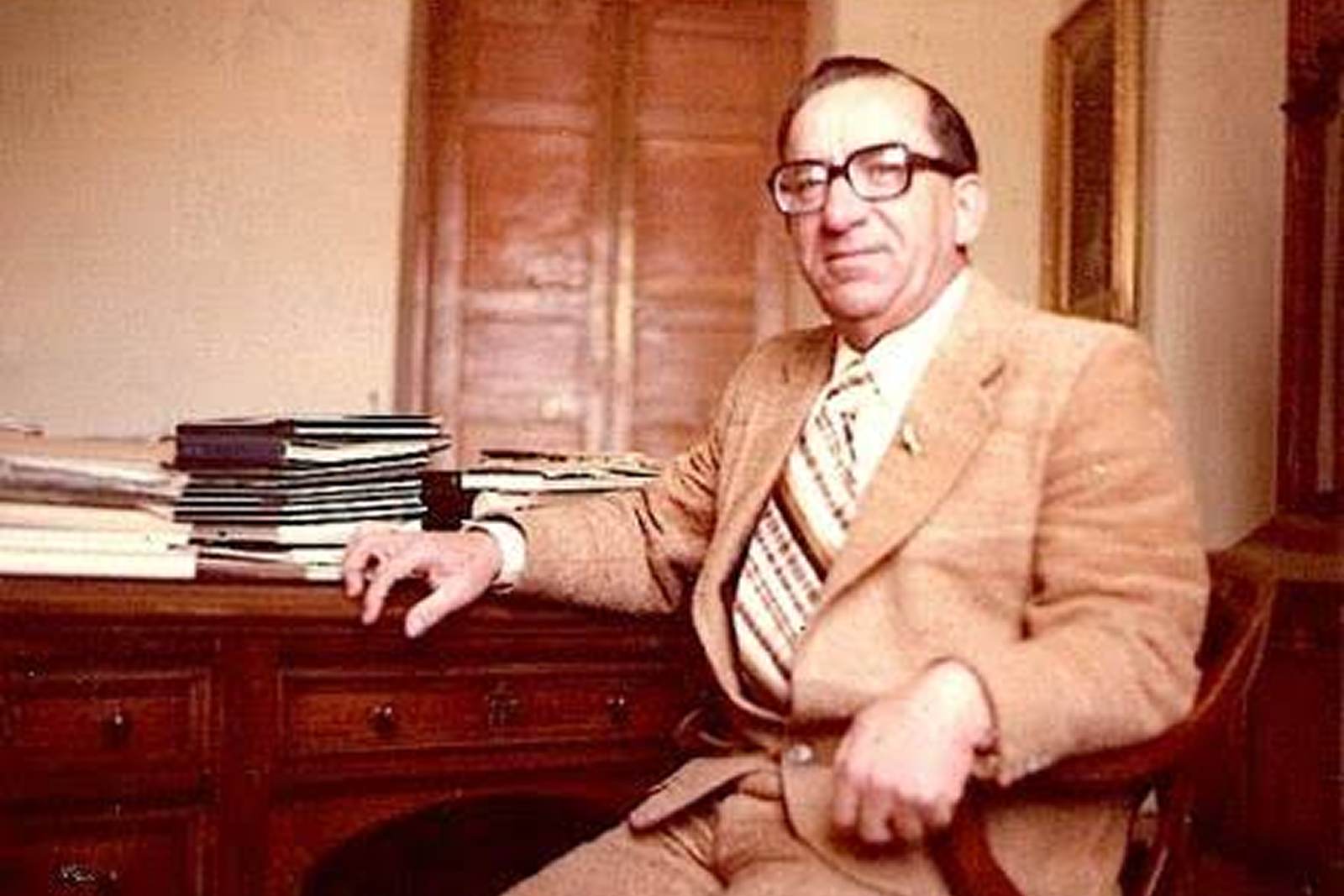
The champion of integration was Dom Mintoff, the formidable leader of the Malta Labour Party, who became Prime Minister after his party won the general election of February 1955, taking 23 seats to the Nationalists' 17. Almost immediately, Mintoff began pushing his most ambitious idea, and it was strikingly concrete.
Under Mintoff's plan, Malta would send three Members of Parliament to the House of Commons at Westminster. Responsibility for Maltese affairs would be transferred from the Colonial Office, the department that ran Britain's colonies, to the Home Office, the department that ran Britain itself. That transfer was the whole point: it would mean Malta was no longer governed as a possession abroad but administered as part of the home country. In exchange for offering Britain a permanent, secure military base in the heart of the Mediterranean, Malta would receive a solemn guarantee of what became the key word of the whole saga: equivalence, that the British government would raise and maintain Maltese wages, employment and social services to the same level as those enjoyed by citizens in the United Kingdom.
It was, in its way, a visionary proposal: a route out of colonial second-class status not through separation but through full equality inside the British state. And remarkably, the British government was willing to take it seriously.
The Round Table Conference
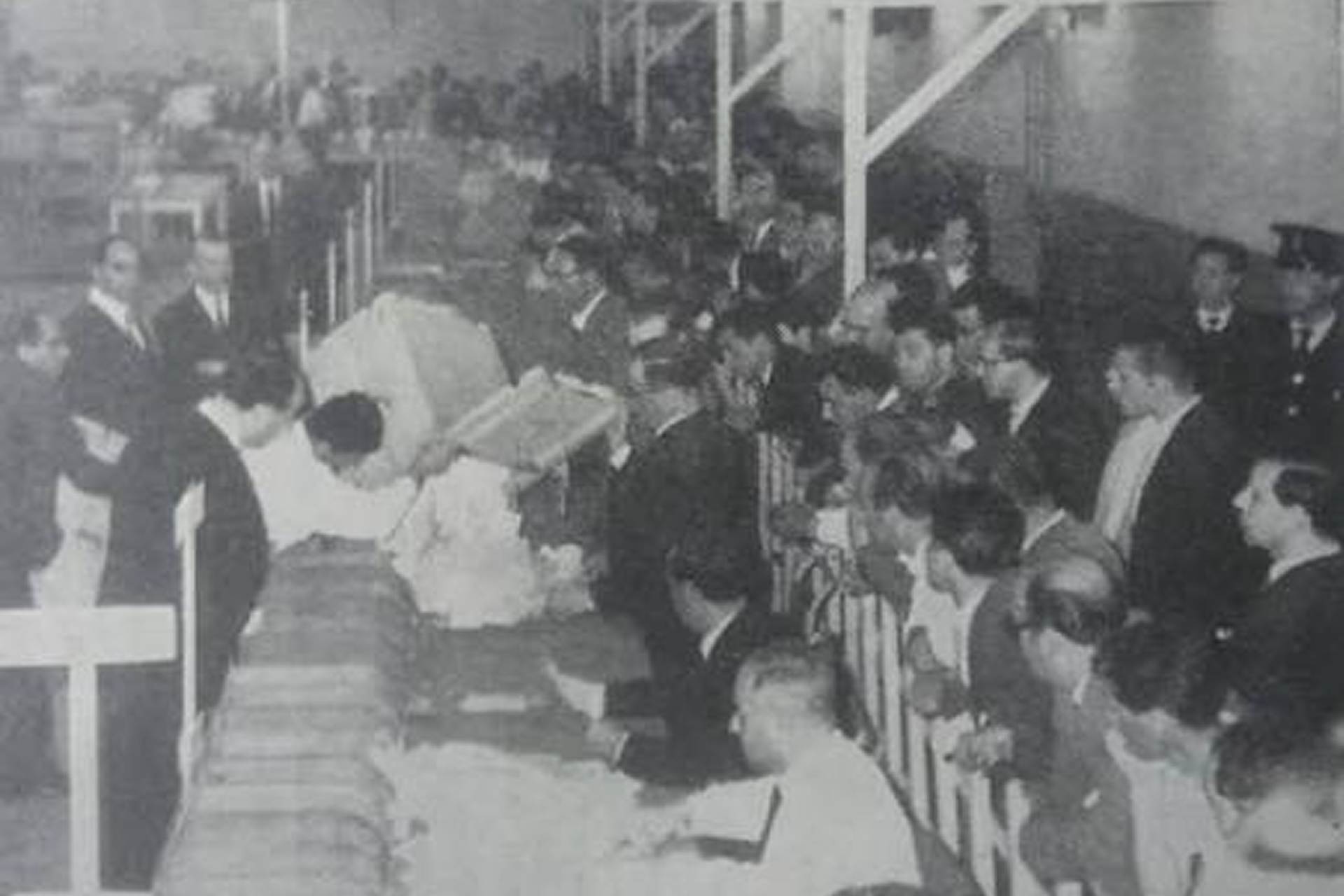
In December 1955, the British government convened a Malta Round Table Conference in London to examine the idea, a cross-party affair, chaired by the Lord Chancellor and attended by Mintoff, by the Nationalist leader George Borg Olivier, by other Maltese politicians, and by the British Colonial Secretary, Alan Lennox-Boyd.
The Conference did two crucial things. It ruled out dominion status for Malta, the halfway-house option, like Canada or Australia, of self-government under the Crown, which the Nationalists wanted. And its report then endorsed the principle of integration, recommending that Malta should indeed have three Members in the House of Commons. The report stated that common membership of the Westminster Parliament would make Malta's equality of status 'manifest'. But it attached a vital condition: the whole scheme depended on the Maltese people giving a 'clear and unmistakable' verdict in favour. And so the question went to a referendum.
The Referendum: 11th–12th of February 1956
On the 11th and 12th of February 1956, the Maltese people voted on whether to integrate with the United Kingdom. On the face of it, the result was a triumph for Mintoff.
Of those who cast a ballot, 77% voted 'Yes'. In raw numbers, of roughly 90,000 people who voted, about 67,000 said yes and 20,000 said no, close to three-quarters in favour. Mintoff travelled to London and stood outside 10 Downing Street to declare that the people of Malta had chosen union with Britain.
But hidden inside that emphatic 77% was the fact that would ultimately doom the whole project. The turnout was only around 59%, and that was no accident. Both the Nationalist Party and the Catholic Church had urged their supporters to boycott the vote entirely. As a result, a huge number of Maltese had deliberately stayed home, and the 'Yes' vote, though overwhelming among those who voted, represented less than half of the total electorate, just 44% of all registered voters had actively said yes. Was that the 'clear and unmistakable' verdict the Round Table Conference had demanded? Supporters said obviously yes; opponents said obviously no. That ambiguity would haunt everything that followed.
Why So Many Maltese said No or Stayed Home
To understand the boycott, you have to understand the two powerful forces ranged against integration and, in fairness, the genuine concerns behind their opposition.
The first was the Nationalist Party, led by George Borg Olivier. The Nationalists did not want Malta to remain tied to Britain as an integral part of it; they wanted dominion status, self-government, like Canada, Australia or New Zealand, with the Queen as head of state but Malta running its own affairs on the road to eventual independence. Their objection to integration was, at heart, about identity: they feared that absorbing Malta into the United Kingdom would dissolve the island's distinct character, its history, its culture and its Catholic way of life, all of which had survived centuries of foreign rule. Since the referendum offered only integration, and not their preferred dominion option, they boycotted it.
The second force was arguably even more powerful: the Roman Catholic Church, led by the Archbishop of Malta, Mikiel Gonzi. In a country as devoutly Catholic as Malta, the Church's position carried enormous weight, and the Church was deeply alarmed. Its central fear was for its own protected, privileged position at the heart of Maltese life. If Malta became part of a United Kingdom whose official state church was the Protestant Church of England, what would happen to the constitutional supremacy of Catholicism in Malta? Might the Anglican Church be placed on an equal, or superior, footing? Archbishop Gonzi mobilised the Church against the proposal, even calling publicly for the referendum to be postponed. For many ordinary, faithful Maltese, a word from the Archbishop was reason enough to stay away from the polls.
Between them, the Nationalists and the Church ensured that the referendum, however lopsided its 'Yes' majority, could never be the unanimous national embrace that would have made integration unstoppable.
The Unravelling: Money, Suez and 'Equivalence'
Even with the referendum won, integration now had to be turned into reality, and over the next two years it slowly, painfully came apart. Here it is worth being careful, because the reasons are often over-simplified.
A popular version of the story pins the blame on the Suez Crisis. In late 1956, Britain launched its ill-fated operation to seize the Suez Canal, partly staged from Malta, and its humiliating failure is often said to have suddenly made Malta strategically worthless to Britain, killing off any reason to pay for integration. There is something to this: Suez did mark a turning point in Britain's imperial confidence and its appetite for costly Mediterranean commitments.
But the most detailed academic study of the episode argues that this is not really the heart of it. According to the historian Simon C. Smith, whose research on the attempted incorporation of Malta is the leading account, the scheme's collapse is to be explained not primarily by any downgrading of Malta's importance after Suez, but by a fundamental deadlock over money. The sticking point was Mintoff's insistence on genuine 'equivalence'; a binding, open-ended British commitment to fund Maltese living standards to the full UK level, and Britain's equal determination not to sign what one British minister bluntly called 'a blank cheque on the British Exchequer'. Mintoff demanded a firm financial guarantee; Britain would promise only limited, conditional aid. Neither side would move. That, more than Suez, is what broke integration.
As negotiations dragged through 1957 and into 1958 with no agreement, relations curdled. The trigger for the final rupture was, fittingly, the dockyard, the very source of Malta's economic anxiety. When the Admiralty announced plans to dismiss dockyard workers, Mintoff was incensed, and declared in the Maltese Parliament that the Maltese representatives no longer considered themselves bound by their agreements and obligations toward the British government. The Colonial Secretary cabled back that Mintoff had 'recklessly hazarded' the entire integration plan.
Resignation, Emergency, and the End of the Dream
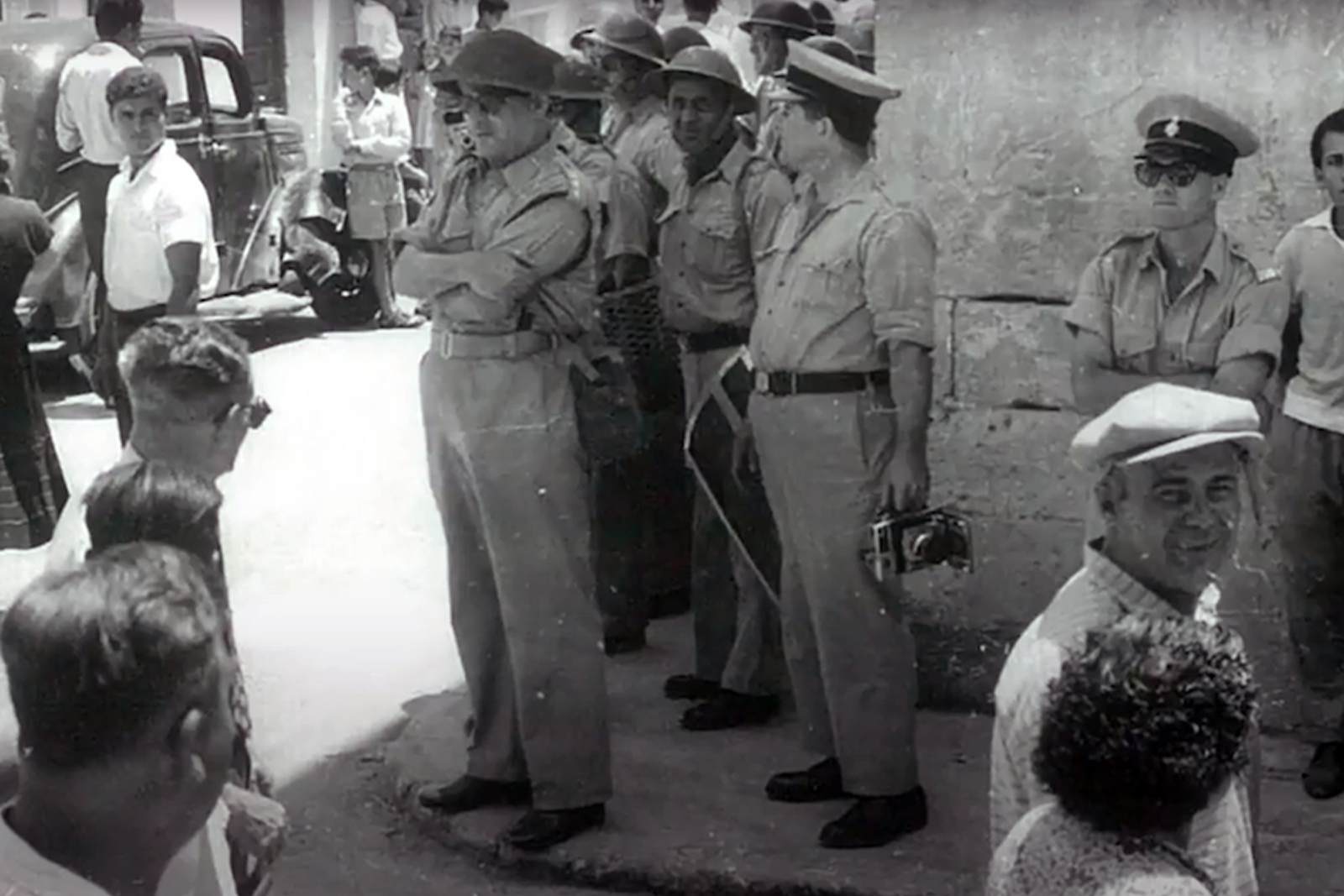
The end came quickly, and violently. On the 21st of April 1958, Dom Mintoff and his ministers resigned, handing their resignations to the Governor, Sir Robert Laycock. Borg Olivier was offered the chance to form an alternative government and declined. With no government able to command the House, the Governor declared a state of emergency and suspended the constitution, and Malta was placed back under direct colonial rule from London.
A week later, on the 28th of April 1958, the General Workers' Union called a general strike, and the accumulated frustration of years; over wages, over the threat of dockyard redundancies, over the collapse of the integration dream that had promised a better life, boiled over into rioting in Valletta and the harbour towns. Vehicles were set alight; police were pelted with stones; troops were placed on standby. The mood in Malta had turned decisively, and bitterly, against Britain.
Integration was dead. In the poisoned atmosphere that followed, the very word became toxic in Maltese politics, and Mintoff's Labour Party abandoned the idea altogether, swinging instead toward the opposite goal: a complete 'Break with Britain' and full independence. The party that had wanted to join Britain now wanted to leave it entirely.
The Road not Taken
What followed is the more familiar story. After a period of direct colonial administration, Britain restored self-government under the 1961 'Blood' Constitution, which recognised Malta as a 'State' and pointed firmly toward independence. And on the 21st of September 1964, under a Nationalist government led by George Borg Olivier, not by Mintoff, Malta became an independent sovereign state within the Commonwealth. It became a republic in 1974, and the last British forces left on the 31st of March 1979, the day Malta marks as Freedom Day.
Integration vanished so completely from Maltese life that many Maltese today are surprised to learn it ever nearly happened at all. And yet it very nearly did. Had the referendum been less ambiguous, had the Church and the Nationalists not boycotted, had Britain been willing to write Mintoff's 'blank cheque', the Maltese might today be sending MPs to Westminster, holding the same passports and pensions as the citizens of London, and celebrating no Independence Day or Republic Day at all.
It remains one of history's great 'what ifs'. Malta, instead, took the more conventional road; to independence, to a republic, and eventually, in 2004, into the European Union, charting its own distinct course as a small sovereign nation rather than as a Mediterranean outpost of the United Kingdom.
A Uniquely Maltese moment
The integration episode is worth remembering not just as a curiosity, but for what it reveals about Malta. It was genuinely unique, no other British colony seriously tried to dissolve itself into the United Kingdom in this way, and that uniqueness says something about the island's peculiar position: too small and too economically dependent to feel safe alone, yet too proud and too distinct to be comfortably absorbed. Integration was an attempt to resolve that tension by having it both ways: full equality and security, inside Britain.
In the end, the things that made Malta Malta; its fierce Catholic faith, its guarded identity, and a proud refusal, on Mintoff's part, to accept anything less than genuine equality, were exactly the things that made full integration impossible. The island could not bring itself to become simply a part of Britain, and Britain would not pay the price to make it worthwhile. And so Malta remained, as it had always ultimately insisted on being, itself and eight years later, it became its own nation instead.

About Dr Hillary Hopkins
Dr Hopkins is a Maltese lawyer, with a love for Malta's historic stories, forgotten corners, and little cultural rabbit holes.