The 1693 Earthquake That Shook Malta and Reshaped Mdina Forever


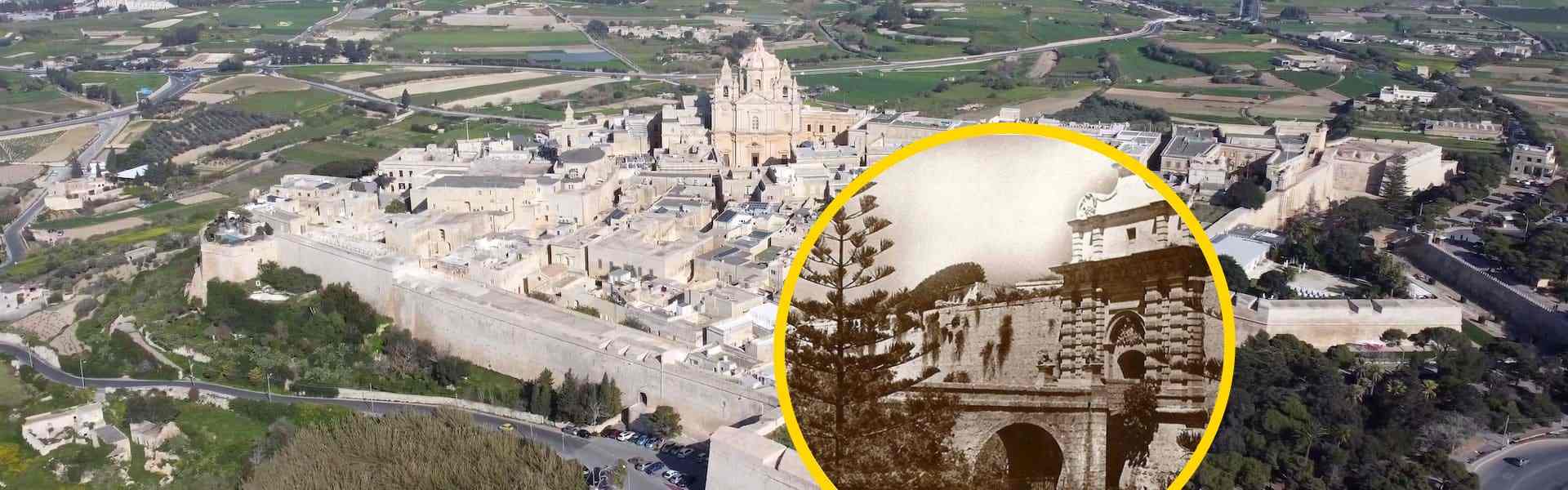
Walk through the silent, golden streets of Mdina today and you are walking through two cities at once. Tucked among the medieval houses and narrow shaded alleys stand grand Baroque buildings, a soaring cathedral, an ornate city gate, a noble palace, whose confident curves belong to a completely different age from the cramped medieval lanes around them. That mixture is not an accident. It is the direct legacy of a single catastrophic night more than three centuries ago.
On the 11th of January 1693, the most powerful earthquake in recorded Italian history struck off the coast of south-eastern Sicily. It killed around 60,000 people and destroyed dozens of Sicilian towns. Its shockwaves rolled south across the sea to Malta, and although not a single person on the Maltese islands died, the earthquake badly damaged Valletta, the Three Cities and, above all, the ancient capital of Mdina. What the Maltese chose to build in the aftermath gave Mdina the face it still wears today.
This is the story of the 1693 earthquake in Malta: what happened that night, what it damaged, and how the rebuilding that followed reshaped the Silent City forever. Every fact below has been checked against the historical and scientific record, including, importantly, an honest account of what the earthquake did and did not do.
The Catastrophe in Sicily
To understand the night, you have to start in Sicily, where the disaster was almost unimaginable in scale.
The 1693 earthquake, known as the Val di Noto or Sicily earthquake, struck at around 9 o'clock on the evening of 11th of January 1693, and according to contemporary accounts the shaking lasted as long as four minutes. It had an estimated magnitude of 7.4, making it the most powerful earthquake in recorded Italian history, with a maximum intensity of XI ('extreme') on the Mercalli scale. It had been preceded two days earlier, on 9 January, by a powerful and damaging foreshock. The epicentre was probably offshore, close to the coast of Catania.
The devastation in south-eastern Sicily was staggering. At least 70 towns and cities were destroyed, across an area of some 5,600 square kilometres. About 60,000 people were killed. In Catania, the deadliest single loss, around 12,000 people died, roughly 63% of the entire population. Ragusa lost about half its people; Noto, Syracuse, Augusta and Modica were all devastated. A series of tsunamis followed, sweeping the coastal villages of the Ionian Sea and the Straits of Messina.
The disaster prompted one of history's great rebuildings. The shattered towns of the Val di Noto were reconstructed in a dazzling, theatrical new architectural style, a style that became known as Sicilian Baroque, and which today gives the rebuilt towns of south-eastern Sicily such a distinctive character that UNESCO inscribed eight of them as a World Heritage Site in 2002. That same architectural wave, born from catastrophe, would wash over Malta too.
The Night in Malta: Shaken, but Spared
In Malta, some 200 kilometres south of the epicentre, the earthquake was felt with frightening force, but, crucially, with far less destructive power than in Sicily, and without a single death.
A series of tremors shook the islands over several days at the start of January 1693, but the great shock of the 11th of January was the worst. People across Malta and Gozo felt the ground move and heard the deep growl of the earthquake. Contemporary Maltese sources, preserved in the National Library in Valletta and in the writings of figures such as the Gozitan scholar Agius de Soldanis, recorded the terror of that night and the damage that followed.
The single most important fact about the earthquake in Malta is this: no one was killed. For all the damage to buildings, the Maltese islands escaped the catastrophic loss of life that engulfed Sicily. This is partly a matter of distance, and partly luck.
But the damage to buildings was real and widespread. In Valletta, according to the historical record, no building escaped unharmed, the damage ranging from simple cracks to, in some cases, complete demolition. The other harbour towns; Vittoriosa, Senglea and Cospicua, the Three Cities, were affected too, though considerably less severely than Valletta. There was also a maritime dimension: in Sicily, the Order of St John lost powder magazines, mills and ovens at Syracuse and Augusta, an important blow to the Hospitaller naval organisation, which then had to find these supplies elsewhere.
The earthquake even left its mark on the sea around the islands. Maltese accounts describe the water at Xlendi Bay in Gozo receding a great distance, by some accounts about a mile, before rushing back, in the words of one source, 'with great rush and murmur': a small tsunami effect, the same phenomenon that devastated the Sicilian coast, reaching Malta in milder form.
Mdina: The Old City takes the Worst of It

It was the old capital, Mdina, that suffered the most. The reason was simple: while Valletta was a relatively new city of solid, recent construction, many of Mdina's buildings were centuries old and poorly maintained, and the ancient structures stood up far less well to the violent shaking.
The most significant casualty was the city's great church. The medieval Cathedral of St Paul, a 13th-century Norman building, traditionally held to stand on the site where the Roman governor Publius met the shipwrecked St Paul, was partially destroyed. The Banca Giuratale, the seat of Mdina's municipal government, was badly damaged too. In neighbouring Rabat, the bell tower and the apse of the church of St Paul came down, and the Tal-Virtù church, standing at high altitude particularly exposed to the shaking, suffered considerable damage. Over on Gozo, the walls of the Cittadella were damaged, although one assessment noted that much of that damage was probably due as much to years of neglect as to the earthquake itself.

The Order of St John responded on two levels. Spiritually, Grand Master Adrien de Wignacourt treated the earthquake as a call to repentance: he ordered the temporary closure of the law courts, the postponement of entertainments, and the cancellation of the 1693 carnival, and the Holy Sacrament was exposed at St John's Conventual Church as the Knights and the public were urged to acts of penance. Practically, the Order sent its chief engineer, Mederico Blondel, to assess the damage; he produced a report on the situation, including in Gozo, dated the 20th of June 1693, which survives in the National Library. The work of recovery had begun.
Damaged, not Destroyed and a Rebuild Already Planned
It is worth being precise here, because the popular memory of 1693 sometimes overstates what happened. The earthquake severely damaged Mdina; it did not flatten it. A great many of the city's medieval buildings survived, which is precisely why Mdina today is such a striking blend of medieval and Baroque, rather than a uniformly Baroque city like the rebuilt towns of the Val di Noto. Visitors still walk past genuine medieval houses, palaces and chapels that came through the night of the 11th of January 1693 intact.
There is a second important nuance, concerning the cathedral. Although the earthquake partly brought it down, a rebuilding of the cathedral had already been planned before the earthquake struck. As far back as 1679, the bishop and the cathedral chapter had decided to replace the old medieval choir with a Baroque one, and the architect Lorenzo Gafà had already been appointed to the work. The earthquake, in other words, did not single-handedly create the decision to rebuild, but it dramatically accelerated and enlarged it, turning a planned partial remodelling into a complete reconstruction. On the 11th of April 1693, three months after the earthquake, the decision was taken to dismantle what remained of the old cathedral and build an entirely new one.
Keeping these two facts straight; that Mdina was damaged rather than destroyed, and that the cathedral rebuild was accelerated rather than purely caused, does not diminish the story. If anything it sharpens it: the earthquake's true historical importance for Malta lies less in what it knocked down than in what the Maltese chose to build in its place.
The Rebuilding: Lorenzo Gafà's Cathedral

What the Maltese built in the place of the damaged old city is the real reason 1693 matters, and it begins with the cathedral.
The new St Paul's Cathedral was designed by the Maltese architect Lorenzo Gafà (1638–1703), the leading Maltese architect of the age and a master of the Baroque. Building works began in 1696. The choir and sacristy, which had survived the earthquake, were incorporated into the new structure, but the rest rose entirely new. The cathedral was largely complete and was consecrated on the 8th of October 1702, with the final work on the dome finished on the 24th of October 1705. It is widely regarded as Gafà's masterpiece, a serene, perfectly-proportioned Baroque composition whose facade still stops visitors in their tracks as they emerge from Mdina's narrow streets. Inside, it holds works by the great Calabrian painter Mattia Preti, including depictions of the Conversion and the Shipwreck of St Paul.
Gafà's cathedral was the first and greatest statement of the new Mdina, but it was only the beginning. The damaged city would, a generation later, be comprehensively remade.
De Vilhena's Transformation: The Mdina We See Today

Three decades after the earthquake, Mdina received the makeover that defined its modern appearance. On the 3rd of November 1722, the newly-elected Grand Master António Manoel de Vilhena issued orders for the comprehensive restoration and renovation of the old capital, which still bore the scars of 1693 and remained, in large part, a medieval city.
The work was entrusted to the French architect and military engineer Charles François de Mondion, who introduced strong French Baroque elements into the medieval fabric. The transformation was dramatic:
- A magnificent new Mdina Gate was built in 1724, set a few metres to the side of the old medieval gate (which was walled up), decorated with de Vilhena's coat of arms and, on its inner face, statues of Malta's patron saints Publius, Paul and Agatha. It remains one of the most recognisable structures in Malta, familiar from countless photographs (and, more recently, as a filming location for the fictional King's Landing in Game of Thrones).
- The grand Palazzo Vilhena was built on the site of the demolished remains of the old castle (the Castellu di la Chitati), as a magnificent French Baroque palace; today it houses the National Museum of Natural History.
- Public buildings including a rebuilt Banca Giuratale, the one damaged in the earthquake, and the Corte Capitanale (the law courts) were constructed. The city's medieval fortifications were rebuilt, the old Turri Mastra was demolished and replaced by the Torre dello Standardo.
The result of all this; Gafà's cathedral of the 1690s–1700s, and de Vilhena and de Mondion's renovation of the 1720s, is the Mdina that visitors walk through today. The Baroque buildings that give the Silent City so much of its grandeur exist because the earthquake of 1693 created the damage, the opportunity, and the impetus to build them. Without that January night, Mdina would look very different.
The Legacy: A Baroque City Born from a Disaster
The 1693 earthquake holds an unusual place in Maltese history. It was, by the standards of what it did to Sicily, a near-miss for Malta, a disaster that killed tens of thousands just across the water but took no Maltese life at all. And yet its mark on Malta is permanent and visible, because of what it set in motion.
It is, in fact, the most significant earthquake felt in Malta in recorded history. Malta sits about 200 kilometres south of the boundary between the African and Eurasian tectonic plates, on a relatively stable underwater plateau, crossed by a system of faults (the Pantelleria, Malta and Linosa grabens) that produce most of the tremors the islands feel. Seismic risk in Malta is considered low, there have been few damaging events and, as far as the record shows, no recorded Maltese deaths from an earthquake, but the islands are not immune, as later tremors (in 1856 and 1908, both felt strongly in Malta) would confirm. The events of 1693 remain the benchmark against which Maltese seismic history is measured.
But the deepest legacy of 1693 is not seismological. It is architectural and cultural. The earthquake accelerated the arrival of the Baroque in Malta, gave Lorenzo Gafà the commission for his masterpiece, and ultimately prompted the wholesale Baroque renovation of the old capital. Like the famous towns of the Val di Noto across the water in Sicily, Mdina is, in part, a city built out of catastrophe, a place whose serene golden beauty was, paradoxically, made possible by one terrible night of destruction.
The next time you stand before the facade of St Paul's Cathedral, or cross the bridge and pass beneath the Mdina Gate into the Silent City, it is worth remembering what made them possible. They are, in a very real sense, the most beautiful things the earthquake of 1693 ever did, the grace that Malta built in answer to the violence of that January night.

About Dr Hillary Hopkins
Dr Hopkins is a Maltese lawyer, with a love for Malta's historic stories, forgotten corners, and little cultural rabbit holes.