5 Good Things That Happened in Malta and the EU Recently


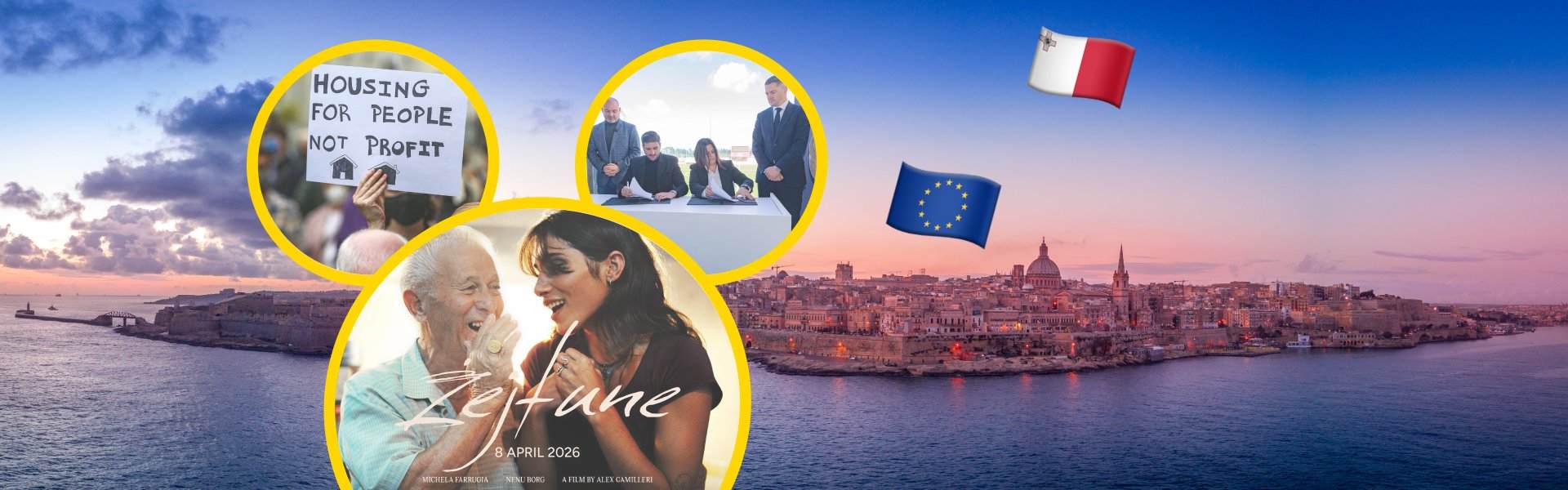
Plenty of good things happened that got lost beneath the noise of the usual news cycle. From a Maltese film making waves across fourteen countries to a food truck celebrating local fishermen in Marsaxlokk, and from children getting arts funding through football to the EU taking meaningful steps on housing and online shopping safety, here are five positive stories worth pausing for this week.
Maltese Film Żejtune is Heading to Cinemas in 14 Countries

Maltese cinema had a moment to be proud of this week. Żejtune, the new feature film by Maltese-American director Alex Camilleri, has already been picked up for distribution in fourteen countries across Europe and beyond, following its international premiere at the Göteborg Film Festival in Sweden earlier this year. The film also screened at the European Film Market during the Berlin International Film Festival, where it attracted significant attention.
The story follows Mar, played by Michela Farrugia, a young woman preparing to leave Malta behind after inheriting land from her estranged mother. Along the way she meets Nenu, an 82-year-old folk singer whose għana music gradually draws her back to the island she was so determined to escape. The film features real Maltese folk artists and was shot against the backdrop of Malta's countryside and coastline.
A special Q&A screening took place at Citadel Cinemas in Gozo on the 30th of March, and the film opens nationwide across Malta and Gozo on 8th of April at Eden Cinemas, Embassy Cinemas and Spazju Kreattiv. For anyone who loves Maltese culture, language and landscape on the big screen, this one is not to be missed.
A New Food Truck in Marsaxlokk is Putting Local Fish in the Spotlight

On Sunday 29th of March, the government launched a new food truck in Marsaxlokk as part of the national campaign 'Skopri l-Varjetà, Kul Ħut Sostenibbli' ; meaning 'Discover the Variety, Eat Sustainable Fish'. The initiative, run in collaboration with the Department of Fisheries and Aquaculture, aims to encourage Maltese people to explore lesser-known local fish species while supporting sustainable eating habits and the fishermen who catch them.
The food truck will be in Marsaxlokk every Sunday, where the public can taste fresh locally caught fish, speak with experts from the sector, and learn about the nutritional and environmental benefits of eating a wider variety of what the Maltese sea has to offer. It is a simple but lovely idea: bringing people back to something local, fresh and worth celebrating.
Marsaxlokk has long been the heart of Malta's fishing tradition, home to around 70% of the Maltese fishing fleet and the iconic Sunday fish market. This new initiative adds another reason to make the trip down south on a Sunday morning.
Malta Launched a Fund to Bring Arts & Culture into Children's Football Nurseries

In a genuinely heartwarming piece of news, Arts Council Malta and the Malta Football Association joined forces to launch SportArti, a national framework that will bring arts and culture into football nurseries across Malta and Gozo. Through the scheme, €50,000 per year will be made available to nurseries that are members of the Malta Youth Football Association, allowing them to run creative learning projects, collaborate with artists and take part in cultural initiatives.
The idea behind it is straightforward and appealing: children who grow up on the pitch deserve the chance to express themselves creatively too. Ten nurseries will each receive €5,000 annually to develop their own artistic projects, which could range from music and visual arts to storytelling and community collaborations. The agreement runs for three years.
It is a small but meaningful investment in the next generation, recognising that the qualities developed through art; imagination, confidence, curiosity are just as valuable as those learned on the football pitch. For families with children in nurseries across the island, this is a welcome addition to what sport can offer.
The EU Agreed its Biggest Customs Overhaul Since 1968, with Better Protections for Online Shoppers

On the 26th of March, the European Parliament and Council reached a landmark agreement on the most sweeping overhaul of EU customs rules since the customs union was established in 1968. The reform is driven largely by the explosion in online shopping and the challenges it has created, from unsafe or non-compliant products slipping through, to unfair competition between EU retailers and overseas platforms that have long operated under looser rules.
One of the most consumer-friendly changes is a shift in responsibility: under the new rules, online platforms and overseas sellers will be treated as the importer of goods sent to EU customers, meaning they, not the shopper will be responsible for ensuring customs formalities and payments are properly handled. This should mean fewer surprise charges and fewer parcels held up at the border for everyday people ordering online.
The reform also introduces a new EU customs data hub, allowing businesses to submit information through a single platform rather than navigating multiple national systems. A recent Commission study found that a significant proportion of imported cosmetics, food supplements and protective equipment did not comply with EU safety standards, so the tightened framework matters for product safety too. For anyone who shops online, this is progress worth knowing about.
The EU took a Concrete Step towards tackling the Housing Crisis Affecting Millions of Europeans

Housing affordability has become one of the most pressing everyday concerns for people across Europe, and this week the EU took a meaningful step towards addressing it. The European Parliament voted on its first-ever dedicated report on the housing crisis, setting out recommendations to increase the supply of affordable homes, mobilise greater investment, reduce the red tape that slows down construction, and support the millions of people currently priced out of decent housing.
The Parliament's proposals complement the European Commission's Affordable Housing Plan, which was presented in December 2025 and includes a commitment to host the first-ever EU housing summit, bringing together heads of state, cities, regions and housing stakeholders to find common ground on solutions. An additional €10 billion from the EU budget has been earmarked for affordable housing investment in 2026 and 2027, with a further €375 billion to be mobilised through partner financial institutions by 2029.
Housing costs in Europe have risen sharply over the past two decades, with home prices up more than 60 per cent since 2015 and rents up by over a quarter in the same period. For young people in particular, the situation has become increasingly difficult. The fact that housing has now moved firmly to the top of the EU's political agenda is itself a form of progress, and one that should eventually translate into real change for people across the bloc, including here in Malta.
Good News Worth Remembering
Maltese cinema travelling to fourteen countries, local fishermen getting a new platform in Marsaxlokk, children in football nurseries gaining access to arts and culture, clearer rules for online shoppers across Europe, and the EU finally putting housing at the top of its agenda; these are the kinds of stories that deserve a moment of attention.
Progress is rarely loud. But it is always worth noticing.

About Matthew Gollcher
Hi, I'm Matthew, an SEO Specialist and Content Writer at Yellow Pages Malta. I'm passionate about creating meaningful content and exploring AI's creative possibilities. When I'm not working, I enjoy the gym, time with friends, watching series and reading, and playing guitar. I'm always eager to learn and grow both personally and professionally.