The History of Fenkata: Malta's Beloved Rabbit Feast


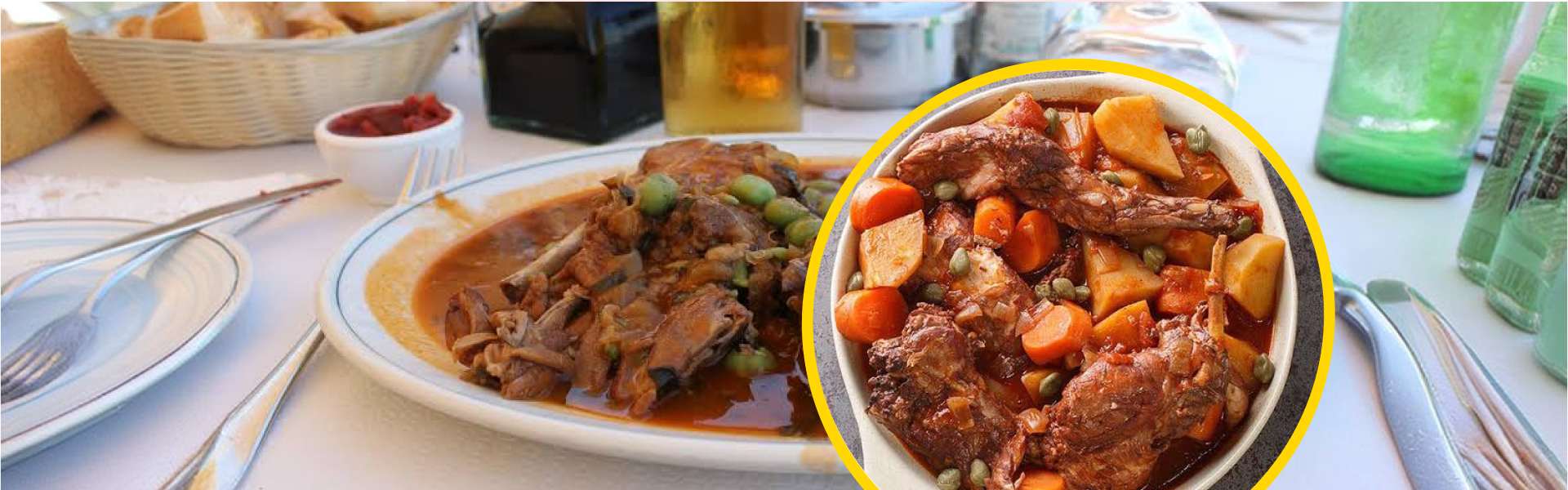
Ask a Maltese person where to find the best fenkata, and you will very rarely be pointed to a restaurant. The honest answer, almost every time, is: 'at my house'. The village restaurants of Mġarr and Rabat and Nadur are, at most, the acceptable public compromise, but everyone secretly believes the real thing happens around their own family table.
That tells you the most important fact about the fenkata straight away: it is not really a dish. It is an event. The word fenek simply means 'rabbit' in Maltese, but a fenkata is something you cannot translate in a single word, it is the whole long, loud, unhurried afternoon of eating rabbit together: the food, yes, but also the wine drunk, the arguments had, the relatives who stayed till dark. It is Malta's national dish and its most sociable ritual rolled into one.
It is also a dish with an unusually rich and contested history, one that reaches from the hunting laws of the Knights of St John, through Malta's oldest folk festival, to a serious academic argument about whether eating a rabbit can be an act of political defiance. This is the carefully-researched story of the fenkata: what it is, where the rabbit came from, why it matters so much, and how much of the romantic version actually stands up. Where the popular story runs ahead of the evidence, we'll say so.
What a Fenkata Actually Is

A proper fenkata is a two-act meal, and the sequence is close to sacred.
The first course is almost always pasta, typically spaghetti tal-fenek, spaghetti dressed in the deep, dark, slow-cooked sauce in which the rabbit has been simmering, rich with garlic, tomato and red wine and carrying all the earthy flavour of the meat. Crucially, this is the same pot doing double duty: the rabbit is cooked first, its sauce feeds the pasta, and then...
The second course is the rabbit itself, and here there are two great traditions. Stuffat tal-fenek is the classic rabbit stew, the pieces braised long and slow until the meat falls from the bone, in a gravy of wine, tomato, garlic, bay leaves and herbs, served with potatoes or with crusty Maltese bread to mop up the sauce. The alternative is fenek moqli, rabbit fried in garlic and wine; quicker, sharper, and much loved. Many a full fenkata serves both.
And then there are the rituals around the edges, which are what make it a feast rather than a dinner. A fenkata characteristically opens with a spread of appetisers, galletti (Maltese water biscuits), ġbejniet (little sheep's-milk cheeselets), olives, bigilla bean paste, and closes, traditionally, with nougat and peanuts, served almost as a duty, to make sure that anyone who somehow did not eat themselves to a standstill on the rabbit finishes the job. It is washed down with plenty of wine, and it is not rushed: a real fenkata occupies an entire afternoon, and at a village restaurant on a Sunday you should reckon on the Maltese families around you settling in for the long haul.
The Rabbit: An Ancient Arrival

The star of all this, the European rabbit (Oryctolagus cuniculus), is not actually native to Malta. Like almost everything else on these islands, it arrived by sea, and, as with so much of Malta's deep past, exactly when and with whom is not certain.
You will read confident claims online that the Phoenicians brought rabbits to Malta around 1500 BC, or that it was the Romans. The honest position is that both are possibilities and neither is firmly established. What is clear is that the rabbit is an ancient introduction that found the Maltese islands thoroughly congenial: the dry limestone terrain, the rubble walls and the open countryside suited it perfectly, and it multiplied. By the medieval period, wild rabbit had become an accessible and important source of meat, especially for the poor, on an island where larger livestock was scarce and most protein came from the sea. Malta is too hot, too dry and too small to sustain big herds of cattle, so for centuries the ordinary Maltese diet leaned heavily on bread, fish and whatever small game could be had. The rabbit was the great exception: affordable meat, if you were allowed to catch it.
That last phrase, if you were allowed to catch it, is where the history of the fenkata becomes genuinely interesting.
Rabbit and Resistance: The Argument of the Historians

The most influential account of why rabbit matters so much to the Maltese comes from Professor Carmel Cassar of the University of Malta, a historian who spent years in the Inquisition archives and has written extensively on early-modern Maltese society. His study of the dish carries a title that is worth quoting exactly, because its punctuation matters: 'Fenkata: An Emblem of Maltese Peasant Resistance?' That question mark is doing real work.
The argument runs like this. Under the Knights of St John (who ruled Malta from 1530 to 1798), hunting was treated the way European elites everywhere treated it as a sport and a privilege, reserved for the ruling class. The Order issued edicts that restricted or regulated the hunting of rabbit by the ordinary population, sometimes requiring licences, sometimes banning it outright. For a peasantry that depended on wild rabbit as one of its few sources of meat, and as vital pest control, since rabbits devastate crops, this criminalised something close to a necessity. In that context, Cassar argues, the act of catching and eating a rabbit could take on a deeper meaning: a small, edible assertion of independence against a foreign ruling order. Rabbit became, in this reading, 'an emblem of peasant resistance', a food bound up with survival, defiance and an us-against-them solidarity among the rural Maltese.
It is a genuinely compelling thesis, and it has become the standard way the fenkata's significance is explained. But two honest cautions are worth keeping in view, and Cassar, to his credit, is himself careful about them.
The first is that the origins of the meal itself are murky. As Cassar plainly notes, 'there seems to be no indication of how a meal consisting of rabbit meat came into being.' We know rabbit was eaten; we do not have a clean origin story for the fenkata as a ritual. The second is that there is a competing, or perhaps complementary, origin that points in almost the opposite social direction. On the very same hunting culture, some accounts hold that the communal rabbit feast actually grew out of the Knights' own regulated hunting parties: licensed gentlemen would spend a day hunting, and afterwards cooks would butcher and prepare the catch into a shared rabbit feast, and from that, the tradition of the fenkata was born. In other words, the rabbit feast may be as much an inheritance from the ruling hunting culture as a rebellion against it. Both threads are probably true at once, which is exactly why the subject is so rich.
A Word on Rabbits and Rebellion

Because the 'resistance' story is so appealing, you will sometimes see it pushed further, into the claim that a ban on rabbit-hunting actually caused one of the most dramatic events of 18th-century Malta, the Rising of the Priests of 1775. Here we need to be careful, because that overstates the case.
The Rising of the Priests (in Maltese, Ir-Rewwixta tal-Qassisin) was a short-lived revolt in September 1775, led by the priest Dun Gaetano Mannarino, in which rebels briefly seized Fort St Elmo and St James Cavalier and raised the banner of St Paul over Valletta before being swiftly crushed. Its causes, as the historical record makes clear, were primarily economic and political: the treasury had been drained by the lavish spending of the previous Grand Master, Pinto; his successor Francisco Ximénez de Tejada imposed unpopular austerity measures and pushed up the price of corn; and there was bitter tension between the Order and the Maltese clergy.
Rabbit does have a genuine walk-on part in this story, however. Among the measures that made Grand Master Ximénez so unpopular was an edict restricting hunting, he is recorded as having banned the hunting of hares, which added to the general resentment of his rule among ordinary people. So it is fair to say that hunting restrictions were one grievance among several that fed the discontent of 1775. It is not accurate to say that a rabbit-hunting ban caused the rebellion. The truthful version is the more modest one: rabbit-hunting was part of a broader web of grievances against the Knights, which is precisely what makes Cassar's 'emblem of resistance' reading plausible without needing to be exaggerated.
What is clear is that the restrictions eased in the later 18th century. As hunting was liberalised, as rabbit-farming and domestication spread (a practice possibly imported from France), and as the hardy indigenous Maltese rabbit multiplied, prices fell and rabbit meat became available to Maltese of every class. When the British arrived in 1800, they went further and actively facilitated hunting, a decree of January 1801, for instance, granted militia volunteers the right to carry a musket for hunting. The rabbit, once hedged about with restrictions, became freely everyone's.
L-Imnarja: The Festival of the Fenkata
If there is one day on which the fenkata is written into the Maltese calendar, it is L-Imnarja, Malta's oldest and most cherished folk festival, celebrated on the 29th of June, the feast of Saints Peter and Paul.
Imnarja (the name derives from the Latin luminaria, 'the illuminations', recalling the bonfires and torches that once lit the early-summer night) is a genuinely ancient harvest festival, and it has been intertwined with rabbit for centuries. Under the Knights, tradition holds, Imnarja was one occasion when ordinary Maltese were licensed to hunt and eat the wild rabbit that was otherwise the elite's preserve, which only deepened the bond between the festival and the feast. To this day, the heart of Imnarja is a vast open-air fenkata in Buskett Gardens, the wooded valley below Verdala Palace near Rabat, where Maltese families gather through the night to eat rabbit under the trees while għana, traditional Maltese folk-singing, carries across the woodland.
There is a lovely historical wrinkle here, though, that rewards honesty. The earliest detailed descriptions of the Imnarja feast do not actually mention rabbit stew as we know it. The French writer De Boisgelin, describing the scene in 1804, records that 'each family was seated under a tree, and partook of a meal, the principal dish of which was a pie', and 18th-century Maltese recipes confirm that rabbit was often baked into a pie in that era, rather than stewed or fried as it usually is today. So the Imnarja rabbit tradition is genuinely old, but the specific stuffat and spaghetti tal-fenek that define a modern fenkata represent a later evolution of how the Maltese prepare their favourite meat. The love of rabbit at Imnarja is centuries deep; the exact form on the plate has kept changing.
More than a Meal: The Culture of the Fenkata

What has never changed is what the fenkata is for. It is, above all, a machine for togetherness. A fenkata is how the Maltese express joy, welcome a visitor, mark a milestone, or simply reclaim a Sunday. It is deliberately communal and deliberately slow, you cannot rush a pot of stuffat, and you are not meant to rush the afternoon around it either.
Like many deeply-held food traditions, it comes with unwritten rules that every Maltese family argues about: whether the rabbit should be marinated in wine overnight; whether the liver goes into the sauce; how much garlic is 'enough' (the answer is always more); whether frying or stewing is superior; and, above all, whose grandmother did it best. These are not trivial disputes. They are the sign of a dish that people genuinely care about, passed down and defended across generations.
The rabbit has even left its mark on the Maltese language and landscape beyond the kitchen. Malta's handsome national hunting dog, the Kelb tal-Fenek, literally 'rabbit dog', known internationally as the Pharaoh Hound, is named for the animal it was bred to chase across the rocky Maltese terrain. When the creature you hunt gives its name to your national dog and your national dish, it is fair to say it has become part of the national furniture.
Where the Fenkata Lives Today
The modern geography of the fenkata is still, tellingly, rural. The villages most associated with it, Mġarr in the northwest, Baħrija (a hamlet above Rabat famous for enormous portions), and Rabat itself on Malta, along with Nadur and other villages on Gozo, are exactly the inland, agricultural communities where the tradition was always strongest. These are the places people drive out to for a proper fenkata: casual, family-run, unpretentious restaurants that have been serving the same two-course rabbit feast for decades, busiest at Sunday lunch when whole Maltese families take over the room for the afternoon.
But as every Maltese person will remind you, the restaurant fenkata is the public compromise. The true fenkata is the one held at home, or in a garage, or in a field, a group of family and friends, a few rabbits, a vat of sauce, spaghetti, wine, nougat, and an afternoon with nowhere else to be. That is the version that no restaurant can quite replicate, and the one that keeps the tradition genuinely alive rather than merely on a menu.
The Feast that tells a Nation's Story
The fenkata is a wonderful example of how a single dish can carry the whole history of a place. In one long afternoon of rabbit and wine you can taste an island that could never feed itself easily, that depended on a small wild animal for its meat, that chafed under the hunting laws of a foreign ruling order, that wove the rabbit into its oldest festival and its national dog and its language, and that turned the simple business of eating together into one of the defining rituals of its culture.
How much of the romantic 'resistance' story is literally true, we have tried to weigh honestly: the peasant-defiance reading is a serious and attractive scholarly argument rather than a proven fact, the meal's exact origins are genuinely murky, and the rabbit's role in the great rebellion of 1775 was real but modest. But the deeper truth the fenkata expresses needs no exaggeration at all. On an island whose history is a long story of outside rulers, the rabbit was the food the ordinary Maltese made their own, and the fenkata is the feast in which they still, every Sunday and every Imnarja, gather to celebrate exactly that.
So the next time someone offers you a fenkata, understand what is actually being offered. Not a plate of rabbit stew; an afternoon, a history, and a seat at the Maltese table. And if you want the very best one, you already know the answer. It's at somebody's house.

About Matthew Gollcher
Hi, I'm Matthew, an SEO Specialist and Content Writer at Yellow Pages Malta. I'm passionate about creating meaningful content and exploring AI's creative possibilities. When I'm not working, I enjoy the gym, time with friends, watching series and reading, and playing guitar. I'm always eager to learn and grow both personally and professionally.