The Maltese Who Were Tried for Treason After WWII: The Conspiracy Trials of 1946-47


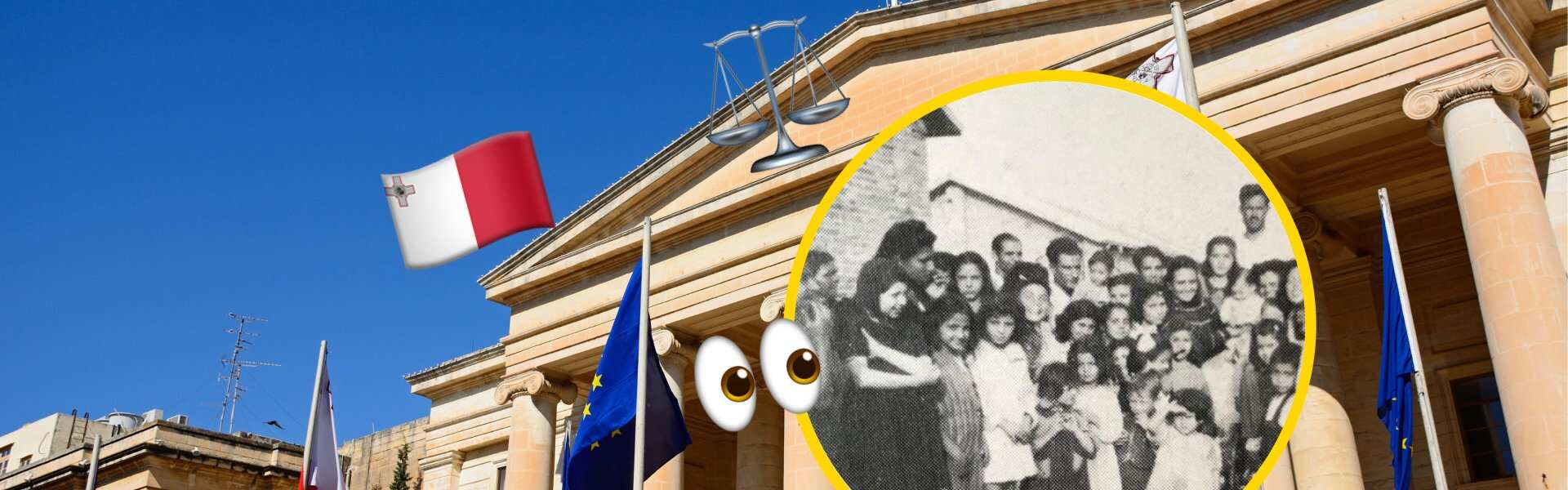
On the morning of the 7th of January 1947, a jury was sworn in at Corradino Prison in Paola. The proceedings about to begin were a defining historical event. Seventeen Maltese men, located in Italy by Maltese police officers acting under British Field Security, were brought back to Malta to face trial.
They were charged with treason: specifically, with having become members of the Comitato d'Azione Maltese, the Maltese Action Committee, at a time when Italy was at war with Britain, and with conspiring to overthrow His Britannic Majesty's Government in Malta by assisting Italy. Eleven of the seventeen had the prosecutor asking for them to be sentenced to death by hanging.
The trials lasted weeks. Witnesses were called. Evidence was presented. Maltese juries deliberated. The verdicts came in; one after another, in four separate jury trials.
Every single one of the seventeen was acquitted.
The most prominent Maltese figure associated with the organisation, Dr Carlo Mallia, escaped the British net entirely. He had pressured Maltese in Italy to renounce their British citizenship, remained in Italy after the war, and was never tried.
This is the story of the Conspiracy Trials of 1947, the post-war treason cases that historian Henry Frendo, reviewing Laurence Mizzi's 1996 book Mixlija b'Kongura u Tradiment, called 'one of the great and perhaps saddest ironies' of modern Maltese history. Some of the men who had aided the Italian war effort, or had been drawn into its apparatus, were acquitted by Maltese juries. The Maltese nationalists who had been deported without charge by the British in 1942 had been forced to risk their lives in heavily bombed seas and got nothing. The chapter has been almost entirely forgotten outside academic circles, but it shaped the modern Maltese state.
HowMalta got to 1947: Italianità, the Sette Giugno, and the Road to War
To understand the Conspiracy Trials, one must understand the political world of Malta in the half-century before them.
Throughout the nineteenth century and the first decades of the twentieth, Malta's political life was dominated by a fundamental question: was Malta culturally Italian, with Italian as its language of education, law and high culture, or was it British, with English in those roles? The colonial government of Britain favoured the second answer; the established Maltese elite; the lawyers, the doctors, the academics, the Catholic clergy, favoured the first. The Italian language was the language of the courts, the church, the medical schools and the bar. To be educated in Malta meant, for most of the nineteenth century, to be educated in Italian.
The Maltese Nationalist Party, founded by Fortunato Mizzi in 1880 as the Partit Anti-Riformista, was the political expression of that Italian-cultural Malta. Mizzi died in 1905, but the Nationalist movement he had founded continued under his son, Enrico (Nerik) Mizzi, through into the 1930s and 1940s.
On the 7th of June 1919, the date Malta commemorates as Sette Giugno, British troops fired on an unarmed crowd in Valletta protesting against rising bread prices. Three men, Manwel Attard, Wenzu Dyer and Ġużè Bajada, were killed by British gunfire on the 7th of June. Carmelo Abela was bayoneted the following day and died of his wounds on the 16th of June. The Sette Giugno killings hardened anti-colonial feeling and gave the language and identity question a sharper political edge. For the rest of the inter-war period, the Maltese Nationalists and a vocal minority of Maltese intellectuals, increasingly drawn towards Mussolini's Italy as the 1920s and 1930s went on, saw the British colonial state as the obstacle between Malta and its true cultural destiny.
By the early 1930s, Fascist Italy was actively cultivating that constituency. The Italian government subsidised pro-Italian publications in Malta. It funded scholarships for Maltese students at Italian universities. It opened in Rome a residential institution called the Casa della Redenzione Maltese, the 'House of Maltese Redemption', to host Maltese students brought to Italy for ideological as well as academic education. Italian historians later confirmed that Mussolini personally received Enrico Mizzi in Rome on the 30th of November 1936, and that Italian funds flowed directly to him.
The British colonial government responded with increasing severity. In 1933, the self-government constitution was suspended after the Maltese ministry approved Lm5,000 for the teaching of Italian. In 1934, Italian was removed from the law courts. In 1937, Dr Carlo Mallia, a Gozitan, professor of law at the University of Malta, former Nationalist Justice Minister between 1924 and 1926, was dismissed from his university chair by the Colonial Office for his fascist sympathies. He left Malta for Rome and would never return.
In Italy, the Maltese irredentist community gathered around two principal figures: the Italian academic Professor Umberto Biscottini, who headed both the Casa del Fascio in Valletta (before his expulsion) and later the Maltese Action Committee in Rome; and Mallia himself, who in exile was appointed National Councillor of the Chamber of Fasci and Corporations, representing Malta in the corporatist parliament of fascist Italy. Mallia became the leading Maltese voice in fascist Rome. Under his direction, the irredentist newspaper Malta, which had been banned by the British colonial authority, was relaunched as an exile publication.
Wartime: Deportation, Internment, and The Road to the Gallows

When Italy declared war on Britain on the 10th of June 1940, Malta's pro-Italian community became, in British eyes, a potential fifth column. The wartime British administration moved quickly and harshly.
On the 30th of May 1940, forty-eight Maltese were arrested without formal charge under Section 18(1c) of the Malta Defence Regulations of 1939. Among them was Enrico Mizzi himself, arrested at the offices of the newspaper Malta in Valletta. Internees were held at St Agatha's Convent in Rabat without trial, without access to evidence, and without the right to institute judicial proceedings. They included Mizzi, the Chief Justice Sir Arturo Mercieca, the editor of the Church newspaper Herbert Ganado, the art critic Vincenzo Bonello, professor of law Dr Giulio Cortis, and Captain Alfred Bencini of the British Army.

On the 3rd of January 1942, an Area Order was issued informing the internees that they would be deported from Malta. The internees impugned the order in court, and on the 7th of February 1942, the First Hall of the Civil Court ruled that the Malta Defence Regulations of 1939 did not empower the Governor to deport British subjects. The Council of Government dominated by Lord Strickland's pro-British Constitutionalists, instantly convened to pass new legislation (Ordinance No. 1 of 1942) granting emergency powers for the removal of detained persons. The Nationalist co-leader Sir Ugo Mifsud, attempting to deliver a constitutional speech against the legislation, collapsed mid-speech from a heart attack he never recovered from; he died days later.
On the 13th of February 1942, around 41 of the internees, the exact number varies between accounts, were forcibly deported from Malta aboard HMS Breconshire, a former cargo liner taken over by the Royal Navy. Their ship was attacked by Axis bombardment twenty times on its way to Egypt. From Alexandria they were taken on a 3,400-kilometre overland journey to internment camps at Bombo, Soroti and Entebbe in Uganda, places notoriously dangerous for Europeans. Most of the deportees suffered from malaria. On the 4th of May 1942, the Court of Appeal, headed by Chief Justice Sir George Borg, ruled the deportation illegal, but by that time the deportees were already in Africa.
They were not allowed back to Malta until the 8th of March 1945, three full years later, as the war in Europe was nearing its end. The former judge of the European Court of Human Rights, Giovanni Bonello, has described the wartime deportation as 'a crime against humanity'.
Meanwhile, in fascist Italy, the Maltese irredentists were going in the opposite direction. Many had renounced their British citizenship and taken Italian citizenship. Some had joined the Italian armed forces. The Maltese Action Committee in Rome continued to publish Malta, broadcast irredentist propaganda in Maltese, and prepare for the Axis invasion of the island. On the 18th of May 1942, one of them, the young artist Carmelo Borg Pisani, was put ashore at Dingli Cliffs on a reconnaissance mission for the planned Axis invasion of Malta (codenamed Operation Herkules). The mission went badly wrong almost immediately: a storm washed away his rations, he could not climb the cliffs, and he was forced to flag down a passing patrol boat. Taken to RNH Mtarfa, the naval hospital, he was recognised by his childhood friend Captain Tom Warrington, who reported him to British Intelligence.
Borg Pisani was tried in secret at Corradino Prison before three judges, headed by Chief Justice Sir George Borg. The trial took place during the war, it began on the 12th of November 1942 and ended with sentence on the 19th of November 1942. Borg Pisani argued that, having renounced British nationality and served Italy, he should not be treated as a British subject committing treason but as an enemy combatant or prisoner of war. The court rejected that argument. He was hanged at 7:30 a.m. on Saturday, the 28th of November 1942, at Corradino Prison. He was 27 years old.
Borg Pisani's execution was, technically, a wartime trial, not a post-war one. But it set the stage for the trials that followed, in two ways. First, Borg Pisani had named names. Under British interrogation between his capture in May 1942 and his trial in November, he had revealed details of the Comitato d'Azione Maltese in Rome, who its members were, what they were doing, where they were based. The names he gave became the British target list for after the war. Second, his execution made what was at stake unmistakably clear: the British colonial state was prepared to hang Maltese citizens for siding with Italy, and was prepared to do so even when the defendant had formally renounced his British nationality. The Maltese in Rome must have known by late 1942 that they were marked men.
The Round-Up: Ferrying the Suspects from Italy to Malta
Italy signed the armistice with the Allies on the 8th of September 1943. Mussolini's government collapsed; the puppet Repubblica Sociale Italiana continued the war in northern Italy until April 1945. With Italy's collapse, the Maltese in Rome, most of whom had been working in or near the Maltese Action Committee, broadcasting, writing, soldiering for the Italians, or simply living off Italian state subsidies, found themselves stranded.
The British Field Security service in Italy, by then operating freely, was given a task: find the Maltese collaborators and bring them back to Malta for trial. The men dispatched to Italy to carry out this work were senior Maltese police officers, named in the academic record as Axisa, de Gray, and Calleja. They went through Italy methodically. They found seventeen Maltese citizens who had spent the war in Italy and who could be linked to the Maltese Action Committee, to broadcasts for the Fascist regime, to military service for Italy, or to other forms of active collaboration.
Several of those they hoped to find were beyond reach. The Italian academic Umberto Biscottini, head of the Maltese Action Committee, was an Italian citizen and could not be tried for treason against the British Crown. Two Maltese in Rome, Dr Carlo Liberto and Dr Camillo Bonanno, had taken Italian citizenship before the war began. They were now legally Italians; they could serve the fascist regime in any way they chose, and the British had no legal hook on which to hang a treason charge. They escaped prosecution.
Dr Carlo Mallia, the former Nationalist Justice Minister and one of the most prominent Maltese figures in the irredentist circle around the Comitato d'Azione Maltese, had been appointed National Councillor of the Chamber of Fasci and Corporations to represent Malta in fascist Italy. He stayed in Italy after the war, was never extradited, and was never put on trial. As Frendo notes in his Storja '98 review, 'Mallia escaped the net, he stayed in Italy and was never tried.' He had told the Maltese internees in 1942: 'you do not know the British and when you come to know them, I ask you to remember me.' By 1947 he was a forgotten man in Italy. He never came home to Malta.
What the British rounded up, therefore, was the second tier, not the leadership, but the rank and file of Maltese collaboration in Rome. Seventeen men. They were ferried back to Malta. They were held at Corradino Prison, the same prison where Borg Pisani had been hanged five years earlier. Their trial was set for the New Year, 1947.
Who They Were: The Seventeen Accused
Most of the seventeen were not the figures one might expect. Some were genuine fascist sympathisers; many were not. The biographies recovered by Laurence Mizzi and Henry Frendo paint a more complicated picture.
Practically all those who had been Italian scholarship holders at Italian universities had been registered, automatically, as members of the GUF (Gioventù Universitaria Fascista, the Fascist University Youth). This was a precondition of receiving the scholarship; it did not necessarily indicate active fascist conviction. Most Maltese in Italy had been pushed into renouncing their British passports during the war in exchange for a monthly allowance and freedom from internment. They had then, by virtue of having no British status, become natural recruits, or pressured ones, for the Maltese Action Committee in Rome.
As Frendo writes in his review: 'A few were genuinely pro-Fascist, but most weren't that keen on fascism, and of those arrested some would have been sceptical if not opposed to it. One or two even rallied "underground" to the allied cause, especially it seems Giuseppe Gonzi, who was in Rome on behalf of the Banco di Roma'.
Among the named accused were:
Willie Apap (1918–1970), one of the most talented Maltese painters of his generation. Born in Valletta on the 26th of June 1918, the youngest of five siblings, brother to the sculptor Vincent Apap (who created the Triton Fountain in Valletta) and to the musician Joseph Apap, he had won a scholarship to study at the Regia Accademia di Belle Arti in Rome in 1937 under Carlo Siviero. When war broke out, he chose to stay in Rome rather than return to Malta. He gave up his British passport when the war made it necessary, accepted an Italian work permit, and exhibited paintings at the Palazzo Antici Mattei in Rome, the same building where the Comitato d'Azione Maltese had its offices. His friend Victor Diacono later recounted that Apap and he, walking through Piazza Venezia one night, deliberately urinated on the very paving stones where Mussolini had addressed his rallies; whatever Apap was, he was not a fascist in his heart. While being held at Corradino during the trial, Apap produced a series of pencil drawings of the proceedings, judges, jurors, lawyers, spectators, which survive as the only contemporary visual record of the Conspiracy Trials and are now held by Midsea Books and the Maltese national art collection. He was acquitted, returned to Italy, and went on to paint portraits of Princess Anne, Lord Mountbatten, and King Vittorio Emanuele III. He died in Rome on the 3rd of February 1970, aged 51.
Giuseppe Gonzi, who had been in Rome on behalf of the Banco di Roma (which had a branch in Valletta before the war) and who appears, on the evidence Frendo cites, to have actually been working underground for the Allies even while ostensibly part of the Italian community.
Edoardo Frendo and Manoel Mizzi, both of whom had direct family connections to Italy, some had not even been born in Malta. Their support for Italy was less treason than family loyalty, but the legal distinction was a difficult one to argue when the country was at war.
Most of the others were similar: men with Italian academic, family or professional connections, caught on the wrong side of the front when war broke out, and gradually absorbed into the apparatus of the Comitato d'Azione Maltese through a combination of economic pressure, social ties, and the absence of any practical alternative. Some had served in Italian uniform; most had been used as translators, broadcasters, or interpreters because they spoke English. As Frendo observes: 'None were particularly enthusiastic to fight for Italy, or for anyone. Their enthusiasm to serve the Fascist cause may be evenly counter weighted by their reluctance to suffer for the British one. To a large extent, most of them were caught between two stools.'
The Trials: the 7th of January 1947 at Corradino

Caption: From his cell at Corradino Prison, the artist Willie Apap drew the courtroom proceedings during his own treason trial in 1947. The drawings depict, sometimes seriously, sometimes as caricature; the judges, the jurors, the lawyers and the spectators. They are the only contemporary visual record of the Conspiracy Trials, and one of the most important documents in Maltese legal history: an accused man, on trial for his life, sketching the men deciding his fate.
The trials began at Corradino Prison in Paola on the 7th of January 1947 and unfolded as four separate jury trials over the following weeks. The charges were identical for each accused: having become members of the Comitato d'Azione Maltese when Italy was at war with Britain and conspiring to overthrow the British Government in Malta by assisting its enemies.
The Crown prosecutors were two of the most distinguished young Maltese lawyers of their generation. The lead prosecutor was Dr Anthony Mamo, born in Birkirkara in 1909, who had joined the Attorney General's Office as Crown Counsel in 1942 and was, by 1947, Professor of Criminal Law at the University of Malta. Mamo would go on to become Attorney General in 1955, Chief Justice of Malta in 1957, Acting Governor in 1962, the first Maltese Governor-General in 1971, and the first President of Malta on the 13th of December 1974. The man prosecuting these treason charges in 1947 would, twenty-seven years later, be the head of state of the independent Maltese republic.
The second principal prosecutor was Dr William Buhagiar, son of Dr Francesco Buhagiar, who had served as Malta's second Nationalist Prime Minister in the early 1920s. Buhagiar later joined the Colonial Service as a judge and went on to become President of the Courts in Emperor Haile Selassie's Ethiopia, before retiring in Geneva, where he died.
For eleven of the seventeen accused, the Crown asked for death by hanging.
The accused were defended by Maltese lawyers, and the cases proceeded by jury, a critical fact, because the Borg Pisani trial in 1942 had taken place before three judges with no jury, on the basis that the Maltese Legal Code had been suspended for the war. By 1947, the legal order had been restored. The Maltese jurors looked at the evidence, and at the men in the dock, and reached their verdict.
The Verdict: Every Single One Acquitted
In all four jury trials, every single one of the seventeen accused was found not guilty.
The Italian-language Wikipedia's entry on Maltese irredentism summarises the outcome in a single sentence: 'After the war the British government obtained the extradition of some of the Maltese irredentists, bringing them to trial on the island, but this time a popular jury acquitted them all.' The English-language Maltese academic literature, Frendo in Storja '98, reviewing Mizzi's book, confirms the same outcome from primary sources: 'They netted in all seventeen Maltese who were in Italy during the war, and dragged them to Malta for trial on grounds of disloyalty to the British king. In the case of eleven of them, the Maltese prosecuting officers, who served the Crown, asked for death by hanging. In four jury trials, however, all the accused were acquitted, many of them returning to Italy.'
Why did the juries acquit? The academic record suggests several reasons.
First, the line between what the accused had done and what amounted to the act of willingly wanting and actively seeking to overthrow the government of His Britannic Majesty, the legal definition of treason, was not easy for the prosecution to draw. Many had renounced their British passports, taken Italian citizenship, or had long-standing family, academic or professional ties to Italy. The Crown had to prove that they had retained, throughout the war, a positive intention to overthrow the British government in Malta, not simply to live as Italians while Italy was at war with Britain. That proof was, in many cases, thin.
Second, and this is Frendo's observation, the war was over. Malta had been bombed, starved, awarded the George Cross, and was about to receive a new constitution restoring self-government. The Maltese jurors of 1947, 'in the wake of a devastating war, which had by then not even landed Malta with a promised self-government constitution, while discharges from the dockyard by the thousand were on the way,' had little appetite for splitting hairs about who had said what in Rome during the war years.
Third, the deepest irony: the Maltese internees who had been deported without charge by the British in 1942, Nerik Mizzi and the others sent to Uganda, had been sent through heavily bombed seas, denied trial, denied due process, denied access to evidence. As Albert Ganado pointed out in his introduction to Laurence Mizzi's book, 'whereas Maltese nationalists suspected of disloyalty were deported without charge and risked their lives and their health in the heavily bombed seas, those who actually aided and abetted the enemy somehow or other in Italy itself ended up scot free.' Maltese juries in 1947 were aware of this contradiction. Many of them may have voted with that contradiction in mind.
Most of the acquitted men returned to Italy. They had jobs there, families there, careers there. Willie Apap went back to Rome, painted altarpieces and portraits, and lived there until his death in 1970. Several others followed similar paths. The Conspiracy Trials of 1947 had ended Maltese irredentism as a political force, but the men themselves were free.
The Aftermath: The Constitution, The Election, and the End of Irredentism
Even before the trials had concluded, the political ground beneath Maltese irredentism was disappearing.
In 1946, a National Assembly was convened in Malta to draft a new constitution. The result was the Constitution of 1947, the so-called MacMichael Constitution, which restored self-government to Malta after fourteen years of strict Crown Colony rule and added, for the first time, the right of women to vote. On the 5th of September 1947, universal suffrage including women was granted. The first elections under the new constitution were held in October 1947.
The result was a landslide for the Malta Labour Party, which won 59.9% of the vote and 24 of the 40 seats in the Legislative Assembly. Sir Paul Boffa became Malta's first Labour Prime Minister; the young Dom Mintoff became Deputy Prime Minister and Minister for Reconstruction. The Nationalist Party of Nerik Mizzi, the same Mizzi who had been deported to Uganda for his Italian sympathies, was decisively rejected at the polls.
Mizzi's association with Italianità and wartime suspicion almost certainly damaged the Nationalist Party, though Labour's victory also reflected post-war social and economic conditions. To regain political traction, Mizzi and the Nationalist Party had to move away from the old irredentist politics. He was finally elected Prime Minister in 1950 with a hung parliament, only to die three months into his term. He was replaced by Gorg Borg Olivier, who had a more contemporary pro-Western vision and would eventually lead Malta to Independence in 1964.
By 1948, only around 1,000 Italian citizens remained in Malta, concentrated in Valletta. The link between Maltese politics and the Italian language, which had defined the previous half-century of public life on the island, had been broken, by the war, by the trials, by the new constitution, and by the new electorate that the war had created.
Mallia died in Italy. Biscottini stayed in Italy. The Maltese in Rome who had not been arrested, those who had held Italian citizenship since before the war, simply continued their lives in Italy. The Comitato d'Azione Maltese ceased to exist. The exile newspaper Malta ceased publication. The Casa della Redenzione Maltese closed.
What Remains: Memory, Archive, and Ambiguity
Almost eighty years on, the Conspiracy Trials are largely forgotten. The standard popular histories of Malta jump from the wartime siege and the George Cross of 1942 straight to the post-war Labour government and independence in 1964; the trials sit in a gap that few popular books fill.
The serious academic work has come mostly from a small group of Maltese scholars. Laurence Mizzi's book Mixlija b'Kongura u Tradiment (Charged with Conspiracy and Treason), published by PEG in 1996, is the foundational text; 223 pages, with a name index, drawing primarily on the contemporary trial reports in the Progress Press newspaper Il-Berqa, and illustrated with Willie Apap's prison drawings. Albert Ganado wrote the introduction. Henry Frendo of the University of Malta reviewed the book in Storja '98, the university's historical journal, and his review remains the most accessible English-language summary of the trials. Andrea Zammit's more recent law thesis Pro-Italianism, Treason and Conspiracy in Wartime Malta, published in the law journal of the Għaqda Studenti tal-Liġi (the Malta Law Students' Society), revisits the legal questions in detail. Carmel J. Farrugia's Polluted Politics: Background to the Deportation of Maltese Nationals in 1942 (Midsea, 1995) is the standard work on the deportation. Giovanni Bonello has written extensively on the postal history of the Maltese internees.
What the academic record makes clear is that the Conspiracy Trials cannot be neatly categorised. The Crown could not prove that ordinary Maltese in Italy had committed treason in the strict legal sense. The juries refused to convict. The leader who had actually directed Maltese collaboration with fascist Italy escaped trial entirely by staying in Italy. The Maltese internees who had been deported to Uganda by the British in 1942 had been treated worse than the Maltese collaborators ultimately were. The whole episode, as Frendo concludes, reveals the moral and legal complexity of how a small colonial society dealt with the legacy of a war that had divided it down the middle.
Willie Apap's drawings remain. So does the question they raise. From inside the dock at Corradino in 1947, an accused man drew the people who would decide whether he lived or died. They acquitted him. He went back to Italy, painted Princess Anne and Lord Mountbatten and a King of Italy, and lived to be 51. His brother became one of Malta's great sculptors. The Maltese state that put him on trial was, within a generation, a sovereign republic of which his prosecutor was the first president. The wartime certainties about loyalty and betrayal that had seemed clear in 1942 had, by 1947, become something far more difficult to read.

About Matthew Gollcher
Hi, I'm Matthew, an SEO Specialist and Content Writer at Yellow Pages Malta. I'm passionate about creating meaningful content and exploring AI's creative possibilities. When I'm not working, I enjoy the gym, time with friends, watching series and reading, and playing guitar. I'm always eager to learn and grow both personally and professionally.