The History of Maltese Bread: From Knights' Ovens to Modern Bakeries'


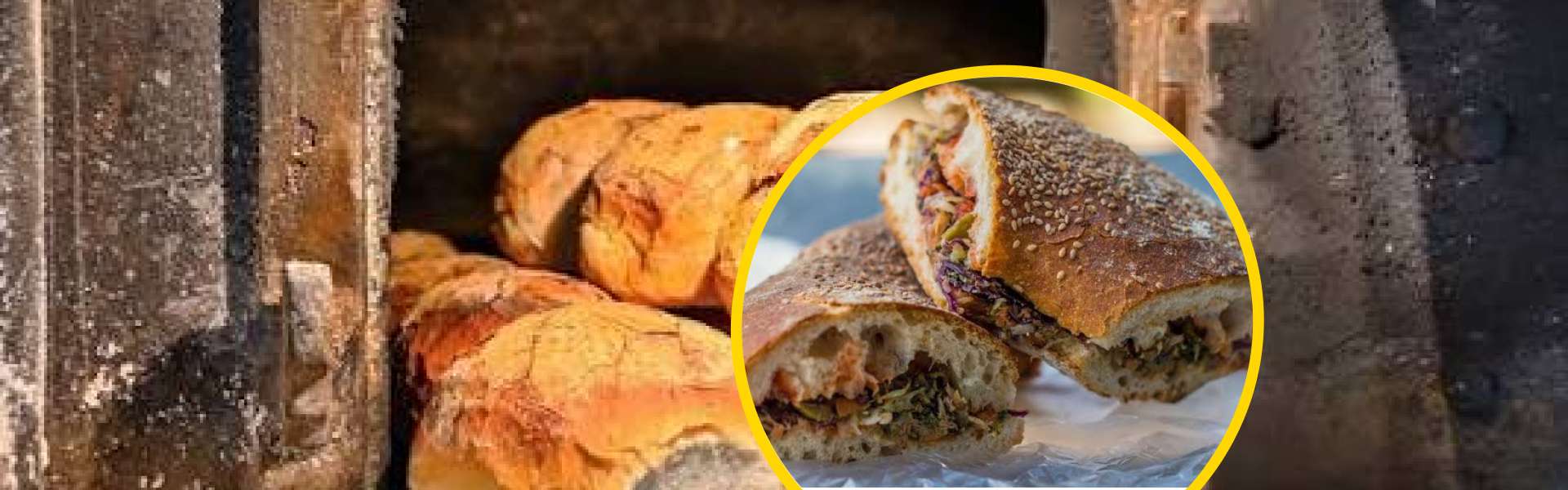
In Malta, bread has never been just food.
Listen to the language and you can hear it. When the Maltese say of a man that ħobżu maħbuż, 'his bread is baked', they mean he is comfortable, secure, doing well. When they say tilef ħobżu; 'he lost his bread', they mean he lost his job. A profitable venture is 'something with a good bit of bread in it'; a worthless one ma fihiex ħobż, 'has no bread in it'. And when the Maltese want to know what sort of person someone really is, they ask: x'ħobż jiekol dan?, 'what bread does this one eat?'
A language does not do that with a food it takes for granted. It does it with a food that meant survival and for most of Maltese history, that is exactly what bread was. On a small, rocky archipelago that could never grow enough wheat to feed itself, bread was the thin line between a family and hunger. Keeping Malta in bread was, for centuries, the single most important job of whoever happened to be ruling the islands. It was worth building an empire of underground silos for. It was worth rioting over. And in the worst year of the Second World War, it was almost all there was.
This is the story of Maltese bread: the crusty, wood-fired, sourdough ħobż tal-Malti and its flat cousin the ftira, where they came from, the extraordinary machinery the Knights built to keep the ovens burning, and how a humble loaf ended up on a UNESCO list.
An Ancient Habit: Wheat, and the Island that couldn't Feed Itself
Bread in Malta is genuinely ancient. Archaeological evidence indicates that Neolithic farmers who came over from Sicily were cultivating wheat on the islands from around 5,000 BC, which is to say, people have been growing grain here for roughly seven thousand years, since long before the megalithic temples were raised. Some of the earliest descriptive accounts of Malta note how completely the islanders depended on bread for survival.
A word of honesty here, because it is a claim you will see repeated everywhere: it is often said that Maltese bread 'dates back to the Phoenician period'. Bread certainly does, the Phoenicians arrived from around the 8th century BC and Malta was already a wheat-eating island. But that is not the same as saying that today's ħobż tal-Malti, a specific round sourdough loaf, shaped and baked in a particular way, has come down to us unchanged for 2,700 years. It hasn't, and no source can demonstrate that it has. What is true, and remarkable enough, is that the habit is that old: this is one of the longest continuous love affairs between a people and a loaf anywhere in the world.
The defining fact of the whole story, though, is a hard one: Malta could not feed itself. The islands are small, the soil is thin, and the rain is unreliable. Maltese agriculture could historically supply only a fraction of the population's needs, during the Second World War, it was reckoned at about one-third. Everything else had to come across the sea, principally from Sicily, the great wheat bowl of the central Mediterranean, lying tantalisingly just over the horizon. Malta had been part of the Kingdom of Sicily since the medieval period, and that connection came with something precious: an exemption from taxes on grain imported from Sicily; a privilege so valuable that it survived the arrival of the Knights in 1530 and shaped Maltese life for centuries.
The Knights' Grain Machine: The Università and Il-Fosos

When the Knights of St John took over Malta in 1530, they inherited the island's oldest problem and, being a military order preparing for siege, they took it extremely seriously. The result was one of the more impressive pieces of administration in Maltese history.
The buying of grain was handled by the Università, the municipal council, working under the Knights, whose specific job of purchasing wheat from Sicily for the Maltese population was known as the Massa Frumentaria. This was not a minor department. Feeding Malta was a matter of state survival, and the whole business of importing grain and other foodstuffs (the Annona) was run from a dedicated headquarters in Valletta, Dar Annona, erected in 1686 by Grand Master Gregorio Carafa. Above its main gate the Knights put a Latin inscription making the point explicitly: the granaries mattered just as much as the city's defences. (The building survives, was classified as a Grade 1 national monument in 2008, and today houses the Valletta Post Office, a fine piece of continuity, one civil service replacing another.)
But buying the grain was only half the problem. It had to be stored; kept dry, kept safe from weevils, and above all kept inside the fortifications, where a besieging army could not burn it. The Knights' solution was to go underground.
They cut il-Fosos; the granaries: flask- or bell-shaped chambers hollowed straight out of the living rock, each sealed with a great circular stone slab mortared shut to keep the interior dry. Each pit could hold somewhere between 50 and 500 tonnes of wheat. The first ones in Valletta were excavated near Fort St Elmo in 1658, in the time of Grand Master Martin de Redin (the same Grand Master remembered for his chain of coastal watchtowers), to store the grain shipped in from Sicily. Seventy pits were dug there; thirty-nine are still visible today, the rest lost under roads and buildings, one surviving example now sits, rather wonderfully, in the middle of a traffic island. Grand Master Ramon de Perellos (1697–1720) pushed the programme further. Granaries were cut at Valletta, Floriana, Birgu, Senglea, Mdina and in Gozo.
The system worked so well that when the British took over, they simply copied it in every detail, digging their own pits, most famously the great expanse in front of St Publius church in Floriana, commissioned between 1847 and 1851 under Governor Richard More O'Ferrall. That square; known to every Maltese as il-Fosos, officially Pjazza San Publiju, holds the largest concentration of granaries on the islands and is today one of Malta's biggest open public spaces, used for concerts, festivals and mass gatherings. Most people dancing at a summer concert there are standing on top of Malta's ancient food security.
How much did the Knights' grain system matter? Consider this: when the French garrison was besieged in Valletta by the Maltese and the British in 1798–1800, it was the stores in the fosos that allowed them to hold out as long as they did. The bread supply was, quite literally, the difference between holding a fortress and losing it.
Casal Fornaro: The Bakers' Town
Grain had to be milled, and dough had to be baked and here too the old system was communal rather than domestic. As far back as the 16th century, the Maltese took their wheat and barley to the windmill to be ground, and bakers baked bread in community ovens scattered across the island. Bread-making was not, for most families, something you did alone in your own kitchen; it was a shared, village-scale operation built around the oven.
One town made it a vocation. Qormi, in the middle of the island, became, and remains, the capital of Maltese bread-making, with bakeries on what feels like every corner. Under the rule of the Knights, Qormi was known by a name that says everything: Casal Fornaro, the bakers' town. The town still celebrates it: an annual bread festival, Lejl f'Casal Fornaro, 'a night at Casal Fornaro', is held there each autumn, filling the streets with the smell of the thing Qormi has been doing for five centuries.
What Actually Makes Maltese bread...Maltese?

So what is ħobż tal-Malti? Physically, it is a round loaf with a thick, dark, blistered crust, crunchy to the point of noisy and a soft, elastic interior full of irregular air pockets. But the character comes from two things: how it is leavened, and how it is baked.
First, it is a sourdough. There is no packet yeast in a proper Maltese loaf. It rises on a natural starter, a piece of living, fermented dough kept back from the previous day's batch and mixed into the new one. In Maltese the mother dough is the tinsila, and the process is unavoidably slow: a real ħobża is a two-stage job begun the day before you want to eat it. That long, slow fermentation is what gives the bread its faintly sour depth, its keeping quality, and its open, holey crumb.

Second, it is baked in a wood-fired stone oven. The fierce, dry, radiant heat of a wood oven is what produces that characteristic scorched, blistered, almost charred crust that no domestic oven can replicate. Maltese bakers traditionally had no thermometers at all; long experience taught them to gauge whether the oven had reached the right temperature using the dough itself, reading the fire by how a scrap of dough behaved in it.
And then there is what the Maltese do with it, which is arguably the most important part. The national way to eat this bread is ħobż biż-żejt, 'bread with oil': a thick slice rubbed with fresh tomato or spread with kunserva tomato paste (much as the Catalans do with pa amb tomàquet), drizzled generously with olive oil, salted, and then loaded with some combination of tuna, olives, capers, raw onion, bigilla bean paste and ġbejna cheeselets. It is peasant food in the best sense; cheap, filling, built entirely from what a Maltese household actually had and it remains, for a great many Maltese, the taste of home more than any restaurant dish ever could be.
The Ftira: The Flat Cousin that made it to UNESCO

Alongside the round loaf sits its flatter relative, the ftira, made from the same dough, but pressed flat, usually with a hole pinched through the middle so it cannot rise, giving it a ring shape like a large, irregular doughnut. It has a thick crust, a light and very holey interior, and it is baked hotter than the round loaf.
Its name is a small history lesson in itself: ftira derives from the Arabic fatir, meaning unleavened bread, one more thread of Malta's Semitic inheritance woven into the everyday. The word is related to the Maltese verb fattar, to flatten the dough. There is a documented early reference too: the linguist Giovanni Pietro Francesco Agius de Soldanis described it in his Damma, a dictionary of 1766, in connection with preparations in the Order of St John's bakery in 1742. Ftira appears in the historical record under other names as well, as schiacciata (Italian for 'squashed') and xawwata (Maltese for something charred or scorched) — and it seems to have begun life, charmingly, as the flat offcuts of ħobża-making that bakers snacked on, before graduating into a bread in its own right.
In December 2020, it achieved something no other piece of Maltese culture had. 'Il-Ftira, culinary art and culture of flattened sourdough bread in Malta' was inscribed on UNESCO's Representative List of the Intangible Cultural Heritage of Humanity, the first Maltese element ever listed, added in the same round as the Finnish sauna and North African couscous. (Malta has since added L-Għana, the folksong tradition, in 2021, and Il-Festa Maltija in 2023.) The path there was deliberate: Malta ratified the UNESCO intangible heritage convention in March 2017, the Culture Directorate campaigned from 2018, and the nomination went in at the start of 2019.
What UNESCO actually recognised is worth noting, because it is not simply 'a nice bread'. The citation highlights that while other Maltese breads can be made mechanically, skilled bakers are still needed to shape ftira by hand; that the knowledge passes from baker to apprentice by watching and doing; that the skills of choosing and filling are handed down informally in homes; and that eating ftira 'fosters a shared identity in Malta, bringing people together'. UNESCO listed the culture, not the recipe. Gozo, characteristically, has its own version — the Gozitan ftira is served more like a pizza, open, with thin slices of potato over the crust, or folded over like a calzone.
Bread, Riots and Rations: When the Loaf was Everything
Because bread was survival, the price of bread was politics, and twice in the 20th century, that came to a head in the most serious way imaginable.
The first was in 1919. In the aftermath of the First World War, the cost of living in Malta had risen sharply, and the price of bread, the staple of the Maltese diet, had soared with it, while wages lagged behind and a bitter conviction spread that the island's grain importers and flour millers were profiteering out of ordinary people's hunger. On 7th of June 1919, that anger erupted onto the streets of Valletta, British troops opened fire, and four Maltese men were killed. Malta still marks the day as a national holiday: Sette Giugno. A riot over the price of a loaf became the founding moment of modern Maltese political life.
The second was the Second World War, when the island's ancient vulnerability, an archipelago that could not feed itself, was turned into a weapon. The Axis blockade was designed to starve Malta into surrender, and it very nearly worked. Local agriculture could cover only about a third of what was needed. The government set up a Rationing Office, a Food Distribution Office issuing a Family Ration Book to every household, and the Communal Feeding Department's Victory Kitchens, communal kitchens where people queued with their own pots and pans and traded ration coupons for one hot meal a day. By August 1942 there were 170 Victory Kitchens in operation with 60,000 people registered, and at the worst point, a huge share of the island depended on them.
The figures from that summer are sobering. In late August 1942, the Governor reported that the rationed food available to a Maltese man aged between 16 and 60 came to roughly 1,300 calories a day, some 200 below the accepted minimum, and that outside the ration, very little food could be had at all. The bread ration for such a man was raised, as a matter of urgent policy, to 14 ounces a day. Bread was not part of the diet; bread very nearly was the diet. One Maltese woman later recalled that at one point the government confiscated the island's locally-grown potatoes and turned them into bread.
Rescue came with the Santa Marija Convoy, the surviving ships of Operation Pedestal, which fought its way into the Grand Harbour on the 15th of August 1942. With the supply position transformed, the government promptly granted a 100% increase in the bread ration. The Victory Kitchens were wound down during 1943

And here the whole story comes full circle in the most remarkable way. During those starving months, part of what fed the Maltese population was grain held in the Knights' granaries, and in the British copies of them. The bell-shaped pits cut into the rock in the 1600s to survive an Ottoman siege were, three centuries later, still doing their job under a German one. Whatever else the Knights got wrong, they understood the fundamental thing about Malta: keep the grain safe inside the walls, and the island can hold.
From the Wood Oven to the Modern Bakery
Which brings us to today and to a genuine tension at the heart of Maltese bread.
On one hand, bread remains absolutely central to Maltese life. Bakeries are everywhere; the round loaf and the ftira are eaten daily; ħobż biż-żejt is still the national snack; Qormi still bakes and still celebrates it. On the other hand, the traditional craft is under real pressure. The practice of making bread the old way is now widely described as a 'dying art'. Wood-fired stone ovens are expensive, laborious and slow; sourdough on a natural tinsila demands a two-day rhythm and constant attention; and both compete against mechanised production that can turn out far more bread, far faster, far more cheaply, using commercial yeast and gas or electric ovens. The economics point one way, and the flavour points the other.
The result is a landscape of real bread and approximate bread sitting side by side, and Maltese people who care are increasingly discerning about which bakery is which, and about which loaves still come out of a wood oven. It is exactly the pattern we have seen with other Maltese crafts: a tradition sustained by a shrinking number of skilled practitioners, propped up by a growing public appreciation of what would be lost.
There are grounds for optimism, though, and the UNESCO listing is the clearest of them, because what it protects is precisely the skill: the hand-shaping, the apprenticeship, the passing-on. A listing does not bake bread. But it does declare, formally and internationally, that the way the Maltese make this bread is worth keeping, and it puts a certain healthy pressure on Maltese bakers to maintain the standard rather than quietly let it slide.
The Loaf that Carried an Island
Stand in front of a Maltese bakery in the early morning, when the ovens have been going since long before dawn, and what you are looking at is not really a shop. It is the surviving end of a chain that runs back through the Victory Kitchens and the ration books, through the Sette Giugno dead, through the British granaries and the Knights' fosos and the Massa Frumentaria and the grain ships coming over from Sicily, through the community ovens and the windmills, all the way back to Neolithic farmers planting wheat in thin Maltese soil seven thousand years ago.
That is why the language is so full of bread. On an island that could never quite feed itself, the loaf was the measure of everything: of security, of work, of character, of whether a family would be all right. 'His bread is baked.' 'He lost his bread.' 'What bread does this one eat?'
So the next time you tear open a warm ħobża, and the crust cracks and the steam comes out and the whole thing smells the way only wood-fired sourdough smells, it is worth a moment's thought. You are eating the thing the Knights built silos for, the thing four men died over in 1919, the thing that kept an island alive through the most bombed years in history and the thing UNESCO finally decided the world should not be allowed to lose. Not bad, for a loaf of bread.

About Matthew Gollcher
Hi, I'm Matthew, an SEO Specialist and Content Writer at Yellow Pages Malta. I'm passionate about creating meaningful content and exploring AI's creative possibilities. When I'm not working, I enjoy the gym, time with friends, watching series and reading, and playing guitar. I'm always eager to learn and grow both personally and professionally.