The Maltese Witch Trials: What the Inquisition Records Actually Show


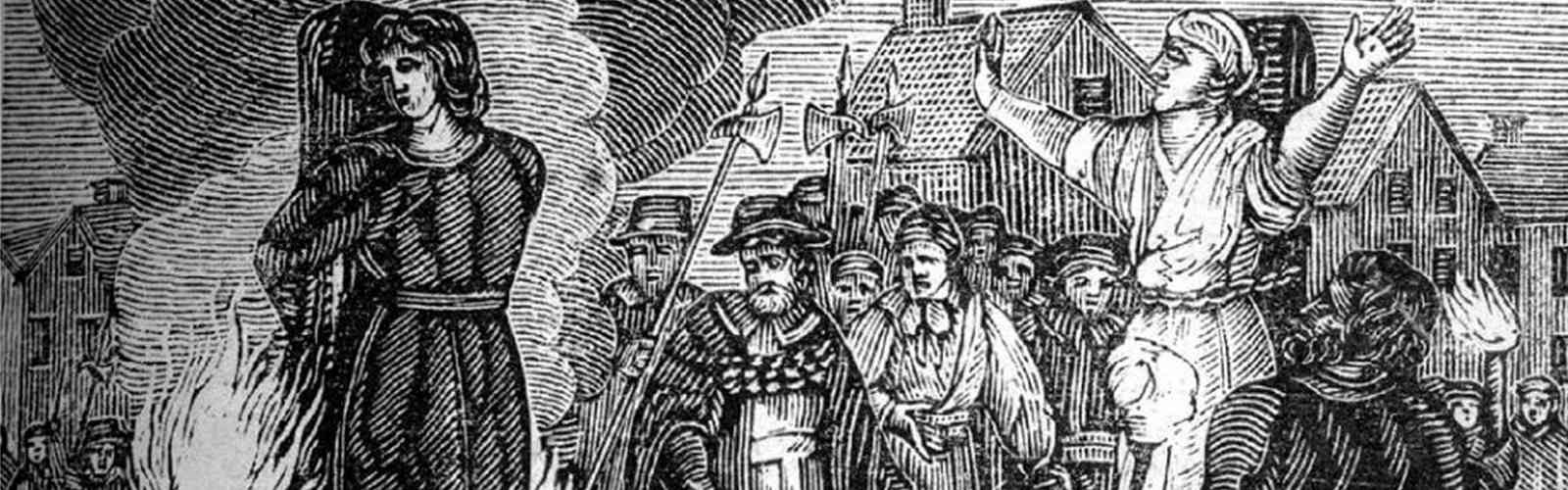
Say the words 'witch trials' and a very specific picture appears: Salem in 1692, or the great witch-hunts that swept early modern Europe, with tens of thousands of people, overwhelmingly women, tortured and burned at the stake on charges of consorting with the Devil. It is one of the darkest chapters in European history.
Malta had witch trials too. Witchcraft was, in fact, the single most common 'crime of faith' that the Maltese were charged with before the Roman Inquisition over its two centuries on the island. And yet, when you actually read what the Maltese records document, and Malta's Inquisition archives are among the most complete in the world, the picture that emerges is startlingly different from Salem. There were no mass burnings. There was no Devil-worship panic sweeping the villages. And, remarkably, there is no clear evidence that anyone was ever executed for witchcraft in Malta.
Instead, the records show love spells and the evil eye, fortune-tellers and folk healers, jealous spouses and squabbling neighbours, and punishments of rosaries and public penance rather than the stake. This is the real story of the Maltese 'witch trials', drawn from the surviving Inquisition records and from the scholars who have studied them most closely, above all Professor Carmel Cassar of the University of Malta, whose Witchcraft, Sorcery and the Inquisition: A Study of Cultural Values in Early Modern Malta (1996) is the standard work. This is what the archives actually show.
The Tribunal: The Roman Inquisition Comes to Malta

To understand the Maltese witch trials, you first have to understand which Inquisition we are talking about, because there was more than one, and the differences mattered enormously.
The Inquisition that operated in Malta was the Roman Inquisition, the system of tribunals run by the Holy See in Rome, and it was a quite different institution from the more notorious Spanish Inquisition. The Maltese tribunal had no connection whatsoever to the Spanish one. Pope Pius IV ordered a resident inquisitor for Malta in 1561, and the first dedicated apostolic Inquisitor, Monsignor Pietro Dusina, arrived in 1574. The tribunal then operated continuously until 1798, when the arriving French revolutionary forces abolished it, a span of more than two centuries.
The Inquisitor was one of the three great centres of power on Hospitaller Malta, balancing the other two: the Grand Master of the Order of St John in Valletta, and the Bishop in Mdina. The Inquisitor's job was to guard Catholic orthodoxy, to watch for the spread of Protestantism, to police heresy, blasphemy, apostasy and superstition, to censor forbidden books, and to keep an eye on the conduct of the Knights themselves. The post was a prestigious stepping-stone: many Maltese Inquisitors went on to become cardinals, and two of them became Pope, Fabio Chigi (Pope Alexander VII) and Antonio Pignatelli (Pope Innocent XII).
The Inquisitor's seat was the Inquisitor's Palace in Birgu (Vittoriosa), which had previously served as the Castellania, the law courts of the Order, until the Knights moved their seat to Valletta around 1571. Handed over to the first Inquisitor in 1574, the building served as residence, courthouse and prison combined. It survives today; one of the very few inquisitorial palaces left anywhere in the world, and now a Heritage Malta museum (also the national ethnography museum), where visitors can still walk through the tribunal room and the prison cells.
The Records: A Window into Ordinary Maltese Lives

What makes the Maltese case so valuable to historians is the survival of the records.
In 1798, in the chaos of the French takeover, some Maltese noble families, whose ancestors had been judged by the Inquisition, seized what they thought was a chance to have the embarrassing documents destroyed, and petitioned the French to burn all the Inquisition's records. The French authorities, under Bosredon Ransijat, declined. The archives survived, and were eventually transferred to the Cathedral Archives in Mdina, where they remain to this day, one of the most complete sets of Inquisition records anywhere.
Those records are a treasure precisely because of what they accidentally preserve. Inquisition trials required detailed testimony, and so the archives are full of the voices of ordinary early modern Maltese people; peasants, slaves, silversmiths, midwives, prostitutes, corsairs, fishermen, housewives, the very people who are usually invisible in the historical record, which tends to preserve only the doings of the powerful. As historians have noted, the Inquisition records reveal more about daily life among the ordinary Maltese, and especially the lives of women, than almost any other source. When we read about Maltese witchcraft, we are really reading a detailed account of the hopes, fears, jealousies and folk beliefs of ordinary people four centuries ago.
What 'Witchcraft' Actually Meant in Malta

The single most important thing the records show is that Maltese 'witchcraft' was, overwhelmingly, everyday folk magic, not satanic Devil-worship. The cases fall into a handful of very human categories.
Love magic was by far the most common. Women, and it was mostly women, sought spells and charms to win a lover, to bring back a straying husband, to secure a marriage, or to reconcile with someone who had left them. The records are full of recipes: incantations muttered at midnight, charms involving salt or ash, beans or bones, ritual words spoken while beating on a wall to make a distant lover's heart 'beat' for the spell-caster. These were the remedies of women who, in a society that gave them very little power over their own romantic and marital fates, reached for the one kind of power that seemed available.

The evil eye; in Maltese, l-għajn was, and to some extent remains, a deep-rooted Mediterranean belief: the idea that a person's envious gaze could bring misfortune, illness or ruin. (The eye symbol painted on the traditional Maltese fishing boat, the luzzu, is a survival of exactly this belief.) The Inquisition handled many reports of people trying to cure or ward off the evil eye with potions, incantations and rituals, sometimes to explain an illness, sometimes to explain why a man had abandoned his wife or squandered his money.
Divination and fortune-telling, reading palms, foretelling the future, finding lost objects or absent husbands, was another large category, as was magical healing, in which folk healers combined Christian prayers with older, pagan-derived practices to treat the sick. This blending of the sacred and the magical was precisely what alarmed the Church: it was not so much that people were worshipping the Devil, but that they were mixing up Catholic prayer with superstition in ways the Inquisitors considered dangerous and ignorant.
Magic was practised by men as well as women, male sorcerers, and notably some of the Muslim slaves held on the island, who were sometimes sought out for their supposed magical knowledge, but the classic 'witch' of the Maltese records is a woman. And she was very often a woman on the margins of society: a widow or a prostitute, living independently of any man's authority; or a midwife, whose work took her out and about at night, when respectable women were expected to be at home. Such women were the most vulnerable to a neighbour's denunciation, which is itself one of the most revealing things the records show.
Witchcraft as a Social Weapon
One of the most illuminating findings of modern scholarship is that accusations of witchcraft were frequently less about magic than about social conflict. The charge of witchcraft was, very often, a weapon; a way of attacking a rival, settling a score, or salvaging a damaged reputation.
The records contain cases that read almost like soap operas. In one, a man named Domenico Carceppo discovered that his sister-in-law, whom he had believed to be a virtuous, virginal young woman, was in fact in a sexual relationship with a local doctor. Unwilling to believe she had chosen this freely, and anxious to protect the family's honour, he accused another woman, Margarita, of having used witchcraft to bring the affair about on the doctor's behalf. The witchcraft charge, in other words, was a way of explaining away an inconvenient truth and shifting the blame.
This pattern recurs throughout the archive. A man's addiction to prostitutes, or his sudden coldness towards his wife, could be blamed on the evil eye or on a love spell cast by a rival. An unwanted pregnancy, an illness, a business failure, a broken engagement; all could be re-cast as the work of witchcraft, and the suspicion would fall, very often, on a marginal woman whom the community already mistrusted. The Inquisition records thus show us not a society gripped by genuine fear of Satan, but a society using the language of witchcraft to manage its everyday tensions, jealousies and scandals.
The Punishments: Penance, not the Stake
And here we come to the most striking contrast with the popular image of the witch trials. What happened to those found guilty in Malta?
The answer is that the punishments were, overwhelmingly, corrective and penitential rather than fatal. The Roman Inquisition in Malta was, by the standards of the age, relatively lenient on witchcraft. Its goal, in these cases, was not to exterminate witches but to correct superstitious behaviour and bring erring Catholics back into the fold. The Roman Inquisition as a whole was sceptical in a way that mattered: unlike the witch-hunting courts of northern Europe, it was generally unconvinced that witchcraft could even be reliably proven, and it treated most folk magic as ignorance and error rather than as a satanic conspiracy.
So the typical sentence for a convicted Maltese 'witch' or sorcerer was a public act of penance. A guilty person might be ordered to recite the rosary a set number of times a week or month, sometimes for a period of years. They might be made to appear in their local church on feast days, dressed in a white robe and holding a candle, kneeling at the front where the whole congregation could see them — the point being precisely that the community should witness the penance, so that the offender's reconciliation with the Church was public and could not be quietly avoided.
The surviving cases bring this home vividly. A Valletta woman named Catherina de Verani, found guilty of witchcraft, was sentenced to walk from Valletta to Zabbar every Saturday for four years, reciting the rosary, and to hear Mass at the church of Tal-Grazzja when she arrived, an arduous and humiliating penance, certainly, but a world away from the stake. In another case, a 14-year-old girl, Andreana Martin, was brought before the Inquisitor merely for consorting with a fortune-teller along with some friends, the kind of minor offence that, handled differently in another country, could in principle have spiralled, but in Malta was treated as a matter for correction.
This is the heart of the matter, and it is worth stating plainly: despite witchcraft being the most common charge of its kind, and despite the Inquisition's undoubted power to imprison, interrogate and, like the Spanish Inquisition, to use torture, there is no clear evidence that anyone was ever executed for witchcraft in Malta during the early modern period. In an age when tens of thousands were being burned across Europe, that is a remarkable fact.
Why Malta was Different
Why did Malta escape the horror that engulfed so much of Europe? The scholarship points to several reasons.
The first is the nature of the Roman Inquisition itself. The institution that policed witchcraft in Malta was the same one that policed it across Italy; and Italy, like Spain, had remarkably few witch executions compared to Germany, Switzerland, France and Scotland. The Roman Inquisition was a centralised, bureaucratic, procedurally careful body, deeply sceptical of the wild confessions and spectral evidence that fuelled the northern witch-hunts. It simply did not believe, in the way the northern courts did, that the folk magic of village women amounted to a satanic conspiracy that had to be purged in blood.
The second is that, in Malta, witchcraft was not seen as a vast, organised, existential threat. There was no equivalent of the panic that produced the mass trials of, say, the German prince-bishoprics. Maltese magic was understood, broadly, as superstition and ignorance, a moral and spiritual failing to be corrected, rather than as a conspiracy of Devil-worshippers to be exterminated. Without that underlying belief in a satanic plot, the machinery of mass execution never engaged.
The third factor was Malta's particular structure of power. The careful balance between the Inquisitor, the Bishop and the Grand Master, and the close oversight of Rome, created a relatively controlled and legalistic environment, quite unlike the local, panic-driven witch-hunts that could erupt in the more loosely governed regions of northern Europe, where a single zealous magistrate or a wave of village hysteria could send dozens to the stake.
Lenient is not the same as Gentle
It would be wrong, though, to romanticise the Maltese Inquisition or to present it as benign. 'Less lethal than Germany' is a low bar, and the tribunal was a genuine instrument of fear and control.
The Inquisition could and did imprison people, sometimes for years, in the cells of the Birgu palace. It could and did use torture in interrogation, as was standard across early modern European justice, religious and secular alike. It encouraged a culture of denunciation, in which Maltese people were duty-bound to report their neighbours' suspect beliefs and practices, with all the opportunities for malice and score-settling that implies. It subjected the poor and the marginal, especially independent women, to humiliating public penance and intrusive scrutiny of their most private affairs. And it cast a long shadow of self-censorship over an entire society for more than two centuries. The absence of the stake did not mean the absence of oppression.
What the Maltese records show, then, is not a kind Inquisition, but a particular kind of religious control: one that policed belief and behaviour intensively, that fell hardest on the vulnerable, and that used penance and fear rather than fire. That is its own kind of story; less lurid than Salem, but in some ways more revealing of how power, gender and belief actually worked in an early modern society.
The Records Today
Today, the legacy of the Maltese witch trials is twofold.
Physically, it survives in the Inquisitor's Palace in Birgu, one of the only such buildings in the world open to the public, where visitors can stand in the tribunal room and the cells and feel the weight of what happened there; and in the Cathedral Archives in Mdina, where the records themselves, thousands of trials, including the witchcraft cases, are preserved and continue to be studied by historians.
Intellectually, the legacy is the extraordinary picture those records give us of ordinary early modern Maltese life. Because the Inquisitors so diligently wrote everything down, we know what village women hoped and feared, what spells they whispered, how they tried to hold their marriages together and ward off misfortune, and how their communities turned on them when something went wrong. Few societies of that era are so vividly documented from the bottom up. The 'witches' of Malta were not the cackling Devil-worshippers of legend. They were, the records show, mostly ordinary women reaching for a little power in a world that gave them almost none, and the trials that recorded them have, ironically, given those forgotten women a voice that echoes down four centuries.
That is what the Inquisition records actually show. Not a Maltese Salem, but something quieter, sadder, more human, and in its way more illuminating: the everyday magic, and the everyday cruelty, of a small Catholic island four hundred years ago.

About Matthew Gollcher
Hi, I'm Matthew, an SEO Specialist and Content Writer at Yellow Pages Malta. I'm passionate about creating meaningful content and exploring AI's creative possibilities. When I'm not working, I enjoy the gym, time with friends, watching series and reading, and playing guitar. I'm always eager to learn and grow both personally and professionally.