The Maltese Brands That No Longer Exist


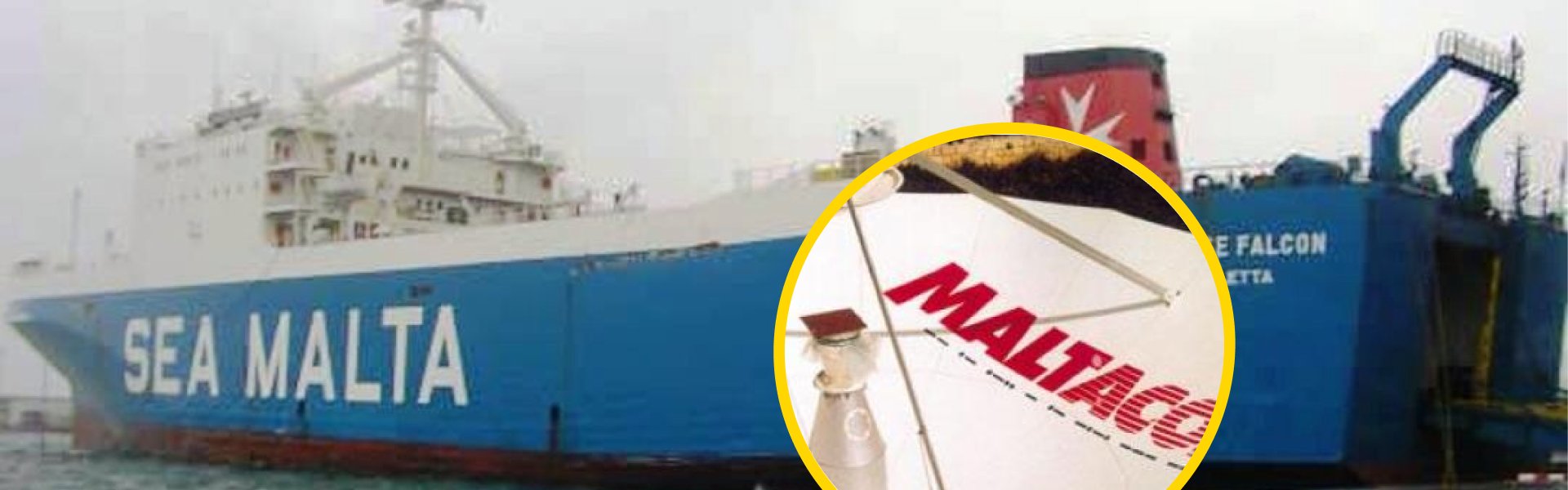
There was a time, within living memory, when the rhythm of Maltese life was marked by a set of familiar names. You flew abroad on Air Malta, the Maltese cross on its tail. The goods in the shops arrived on the ships of Sea Malta. You kept your savings at Mid-Med Bank. You paid your telephone bill to Telemalta, and later Maltacom.
Today, every one of those names is gone.
Some were liquidated and ceased to exist entirely. Some were bought by foreign giants and rebranded out of existence. Some simply changed their names as they modernised. But the cumulative effect is striking: a whole layer of distinctively Maltese brands; names that an older Maltese person grew up with and took entirely for granted, has quietly disappeared, mostly within the last twenty-five years. This is the story of some of the great Maltese brands that no longer exist: what they were, what happened to them, and what their vanishing tells us about how profoundly Malta has changed.
Air Malta (1974–2024): The Flag on the Tail

No vanished Maltese brand is mourned more widely than Air Malta, the national flag carrier.
Its roots run back to the small private airlines that sprang up in Malta after the Second World War, but the airline that Maltese people knew was born in the early 1970s. Air Malta Co. Ltd was established on the 31st of March 1973, under the chairmanship of Albert Mizzi and with Pakistan International Airlines brought in as a technical and strategic partner, and its inaugural flight took off on the 1st of April 1974, opening routes to Rome, Tripoli, London, Manchester and beyond. For the next fifty years, Air Malta was the country's flying ambassador. Its aircraft, latterly a fleet of Airbus A319s, A320s and A320neos; carried the Maltese cross to destinations across Europe, North Africa and the Middle East, and even, for a time around 2000, as far as New York. For most tourists, an Air Malta cabin was their first and last impression of the islands.

But Air Malta was, for most of its life, a loss-making airline. The Finance Minister revealed in October 2023 that the carrier had been operating at a loss for around twenty years, and at one point employed some 1,400 staff to operate just nine aircraft. The decisive blow came from Brussels: in April 2023, the European Commission declined to allow the Maltese government to inject €290 million of state aid into the airline. Without that recapitalisation, the airline could not continue. On the 2nd of October 2023, the government announced that Air Malta would close.
Air Malta operated its final flight on the 30th of March 2024, after almost exactly 50 years. The very next day, the 31st of March 2024, it was replaced by a new, leaner, government-owned flag carrier, KM Malta Airlines, which inherited the staff, most of the assets, and a slimmed-down route network, but flies under a new name. ('KM' was, fittingly, Air Malta's old flight code.) The replacement was carefully engineered to sidestep the EU state-aid rules that had doomed its predecessor. The practical service survived in a new form; but the brand 'Air Malta', and the goodwill attached to it, was retired after half a century.
Sea Malta (1973–2006): The National Shipping Line

If Air Malta carried the Maltese flag through the air, Sea Malta carried it across the water.
Sea Malta Company Limited was established on the 10th of November 1973, during the Labour government of Dom Mintoff, as the national shipping line, with the government holding the majority of the shares. Its purpose was to provide commercial maritime services and to serve the needs of Maltese industry and the nation, a strategic link between a small island and its markets. Its first ships were three vessels inherited from the earlier Maltese National Lines; in 1974 it bought its first new vessels, and over the following decades it built up a fleet (with famous names like the Żejtun, the Żebbuġ and the Maltese Falcon) and expanded into oil bunkering, insurance and shipping-agency services.
Sea Malta's end came through a failed privatisation. In 2005, the government tried to privatise the company, entering negotiations with the Italian shipping group Grimaldi. But the talks faltered after the company's sea-based employees objected to the conditions on offer, and even after a preliminary agreement was signed the sailors continued to object. The process was abandoned, and the government declared Sea Malta bankrupt. The company was liquidated, and its ships sold off in 2006, the Maltese Falcon went to Grimaldi (and was eventually scrapped in India in 2009), the Żebbuġ to another operator. After 33 years, one of the icons of independent Malta was gone.
Mid-Med Bank (→ HSBC, 1999): The Bank that Changed its Name

Some Maltese brands did not so much die as get absorbed and the most prominent example is Mid-Med Bank.
For decades, Mid-Med was the largest commercial bank in Malta. By the late 1990s it had around 60 branches and offices and some 1,800 staff, and the government was its majority shareholder. It was, in the fullest sense, a Maltese national institution; the bank where a huge share of Maltese families kept their money.
In 1999, the British banking giant HSBC (through Midland Bank) acquired the government of Malta's controlling stake in Mid-Med. When HSBC brought all its global operations under a single common name, Mid-Med Bank became HSBC Bank Malta plc. Overnight, a familiar Maltese name on high streets across the islands was replaced by the red-and-white hexagon of a global multinational. The sale was, and remains, controversial; critics argued that Malta had handed control of a strategic national asset, and one of its largest banks, to a foreign corporation with no particular loyalty to the island.
There is a remarkable epilogue. Having swallowed Mid-Med a quarter of a century ago, HSBC is itself now on its way out of Malta. In August 2025 HSBC announced that it had selected the Athens-based CrediaBank as the preferred bidder to acquire HSBC Bank Malta. If that sale completes, the HSBC name will in turn disappear from the Maltese high street — meaning that, within a single generation, the same banking branches will have carried three different names: Mid-Med, then HSBC, and then something new again. Few things illustrate the churn of Maltese brands more neatly.
Telemalta and Maltacom (→ GO): The Names on the Phone Bill

Anyone in Malta old enough to remember landline telephones as the only telephones will remember the names Telemalta and Maltacom; and both are now gone, replaced by a brand that looks nothing like them.
Malta's telecommunications trace back to the undersea telegraph cables laid from the island to Sicily in 1857 and to Egypt in 1868, operations later consolidated into a company that became Cable & Wireless. The Telemalta Corporation was created by an Act of Parliament in 1974, and given monopoly rights as both operator and regulator of all telecommunications services in Malta; it was, for a Maltese household, simply 'the phone company'. In 1997, Telemalta's assets were assumed by a new public limited company, Maltacom plc, as the sector was prepared for partial privatisation and competition; the government kept 60% and sold the rest to the public.

Then the brand changed again. Maltacom's mobile arm launched a GSM network branded GO Mobile in late 2000, and over the following years the whole company was progressively rebranded simply as GO; the name it still trades under today as one of Malta's main telecoms operators. The company survived and thrived; but the names Telemalta and Maltacom, which had appeared on Maltese phone bills for a quarter of a century, were retired into history.
What the Vanished Brands Tell Us
Lined up together, these vanished names tell a coherent story about modern Malta and it is a story in three movements. It is worth saying, too, that not everything has vanished. Malta still has enduring home-grown brands that have survived for the better part of a century; Farsons, with its Cisk lager (first brewed in 1929) and its uniquely Maltese soft drink Kinnie (launched in 1952), is the obvious example of a Maltese brand that has not only survived but thrived. The disappearances are real, but so is the continuity.
Still, for a certain generation of Maltese, there is a particular poignancy in these lost names. They were the furniture of ordinary life; the airline you flew, the bank you trusted, the phone company you grumbled about, etc. They were, in their way, part of what it meant to be Maltese in the second half of the twentieth century. And one by one, quietly, they have slipped into memory; a reminder that even on an island that prizes its continuity and its traditions, the commercial landscape can change beyond recognition within a single lifetime.

About Matthew Gollcher
Hi, I'm Matthew, an SEO Specialist and Content Writer at Yellow Pages Malta. I'm passionate about creating meaningful content and exploring AI's creative possibilities. When I'm not working, I enjoy the gym, time with friends, watching series and reading, and playing guitar. I'm always eager to learn and grow both personally and professionally.