The Great Plague of 1813: Six Months That Killed One in Twenty Maltese


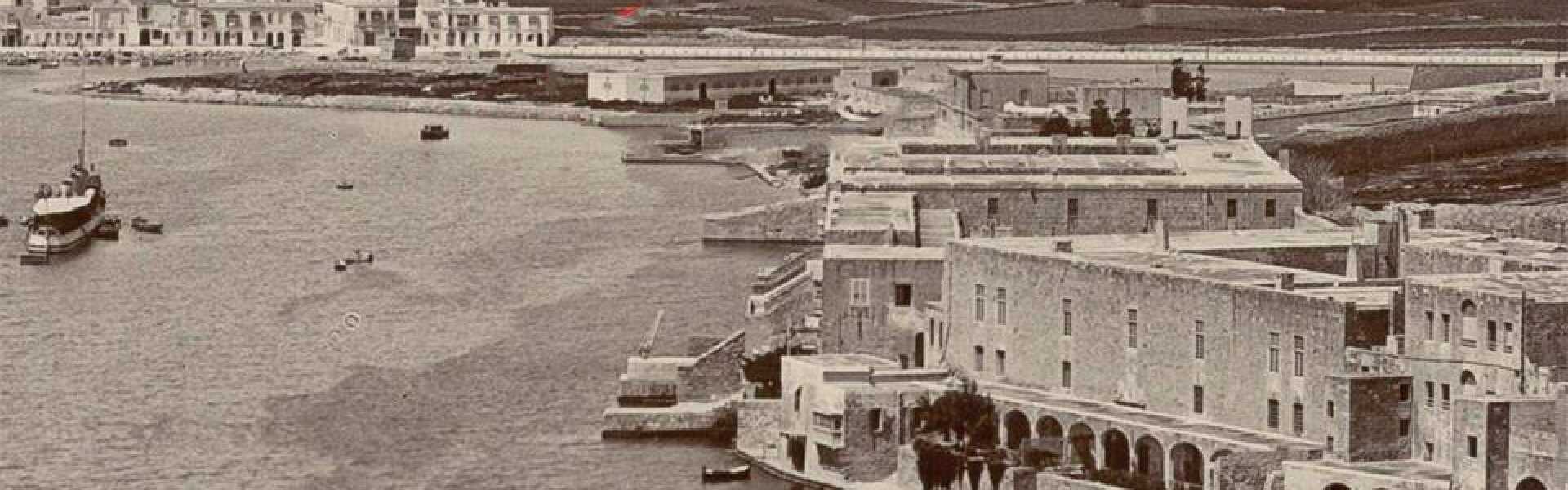
On the 19th of April 1813, in a poor Valletta neighbourhood near the Grand Harbour, an 8-year-old girl died.
Her name was Anna Maria Borg. Her home was at 227 Strada San Paolo, the lower end of what is today, St Paul Street, a stone's throw from Fort St Elmo. She was the daughter of a shoemaker named Salvatore Borg. The doctor who visited her in her last days, Dr Francesco Gravagna, Physician to the Civil Hospital Valletta, attributed her swollen glands to a skin complaint and her rash to typhoid fever. She was given Extreme Unction and buried the following day in the crypt beneath the church of the Franciscan Minors, Ta' Ġieżu, in Valletta.
It was, the Malta Independent observed in a commemorative article on the 200th anniversary, more than Anna Maria could have hoped for. 'In a little while all hell would break loose,' the paper wrote, 'and disease would strike down thousands of people. Many hardly managed to make a surreptitious entry into their parish's death ledger let alone a dignified burial in a hallowed crypt.'
By early May, the authorities could no longer treat the deaths as ordinary fever. On the 5th of May, public buildings were closed and the harbour towns were placed under medical observation. By June it was in the Three Cities. By July it was killing people at a rate of more than 50 a day. By the time the outbreak finally subsided in January 1814, approximately 4,486 Maltese had died out of a population of around 96,000; roughly one in every twenty people on the islands. A small follow-up outbreak in Xagħra, Gozo, in spring 1814 killed another 104.
In the contemporary phrasing, picked up by an English writer in the 1820s and quoted by the standard historical reference works: the disease 'swept away more than one-twentieth of the inhabitants of one of the most populous islands under the British crown.'
Six months, May to October 1813, took 4,432 of the 4,486 lives lost. This is the story of those six months.
The San Nicola: How the Plague Arrived

On the 17th of March 1813, a brigantine called the San Nicola left Alexandria for Malta with a crew of twelve. Two of the crew fell ill about a week into the voyage. They were attended by the captain, Antonio Maria Muscara, and his servant.
The ship arrived in Maltese waters on the 28th of March 1813. The Board of Health hoisted the yellow flag with a black ball at its centre, the sign that plague was suspected on board, and the San Nicola was kept at anchor in the middle of the Marsamxett Quarantine Harbour for a fortnight. The crew were admitted to the Lazaretto on Manoel Island after, in the routine phrasing of the regulations, 'shaving their heads, washing themselves with sea water, and afterwards with vinegar, and leaving their clothes behind them in the ship.'
There was an early dispute. The Maltese Board of Health wanted the ship and its cargo destroyed outright. The British civil commissioner, Lieutenant General Sir Hildebrand Oakes, balked at the compensation that would be due to the owners. The senior army medical officer Arthur Brooke Faulkner, Physician to the Forces, urged a compromise: move the ship to a temporary lazaretto at St Paul's Bay. Neither view won out. Instead, two guard boats were stationed alongside the San Nicola to prevent any communication with the shore.
On the 1st of April, roughly a week after they had tended to the sick crew, Captain Muscara and his servant fell ill. Both were dead by the 7th of April.
On the 8th of April, Oakes allowed the owners to procure a fresh crew and to send the ship back to Alexandria. The deputy inspector of hospitals, Ralph Green, a member of the Board of Health, examined the surviving crew at the Lazaretto and found no signs of plague. The San Nicola sailed for Alexandria. The Board concluded that the danger had passed.
It had not.
There is a debate among historians about how, exactly, the plague got from the San Nicola or from the Lazaretto into the city. The colonial governor Sir Thomas Maitland, who would arrive in Malta in October, later wrote that the plague was 'brought into Malta by a ship from Egypt, and conveyed out of that ship by a person smuggling some leather; this person and his family were the first to suffer from it.' Inspector of Hospitals John Hennen believed the plague had actually been introduced before the San Nicola, by Alexandrian cloth circulating in Valletta in its original wrapper, the quarantine laws having been violated. The army physician Robert Calvert attributed the outbreak to 'pestilential effluvium' generated by the plague bodies buried at the Lazaretto.
The modern understanding is different. We now know that bubonic plague is caused by the bacterium Yersinia pestis, carried by the flea Xenopsylla cheopis living on the black rat (Rattus rattus). Alexandre Yersin isolated the organism in Hong Kong in 1894; the flea–rat transmission cycle was established by 1910. In 1813 nobody knew this. They debated whether plague was caused by contagion (direct contact, the position of Ralph Green) or by miasma (atmospheric corruption, the position of Robert Calvert), and they were both wrong. The plague almost certainly arrived in Malta in infected rats that came ashore from the San Nicola or from some other Alexandrian ship that berthed unsuspected along the Grand Harbour marina. The official version blamed the San Nicola because the timing fitted. The historical record cannot now confirm whether the link was real or simply the easiest explanation to hand.
The Shoemaker, the Smuggled Cargo, and the First Deaths

Anna Maria Borg died on the 19th of April 1813. Her mother, seven months pregnant, was visited by Dr Gravagna on the 1st of May. By that point the clinical picture had become unmistakable: she was febrile, with painful buboes in her groin. She went into early labour, delivered a stillborn child, and died on the 4th of May. Her four-year-old son and her husband Salvatore Borg were also ill.
Dr Gravagna was now in no doubt about what he was dealing with. He notified the Board of Health.
There is a chilling detail about Salvatore Borg that has come down through the historical record. The Malta Independent's 2013 commemorative article on the plague recounts the contemporary rumour: that Borg, in addition to being a shoemaker, was 'a small-time crook,' dabbling in stolen goods. The looted cargo he had bought in late March or early April 1813, the rumour ran, came from the San Nicola: cloth or leather or both, smuggled out of the ship's hold during the quarantine. If the rumour was true, and the available evidence is suggestive rather than conclusive, then Salvatore Borg may have been precisely the small-time middleman who carried the plague-bearing fleas from the harbour quarantine into the densely-packed slums of lower Valletta. He paid for it with the lives of his entire family and, indirectly, with the lives of several thousand others. He himself died of plague within weeks.
Other cases began to appear in the same neighbourhood. On the 6th of May, the midwife Maria Agius, who had attended the wife of Salvatore Borg, was found dead in her house at Strada St Ursula. Grazia Pisani, a young girl who had slept at the midwife's house, fell ill. On the 7th of May, a Falzon boy died at 150 Strada San Paolo. On the 16th of May, the son and daughter of a baker named Stellini died at 92 Strada San Christoforo.
Between the 12th and 31st of May, Strada San Paolo recorded six cases of plague; Strada Pozzi, near the old Sacra Infermeria, recorded sixteen; Strada San Nicola had eight; Strada Ospedale reported twelve. The geography of the outbreak, all of it concentrated in a few streets in lower Valletta, all in the slum quarter near the harbour, fits the rat-and-flea hypothesis exactly.
The Public Response: Lockdown, The Death Penalty, the Closing of Churches
The British administration moved fastest where the law was clearest.
On the 5th of May, trade was suspended and public buildings; the law courts, the theatre, government offices, were closed. The Three Cities of Birgu, Cospicua, and Senglea were placed under medical observation alongside Valletta and Floriana. On the 7th of May, all communication between ships in the harbour and the shore was forbidden. In May, Bishop Ferdinando Mattei ordered the suspension of ordinary church activity and religious functions, one of the most dramatic ecclesiastical restrictions in Maltese history. The Maltese government then published an account of the Messina plague of 1743 to inform the public, by analogy, of what was at stake. On the 17th of May, Civil Commissioner Oakes issued a proclamation: any suspected case of plague had to be reported to the Board of Health, and anyone who concealed the existence of the disease was liable to the death penalty.
On the 20th of May, the Board of Health recommended shutting up the entire population of Valletta within their houses for 40 days. The city was divided into eight districts, each under three deputies who inspected and reported daily. The inhabitants were confined to their own districts. The Maltese Provincial Battalion guarded the barriers erected at the district boundaries.
Healthy members of infected families, and those suspected of being infected, were transferred to Fort Manoel. On the 21st of May, Baron Benedict Muller de Friedberg took command of the sanitary cordon at Fort Manoel. As the fort became overcrowded, small wooden huts, barrache, were erected in the ditches around the fort, then in the ditches near Porte de Bombes and the bastions of Floriana. The huts were 12 feet square, with sloping roofs and a single small window, placed 12 feet apart and separated by iron bars to prevent communication. There was no furniture, no plumbing, no shade. People lived in them for weeks in the high summer heat reflected off the bastions. In June 1813, 234 people died in two small casemated rooms at Fort Manoel alone. In July and August, in the three field hospitals in the ditches at Floriana, 791 more died.
Public hired carriages were banned (their cotton linings were thought to retain the contagion). Cotton fields were abandoned (cotton was Malta's main cash crop, but cotton was a 'susceptible article' and could not be safely brought to market). The cart that carried the dead, the pest cart, was driven by a man who, in defiance of the regulations, was allowed to come and go: he marketed for his own family, the greater part of whom died of the plague. The Board of Health's president, the army surgeon Joseph Thomas, issued a proclamation on the 12th of May which Arthur Brooke Faulkner mocked as ambiguous to the point of being self-defeating, it told the head of every family that any dependent who refused to obey the regulations would be 'allowed to quit the house', which Brooke Faulkner pointed out meant only that the disobedient would catch the plague at his neighbour's.
Through all of this, the postal service continued to function. It was the only means of communication between people in the quarantined cities of the Grand Harbour and the rest of the islands.
Six Months that Broke a Generation

The civilian death toll, recorded month by month by the army physician Robert Calvert and now treated as the standard historical record, ran as follows:
March: 0 deaths. April: 3. May: 111. June: 802. July: 1,595. August: 1,041. September: 674. October: 209. November: 53. December: 0.
The peak month, July 1813, killed 1,595 people: more than fifty a day. The body count was so high that the standard Christian burial within parish churches had to be abandoned. Special extramural cemeteries known as klawżuri (clausure) were established outside settlements, contrasting with the long-established practice of burying the dead within churches. Several of these survive in Maltese villages today as quiet, walled enclosures off the main streets.
Plague spread out of Valletta and Floriana through the cordons and the cotton fields into the casals (villages) of the interior. In Żebbuġ, a substantial village of about 4,700 inhabitants, there were 691 plague deaths between May and October, approximately 14.5% of the entire population. Qormi, with a similar population, suffered a similarly catastrophic loss. Birkirkara and Rabat both reported significant deaths. The plague reached Ħaż-Żejtun, Tarxien, and a long list of other villages.
Some villages, by sustained vigilance and good fortune, escaped entirely. The merchant community of Senglea, recognising the danger early and imposing its own quarantine, recorded no cases of plague at all. Ħal Għargħur, Ħal Balzan, Ħal Kirkop, Ħal Safi, Ħal Għaxaq, and Qrendi were among the other villages that escaped the plague of 1813 entirely. To the present day, these villages mark their deliverance with statues of St Roche, the patron saint of plague victims, and with annual festas dedicated to the Madonna's intercession.
In September 1813, with deaths in the casals still rising, Oakes ordered armed cordons of troops to surround the infected villages of Żebbuġ, Birkirkara and Qormi. Anyone attempting to cross the cordon faced the death penalty. Żebbuġ raised its own internal Committee of Health on the 25th of June; from 25th of August onwards, the sick of the village's poorer classes were removed to 104 barrache erected in a field on the outskirts. Within fifteen days 189 of them had died.
'King Tom' Maitland Arrives
On the 3rd of October 1813, the British naval transport arrived at Valletta carrying Lieutenant-General Sir Thomas Maitland, appointed by London as the first full Governor of Malta after its formal redesignation from protectorate to Crown Colony. Maitland assumed office two days later.
Oakes; sick, by now exhausted, his nerve broken, had already declined the new Governor's position when it was offered to him. Some have suggested that Oakes resigned because of the plague, but a letter he had written before the disease broke out already expressed his wish to retire on health grounds. The historical record clears him of running away, but his administration of the plague has been judged harshly by every serious account since.
Maitland was a different proposition. A Scottish soldier, then 54 years old, who had served in the Caribbean, Ceylon (where he had earned his nickname 'King Tom'), and the Mediterranean, he had a reputation as a man who ruled by personal authority rather than by committee. He arrived in Malta with the plague raging, the treasury empty, trade suspended, and the medical establishment in open warfare with itself. He wrote to his patrons in London that 'the whole of Valletta and Floriana resembled more a plague hospital than a regular government. Pest houses for the reception of those with plague existed wherever the fancy or caprice of the medical men chose to put them. The lazaretto appropriated for the purpose and Fort Manoel were left totally vacant… the only thing which astonishes me is that it ever subsided at all.'
Maitland's response was unsentimental. He rejected the contagion-versus-miasma medical debate as a distraction: 'nothing can be so absurd as the supposition that any medical man is a bit better judge than any other member of the community how the plague is to be stopped.' He believed the only thing that mattered was rigorous police enforcement. On the 23rd of October 1813, he issued a proclamation defining the powers of the various medical departments with surgical precision, the army medical service was to look after the troops; the protomedico was to look after the civilian population; the lazaretto was to be under the Acting Superintendent of Quarantine; each was to report to the Palace daily at 9 a.m., and that was the end of it. On the 29th of November, he abolished the civilian Extraordinary Council of Health that had succeeded the original Board of Health. On the 4th of December, he placed Qormi, the village that had refused to break despite the cordons, under martial law.
Qormi was, by Maitland's decree, surrounded by three sequential cordons: an inner wall of ten feet, an outer wall of six feet ten paces beyond it, and a perimeter cordon of troops beyond that. A single gate with a triple barricade was the only access. The village of approximately 3,000 people was kept in strict isolation for three months. Qormi recorded its last case of plague on the 7th of March 1814.
Two men died of summary execution. On the 13th of March 1814, a man named Joseph Said, in a state of plague-induced delirium, wandered out of his house and was shot dead by the police. On the 31st of March 1814, another Maltese man was executed by firing squad for concealing the disease.
Maitland's methods were brutal. Whether they were also necessary is a question historians still argue over. The mortality figures show that the deaths-per-month curve had already started to fall by September, before Maitland arrived. Some have argued the plague was simply burning itself out as it ran out of susceptible victims, and that Maitland's policies took credit for a recovery he did not cause. Others argue that without the strict cordons and the martial law at Qormi, the second peak would have been worse than the first. The record is mixed.
The Cost: Bodies, Treasury, and a Generation
By the 29th of January 1814, the plague in Malta was declared over. The barrache at Fort Manoel and Floriana were dismantled and burnt on the 27th of January. On the 8th of February, churches and shops reopened. Maitland's administration began the long diplomatic process of persuading the other Mediterranean ports to lift their quarantine on Maltese shipping.
Then on the 2nd of March 1814, news reached Maitland of an outbreak of fever in the village of Xagħra in Gozo. On the 7th of March it was confirmed as plague.
The outbreak in Gozo was small but lethal. It was confined to six houses in the northwest part of Xagħra. Maitland sent a detachment of the Sicilian Regiment under Captain Carter to seal off the village. On the 19th of March, a farmhouse on the Għajn Luqin ridge south of the village was requisitioned and converted into a pest hospital. On the 31st of March, the population of four-fifths of the village was relocated into tents on the ridge above. Physician to the Forces George Craig McAdam, who had arrived in Malta only in January 1814, volunteered for Gozo and was killed by the plague himself on the 6th of May 1814. The parish priest of Xagħra, Father Vincenzo Cauchi, was also among the dead.
By the 28th of May 1814, the last death had occurred in Gozo. In 99 days, the outbreak had killed 104 people; out of a Gozo population of about 15,000, all of them in or around Xagħra. Full pratique, the resumption of free movement between Gozo and Malta, was granted on the 8th of September 1814. On that day, Malta was officially clear.
The safest figure is approximately 4,500 deaths in Malta in 1813, with a further 104 deaths in Xagħra, Gozo, in 1814. Contemporary and modern sources vary slightly, usually giving totals around 4,486 to 4,668. The civilian mortality was approximately 4% to 6% of the population: about one in twenty.
The British garrison, around 3,700 men strong, lost only about 20 men. The army medical officers attributed their relative immunity to the strict quarantine of their barracks, the use of 'oily friction' (rubbing the body with oil before contact with the sick) and the constant fumigation of their hospital rooms with sulphuric acid and nitric acid. They were probably right that strict isolation worked. They were probably also lucky.
The medical cost; to those who entered the pest hospitals at all, was less clear. The physician Dr Francesco Gravagna, who had identified the plague in the Borg family in May, himself died of plague in the course of his duties. Dr Salvatore Bardon, in charge of the Fort Manoel pest hospital, was infected but survived.
The financial cost to the colony was crushing. The plague drained the Maltese treasury of 2,583,685 Maltese scudi, equivalent at the time to £232,531 sterling. The total annual revenue of the colony was around £130,000 to £140,000. A shortfall of £172,750 was supplied by a subsidy from the British military chest; £16,875 was repaid in 1816; the remaining £155,875 was effectively absorbed by the British government as the cost of helping its new Crown Colony recover.
Malta's cotton industry, already in decline by 1813 because of competition from British, Indian and Egyptian cotton, never fully recovered. Cotton had been Malta's principal cash crop for centuries. The forced abandonment of the fields during the cordons, combined with the burning of all cotton stocks considered 'susceptible', finished it as a serious export. Many Maltese cotton families never returned to the trade.
What It Left Behind
The plague of 1813 left several lasting marks on the Maltese landscape and on Maltese institutions.
First, the klawżuri; the special extramural plague cemeteries. They survive today in Birkirkara, Lija, Floriana, Żebbuġ and other towns and villages. They are usually small walled enclosures with a single gate, often with a niche or a cross. Most contain no inscriptions and few visible graves, because the dead were buried in mass plots without ceremony. They are quiet places. Most Maltese walk past them every day without recognising what they are.
Second, the niches and statues of St Roche, the patron saint of plague victims, traditionally depicted as a bearded pilgrim with a staff, a calabash, a hat and the shell of St Jacques de Compostela, pointing to an ulcerated lesion on his thigh. Statues of St Roche dating to 1813–16 still stand at street corners in Birkirkara, Żebbuġ, Lija, Balzan and many other Maltese localities. The statue at the corner of Mamo Street, Żebbuġ, is one of the best preserved. Bishop Vincenzo Labini in 1813 granted an indulgence of 40 days to anyone praying the Our Father in front of St Roche.
Third, the Senglea Madonna. On the 8th of August 1813, the inhabitants of Senglea, the merchant town that had escaped the plague through its own discipline, made a series of pledges to the Madonna in gratitude for their deliverance. The pledges were approved by Bishop Mattei on the 4th of May 1814. On the 19th of May 1816, a statue of Our Lady worked by the sculptor Vincent (Censu) Dimech was blessed by Parish Priest Father Vincent Cachia. The Senglea Madonna festa continues to this day, in memory of the village's escape from the plague.
Fourth, the Lazaretto itself. The plague exposed the inadequacy of the quarantine system at Manoel Island, and after 1814 the Lazaretto was substantially expanded and reformed. A 'Parlatorio' was eventually erected in 1833 in the Grand Harbour and at Marsamxett so that larger ships could perform their quarantine more safely. The Lazaretto remained in use through the 1865 cholera epidemic and was used again during the small Maltese plague outbreak of 1937. Famous travellers held there included Lord Byron, Sir Walter Scott, Horace Vernet, Benjamin Disraeli, and Alphonse de Lamartine, all of whom recorded their irritation in letters and diaries.
Fifth, the change in colonial governance. The British administration of the plague was, by most contemporary and modern accounts, inept under Oakes and effective under Maitland. The crisis cemented Maitland's personal authority on the island and accelerated the transition from indirect to direct British rule. Maitland's decisive handling of the plague was, in his own view and in that of the Colonial Office, the foundation of his reputation. He went on to administer Malta until his death in 1824, he is buried in the Upper Barrakka Gardens in Valletta,and his style of personal, military-backed administration set the template for British colonial government in Malta for decades afterwards.
Finally, and least visibly: a demographic shadow. A 5% loss of population, concentrated overwhelmingly among the poor of Valletta, the Three Cities, and the central villages, fell most heavily on dock workers, fishermen, cotton-pickers, market traders, midwives, and small artisans. Whole families disappeared from parish death registers. Cotton fields were abandoned and never re-planted. The post-plague generation grew up in a Malta with empty streets in some districts and visibly fewer people in the working trades. The plague of 1813, unlike the earlier plagues of 1592–93 and 1675–76, was the last great plague Malta experienced, but it was also the most catastrophic in scale relative to the modern population of the islands.
Anna Maria Borg, 8 years old, was buried in the crypt of Ta' Ġieżu in Valletta on the 20th of April 1813. She was the first of 4,486. Six months later, when the worst of it ended, one in twenty of her countrymen had followed her. Of all the casualties of the plague, the doctor Gravagna, the captain Muscara, the midwife Maria Agius, the parish priest Vincenzo Cauchi, the army surgeon George McAdam, and the thousands of unnamed others, she remains the one whose name comes first in the historical record. It is the right place to start.

About Matthew Gollcher
Hi, I'm Matthew, an SEO Specialist and Content Writer at Yellow Pages Malta. I'm passionate about creating meaningful content and exploring AI's creative possibilities. When I'm not working, I enjoy the gym, time with friends, watching series and reading, and playing guitar. I'm always eager to learn and grow both personally and professionally.