The Ghosts of Paceville: A History of Maltese Nightlife, From Quiet Bars to Sin City


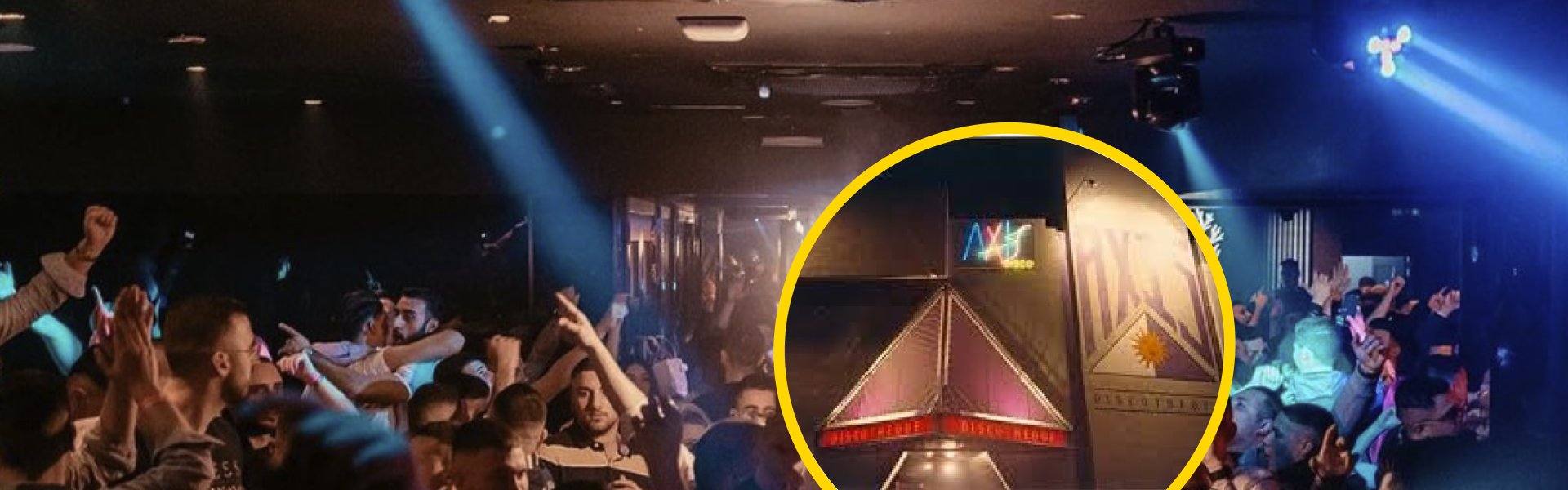
Ask anyone in Malta over a certain age about Paceville, and their eyes will light up with a particular memory. For one generation it is queuing outside Axis on a Saturday night, a Lm1 coin in hand, waiting for the bouncer to wave them in just in time for the laser show. For another it is rock nights at Coconut Grove, or beach parties at Styx, or the foam and the Aftershocks and the long walk home as the sun came up over St George's Bay. Paceville is where a great many Maltese grew up; a rite of passage compressed into a few crowded, neon-lit streets.
And yet, remarkably, this place barely existed at all within living memory. As one writer who grew up nearby recalled in an article of MaltaToday, Paceville 'quite simply didn't exist' as a nightlife district until the early 1970s. Within a single lifetime, a quiet seaside corner of St Julian's, a few villas, some olive trees, a couple of small bars, became the pulsing entertainment capital of the country, the place locals love and love to hate, nicknamed, with a mixture of pride and despair, 'Malta's Sin City'.
This is the story of how that happened, and of the legendary clubs that defined each generation along the way. Maltese nightlife history is poorly documented. Much of it lives not in archives or history books but in the memories of those who were there, in faded photographs, and in the bittersweet nostalgia of Facebook groups. The clubs were real. The nights were real. The memories, as anyone who danced there will tell you, are very real indeed.
Before the Neon: A Quiet Corner of St Julian's
The story begins, like so much in Malta, with a name. Paceville takes its name from Dr Giuseppe Pace, who in the early twentieth century, the 1920s and 1930s, built a number of residences in this then-rural corner above Spinola Bay. The houses were initially rented out to British servicemen stationed at the nearby St Andrew's and St George's barracks, and in time to Maltese families too. It was, in those days, an upmarket and decidedly quiet seaside spot of colonial-style villas, gardens and olive trees; about as far from a 'Sin City' as could be imagined.

Overlooking it all stood the area's grandest building: Villa Dragonara, built in 1870 as the summer residence of Marquis Emanuele Scicluna, Malta's wealthiest banker (nicknamed ic-Ċisk). During the wars the palace served as a military hospital and a headquarters for voluntary services. And then, in 1964, the very year Malta gained its independence, the Dragonara palace was converted into a casino, which still operates today as Malta's most prestigious gaming house. The arrival of the casino was the first sign of the area's future as a place of leisure and entertainment.
Those who remember Paceville before the boom describe an 'adventure playground' of caves, secret passages and open fields, dotted with just a handful of small bars: places with names like Paul's Punch Bowl, Tony's Bar (later Hiccups), Joe's Bar and Dick's Bar near Spinola. These were social hubs for locals and servicemen rather than party venues, but they laid the foundations for everything that came after.

The Boom: Tourism, Hotels, and the Birth of a Nightlife District
The transformation began after independence. With the British military presence winding down, the Maltese government turned decisively towards tourism as the engine of the new nation's economy, and directed much of that development towards St Julian's and Paceville.
Through the late 1960s and the 1970s, large hotels rose around the district, among them a Sheraton, a Hilton on the Dragonara peninsula, and the St George's complex, bringing a steady flow of international visitors, initially British holidaymakers and later tourists from across Europe. As one local guide bluntly puts it, Paceville as a nightlife destination essentially did not exist before the early 1970s; it was the tourism boom that called it into being. The scattered bars multiplied, and slowly began to evolve from simple drinking spots into music-driven venues with dance floors and DJs.
By the 1980s, the shift was unmistakable. Paceville had become a genuine nightlife district, no longer just a place to have a drink, but a destination in its own right, where young Maltese and tourists alike came specifically to dance and to stay out late. The clubbing culture that would define the area for the next forty years was being born.
The golden age: Axis, Coconut Grove and the Clubs that Defined a Generation

For many Maltese, the late 1980s and 1990s were the golden age of Paceville. Clubs like Axis, Coconut Grove and Styx weren't just venues, they were cultural landmarks, and a weekend in Paceville was a rite of passage for Maltese youth.
For many Maltese, the late 1980s and the 1990s were the golden age of Paceville, the era when clubbing culture truly exploded and the venues became cultural landmarks. And towering over that era, in memory at least, is one name above all others: Axis.
Axis is remembered, in the words of those who were there, as 'the best disco Malta has ever seen' and is often cited as the most influential club in Paceville's history. The picture that survives is vivid: hundreds of youngsters queuing down the street on a Saturday night in the mid-1990s, a Lm1 coin in hand, waiting for the legendary bouncer 'Ernest' to let them in just in time for the laser show, the sound of Snap!'s 'Rhythm is a Dancer' booming into the street. Inside, Axis was a multi-room complex; it housed, among other spaces, a room called Matrix for hip hop and R&B, and a disco-bar called Styx. It was, for a generation, simply the place. In time, like so much of old Paceville, Axis closed and the building was redeveloped, a transformation longtime clubbers still talk about with a real sense of loss.

The other great anchor of the era, and the one with the firmest dates, was Coconut Grove, the legendary rock and metal bar, which opened its doors in 1986. For three decades it was the spiritual home of Maltese rock fans, in its well-known spot near what is now a Burger King. When it was first threatened with closure, the backlash gave birth to the riotous 'Last Bash' party that older rockers still recount with glee. Coconut Grove eventually relocated, and finally closed for good in 2016, after roughly thirty years; an event met with a genuine outpouring of public grief on social media, the clearest possible sign of how deeply these venues were woven into people's lives.
Around these giants orbited a whole constellation of beloved clubs and bars whose names still summon instant nostalgia for those who knew them: Styx (one of the earliest clubs, famous for its Friday beach parties), BJs (long remembered as a jazz and live-music haunt), Wild Koyote, Zanzi Bar, Tigullio, The Alley (which many describe as their second home, and where more than a few Maltese couples first met), Bamboo, DewDrops, and Clouds. There was also a thriving underground scene for those who wanted something other than the mainstream — venues like Generator, remembered as Paceville's techno, house and drum-and-bass heartbeat, which helped shape Malta's electronic-music culture.
We should be honest that, for most of these clubs, precise opening and closing dates simply are not recorded anywhere reliable, they live on in collective memory, in Facebook groups like 'Nostalgia Malta', and in the stories people tell. But that, in a way, is the point: these places mattered less as dated institutions than as the backdrop to a whole generation's coming of age.
A World of its Own: The Two-round System and 'Sin City'

Maltese nightlife in this era had some genuinely distinctive features. One that older Maltese remember vividly is the two-round system. Many nightclubs effectively ran two shifts in a single night: until around 11pm the clubs were open to teenagers, after which they would close briefly for a clean-up, and then reopen for the adult crowd. It was a peculiarly Maltese arrangement, a whole island's teenagers and adults sharing the same dance floors at different hours of the same night, and the loosening of those rules over the years is one of the things that marks the passage from old Paceville to new.
As the district grew denser and wilder through the 1990s and 2000s, it acquired its enduring and double-edged nickname: 'Malta's Sin City'. Packed into a handful of streets radiating from the central square were dozens of bars, clubs, casinos, gentlemen's clubs, fast-food joints and cinemas, a concentration of nightlife found nowhere else on the islands. To tourists and language-school students it was an irresistible draw; to many locals, especially residents and parents, it was increasingly a source of concern over noise, drinking and safety. That tension, between Paceville as beloved playground and Paceville as problem, has run through its entire modern history and continues today.
The Modern Era: Super-clubs, Entrepreneurs, and a Changing District

The Paceville of today is, in many ways, a different beast from the golden-age version that millennials and their elders remember. The intimate clubs of old have given way, in large part, to fewer but much larger super-venues, high-capacity complexes catering to thousands of tourists, Erasmus students and language-school visitors each night.
Much of modern Paceville is associated with a handful of major entrepreneurs, the most prominent of whom was Hugo Chetcuti. An entertainment mogul who shaped a large part of the district, Chetcuti began with a club-and-bar called Footloose in the 1980s and went on to build a cluster of well-known venues nearby, including Club H, the Havana club, and Shadow Lounge, alongside hotels and other businesses. His success helped consolidate Paceville, Portomaso and the Dragonara area into a single, self-sustaining hub of nightlife, hospitality and business. In a tragedy that shook the country, Chetcuti was fatally attacked by an assailant in Paceville in 2018; a stark and sombre chapter in the district's recent history.
The Havana club, which opened in the late 1990s, has proved one of the most durable names in Paceville, surviving multiple nightlife generations, refurbishments and changing musical trends to remain a fixture of the scene into the 2020s. Around it, the current generation of large clubs — and a roster of names that will, inevitably, change again, continues to draw the crowds. Beyond Paceville itself, the open-air summer complex at Gianpula, out in the countryside near Rabat, has become a major part of the Maltese clubbing calendar, offering a different, festival-style experience under the stars.
Meanwhile, the very ground of Paceville is changing. The district that was built on low-rise villas and modest clubs is now sprouting high-rise towers, as major developments reshape the skyline and property values soar. Some of the old landmarks have become shopping outlets, fast-food restaurants, or building sites. The neon still blazes every weekend — louder and bigger than ever, but the intimate, slightly ramshackle Paceville of the laser-show era is increasingly a thing of memory.
The Ghosts Remain
There is a particular kind of nostalgia, common across Malta, for the Paceville that was. It surfaces every time an old club closes, every time a photograph from the 1990s circulates online, every time someone over thirty hears a certain Europop track and is transported back to a sweaty dance floor and a Lm1 entry fee. The clubs themselves; Axis above all, but also Styx, BJs, Coconut Grove, the Alley and all the rest, have mostly vanished, redeveloped into shops and restaurants and apartment blocks. But they remain vivid landmarks in the mental map of a whole generation.
That is, perhaps, the truest thing one can say about the history of Maltese nightlife: that it is a history written less in records than in memory. The precise dates are often lost. The buildings have changed hands and names and purposes many times over. But the experience, of growing up, going out, queuing in the warm night air, dancing until dawn with everyone you knew, is one that hundreds of thousands of Maltese share, and remember, and pass on. The ghosts of Paceville are not really gone. They live on every time someone says, with a smile and a far-off look, 'you should have seen Axis back in the day'.

About Matthew Gollcher
Hi, I'm Matthew, an SEO Specialist and Content Writer at Yellow Pages Malta. I'm passionate about creating meaningful content and exploring AI's creative possibilities. When I'm not working, I enjoy the gym, time with friends, watching series and reading, and playing guitar. I'm always eager to learn and grow both personally and professionally.