The Complete History of Pastizzi: Malta's Favourite Traditional Snack


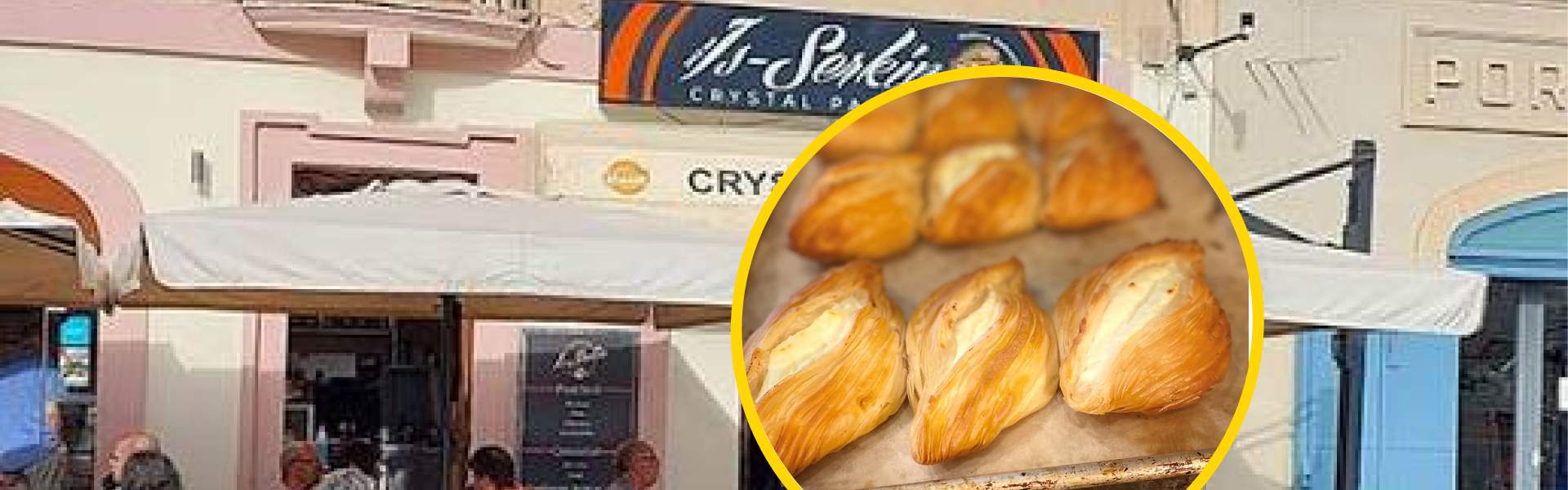
The first pastizz in recorded Maltese history got somebody in trouble with the Inquisition.
Sometime in the 16th century, when the Order of St John ruled Malta, a painter was reported to the Inquisitor for the offence of eating meat on a day when meat was prohibited. The authorities, being the Inquisition, wrote it down. And because they wrote it down, we have the earliest documented mention of a pastizz anywhere; a pastizz that was, as it happens, filled with rabbit.
That is a genuinely wonderful origin for a national snack: not a royal banquet or an ancient recipe scroll, but a man getting reported for eating the wrong thing on the wrong day. And it tells you something important about the history of pastizzi, that we know far less about it than the confident stories online suggest, and that what we do know, we mostly owe to accidents of the historical record.
This is the properly researched history of Malta's favourite snack: what a pastizz actually is, where the documented trail really begins, how the British era turned it into a national habit, and how, in January 2026, it finally made the Oxford English Dictionary. It also includes a section on where pastizzi did not come from, because that part needs correcting.
The Definition of a Pastizz

A pastizz (the plural is pastizzi, more on that later, because it matters) is a savoury pastry made from thin, flaky, filo-like layers of dough, folded around a filling and baked in a very hot oven until the pastry blisters apart into shattering flakes.
There are two classic fillings, and they are the whole tradition:
Pastizzi tal-irkotta: filled with irkotta, the Maltese cousin of Italian ricotta, made from sheep's milk and rather more savoury than the Italian version, usually mixed with egg and parsley. (These are also known as pastizzi tal-ħaxu.)
Pastizzi tal-piżelli: filled with curried mushy peas: cheap, filling, well-spiced, and quietly one of the most obviously British-influenced things in the entire Maltese kitchen.
They are usually diamond-shaped, though round ones exist too (known as pastizzi tax-xema'). And there is a small piece of everyday Maltese genius in how they are folded: because you cannot tell from the outside what is inside, bakers traditionally fold the two types differently as a code, the ricotta ones closed down the middle, the pea ones folded down the side. Every Maltese person can read that code across a counter at a glance.
They are baked on metal trays in a pastizzerija, typically a small, traditional, family-run place and sold hot, often for well under a euro, at almost any hour of the day or night. They are breakfast, they are elevenses, they are lunch, and they are what you eat at four in the morning on the way home from a night out.
Where Pastizzi Did NOT Come From

Search for the history of pastizzi and you will be told, with total confidence, that they descend from Arab börek-style pastries brought to Malta during the Muslim conquest around 870 AD. One statement goes further and claims historians place their inception 'between 1200 BC and 870 AD'. You will also find the pastizz confidently traced to Turkish, Sicilian, or even South Indian paratha ancestry.
Here is the problem: none of that is established. These are hypotheses; some plausible, some fanciful, dressed up as facts.
The person best placed to say is Dr Noel Buttigieg, Senior Lecturer at the University of Malta, who researches food history and its relationship to culture and is widely regarded as the go-to authority on Maltese foodways. And his answer is refreshingly, rigorously honest. The earliest documented mention of pastizzi, he explains, is the 16th century, the Inquisition's unfortunate painter. Beyond that, in his words: 'Just how far back pastizzi goes into Maltese history is impossible to say.'
That is the truthful position, and it is worth respecting. It is entirely possible that filled pastries reached Malta far earlier, the whole Mediterranean and Middle East has been wrapping dough around fillings for a very long time, and Malta sat at the crossroads of all of it. But 'possible' is not 'documented', and a date like 870 AD, stated as fact, is an invention. As one editor drily noted while arguing about this very question: the Italian word pasticcio is simply the generic name for any stuffed pastry, and Occam's razor tells you which explanation to favour.
The Word Itself and its 2026 Moment

The etymology, at least, we can pin down, and in January 2026 the Oxford English Dictionary did exactly that, admitting pastizz to its pages for the first time, alongside two other Maltese entries, bigilla and aljotta.
The OED traces pastizz to an 18th-century Maltese word, attested before 1767, appearing in the plural as pastazies, derived either from the Sicilian pastizzu or the Italian pasticcio, both meaning 'pie'. (The dictionary notes it is unclear whether the Sicilian word is a variant of the standard Italian one or merely a cousin.) Beneath both sits the Latin pasta; dough, paste. So the name, at least, points not east to Arabia but north to Sicily and Italy, exactly as you would expect for a word that entered Maltese during centuries of Sicilian and Italian cultural traffic.
The OED adds a lovely, slightly pointed detail. English first recorded the word in 1910, and English speakers, encountering 'pastizzi' on menus, widely mistook the Maltese plural for a singular. That is why so many English speakers say 'a pastizzi'. The OED calls this, politely, 'a misapprehension of the Maltese plural form'. One is a pastizz. Two or more are pastizzi. Now you know, and so does Oxford.
The Trail Reappears: A Christmas Treat?
After that lone 16th-century scandal, the documentary trail goes quiet for a very long time. Direct references to pastizzi do not show up again, Dr Buttigieg explains, until around the turn of the 19th century, and when they do, something striking emerges: the descriptions of the pastry's shape and size match what is sold across Malta today. By 1800 or thereabouts, the pastizz had essentially arrived at its final form.
Those early references carry a surprise, though. 'It appears that many Maltese used to consume pastizzi as some sort of a dessert during Christmas, or during the Christmas meal,' says Dr Buttigieg, which is not at all how anyone eats them now. He is careful, though, to distinguish what the sources say from what he suspects: 'I have a feeling that prior to these references in the 19th century, the Maltese were consuming pastizzi throughout the whole year.' In other words, the Christmas association may simply be what happened to get written down, rather than the whole picture. It is a good reminder of how the historical record works, we see what someone bothered to record, not what actually happened.
Tea, Cafés and Colonial Imitation: How Pastizzi became a Habit

The references really begin to multiply in the run-up to the Second World War, and here the story becomes recognisably modern.
The Maltese lawyer, politician and author Herbert Ganado, the great chronicler of Maltese life under British rule; described the growth of sophisticated cafés along Valletta's public squares during this period. 'Ganado says that the Maltese are eating pastizzi at these cafés and they're drinking coffee and tea,' explains Dr Buttigieg. And Ganado had a theory about why: the Maltese, he believed, were emulating their British colonisers, adopting the café-and-tea habit of the imperial power, but filling it with their own pastry.
It is a fascinating thought. The pastizz-and-tea combination that feels so quintessentially, unpretentiously Maltese today may have begun partly as an act of colonial aspiration, the Maltese middle class doing what the British did, in a Maltese accent.
It was around this same period, Dr Buttigieg notes, that pastizzi became something more than a thing the Maltese ate: they became a food souvenir, something visitors to the island sought out and remembered. That was especially true of the British soldiers stationed on Malta, who took to them enthusiastically. And that soldier connection would give Malta its most famous pastizzerija of all.
Is-Serkin: The Horse Carts and the Crystal Palace

In Triq San Pawl in Rabat, a short walk from the gates of Mdina, sits a small, unassuming bar that has become a national institution: Is-Serkin, also known as the Crystal Palace. Its two names are, between them, a compressed history of modern Malta.
The first name came from the original owner, Ninu Azzopardi. His customers habitually turned up riding the light horse carts known in Maltese as serkin (from the English 'sulky'), so Ninu picked up the nickname tas-Serkin, 'the one with the horse carts', and the nickname stuck to the bar. It is a very Maltese way for a business to be named: not by a sign, but by the village.
The second name came from the British Army. During the mid-20th century, soldiers stationed at nearby Mtarfa; a good number of them from the Crystal Palace area of south London, made the little bar their regular haunt for eating and drinking. They called it the Crystal Palace after home, and the name stuck to it just as firmly as the horse carts had. Today the sign outside reads 'Crystal Palace Tea and Coffee Bar', and Maltese people still call it Is-Serkin. Both names are correct. Both are history.
Ninu's son, Martin Azzopardi, known around Rabat, inevitably, as Tas-Serkin, took over the business around 1969 or 1970 and ran it until selling up in the late 2010s. He always attributed the place's fame to four things: its hours, its location, its price, and its taste, the last coming from a recipe the family kept secret. The pastizzi are made off-site and served straight out of the oven in the shop, traditionally with a mug of milky tea. Famously, the place kept extraordinary hours, feeding farmers at dawn, tourists at noon and clubbers at four in the morning.
The Rise of the Pastizzerija

The modern geography of pastizzi is surprisingly recent. It was only after the Second World War, Dr Buttigieg explains, that dedicated pastizzi shops, the pastizzeriji, really started appearing, and at first they were an urban phenomenon, concentrated in Valletta. The spread outwards came later. 'By the 1970s,' he notes, they were opening across suburban and rural Malta as well. 'Today, you have pastizzi shops in pretty much every single town in Malta.'
So the sight that now feels eternal and unchanging, a little pastizzerija on the corner of every village, trays coming out of the oven all day, is, as a nationwide pattern, roughly fifty years old. The pastizz is ancient; the pastizzerija on every corner is younger than colour television.
The Pastizz in the Maltese language
You can measure how deeply a food is embedded in a culture by how far it has crawled into the language, and by that measure, the pastizz is very deep indeed.
The most useful expression is jinbiegħu bħall-pastizzi, literally 'they're selling like pastizzi', the exact Maltese equivalent of the English 'selling like hot cakes', used for anything in apparently inexhaustible demand. It is a small linguistic monument: for that idiom to work at all, pastizzi must be the thing everybody buys.
Less flatteringly, calling a person 'a pastizz' is an insult, it marks someone out as a pushover, an idiot, or generally not much good. And the pastry's distinctive shape has generated a strand of considerably earthier Maltese slang, along with a rude hand gesture made by pressing the thumbs and index fingers together into a diamond, which we will leave, discreetly, at that. Suffice to say that no Maltese person needs it explained.
The Great Pastizzi Mind Shift
Here is perhaps the most surprising finding in the whole story and it is recent. Around 2007, Dr Buttigieg ran a simple survey: he asked students to name three foods they considered Maltese. Pastizzi did not make the list. Not the top three; at all. Shortly before the COVID-19 pandemic, he ran the identical exercise again. This time, pastizzi came top.
'You can see that in just 15 years, you have this major cultural mind shift in what they consider to constitute typical Maltese food,' he says. 'Today, there is a very strong connection with pastizzi, especially among the younger generation.' That is a remarkable thing to have documented. Within a decade and a half, an everyday snack that Maltese young people apparently did not even think of as particularly Maltese became the single most Maltese food they could name. National identity, it turns out, is not fixed and ancient; it can reorganise itself around a pastry inside one generation.
Innovation of the Pastizz?

One last lesson, for anyone with big ideas. Around 2012, Dr Buttigieg recalls, a company attempted to broaden the pastizz's horizons by introducing new fillings, including Nutella.
His verdict on the experiment is four words long: 'It didn't fly.'
The Maltese are not, in general, precious about their food, but the pastizz appears to be a line. Some evolution has been permitted, chicken pastizzi are now sold in most pastizzeriji and have been quietly accepted into the family, and the occasional limited edition surfaces but the two great fillings remain what they have been for as long as anyone can document: irkotta and peas. You do not fix what is not broken, and you do not put chocolate spread in it.
The Pastizz: Gone Global

For a food so tied to one small archipelago, the pastizz has travelled remarkably far, carried, as Maltese things usually are, by emigrants. Maltese communities produce pastizzi in Australia, Canada, the United Kingdom, the United States and, more recently, Rome; the first pastizzeria in Scotland opened in 2007. For the enormous Maltese-Australian community in particular, the pastizz is a direct, edible line back to the islands.
And then, in January 2026, came the ultimate recognition of that journey: the Oxford English Dictionary formally admitted pastizz, along with bigilla and aljotta, into the English language, noting that both the food and the word have travelled internationally with the Maltese diaspora. A snack once recorded only because a painter got in trouble with the Inquisition is now, four and a half centuries later, an English word with an Oxford citation.
The Honest History of a Humble Thing
What makes the pastizz such a satisfying subject is precisely that its history refuses to be grand. There is no ancient founding recipe, no royal patronage, no unbroken 3,000-year lineage, whatever the internet insists. There is a painter caught eating rabbit on the wrong day. There is a gap of two centuries. There is a 19th-century Christmas habit that may or may not be the whole story. There are Maltese families in Valletta cafés, drinking tea in imitation of the British and inventing, without meaning to, the most Maltese ritual there is. There are British squaddies from south London naming a Rabat bar after their own neighbourhood. There is a horse cart, a nickname, a secret recipe.
And there is Dr Buttigieg's honest, unglamorous, entirely admirable verdict on the deep origins: impossible to say.
Which is, in the end, the right note. The pastizz did not come down from antiquity fully formed. It was assembled, slowly and accidentally, out of everything that washed over these islands; an Italian-Sicilian word, a Mediterranean pastry technique, a filling of curried peas that could only have come from the British, sheep's milk irkotta from the Maltese countryside and it was made national not by decree but by hundreds of small family bars deciding, one town at a time, to put a tray in the oven.
So, the next time you take a hot one out of a paper bag, and the flakes go everywhere, and you burn the roof of your mouth because you never learn, you are eating the most delicious thing in Maltese culture.

About Matthew Gollcher
Hi, I'm Matthew, an SEO Specialist and Content Writer at Yellow Pages Malta. I'm passionate about creating meaningful content and exploring AI's creative possibilities. When I'm not working, I enjoy the gym, time with friends, watching series and reading, and playing guitar. I'm always eager to learn and grow both personally and professionally.