Nine Lives, One Island: Who Feeds Malta's Cats? The Quiet Network Keeping Thousands Fed


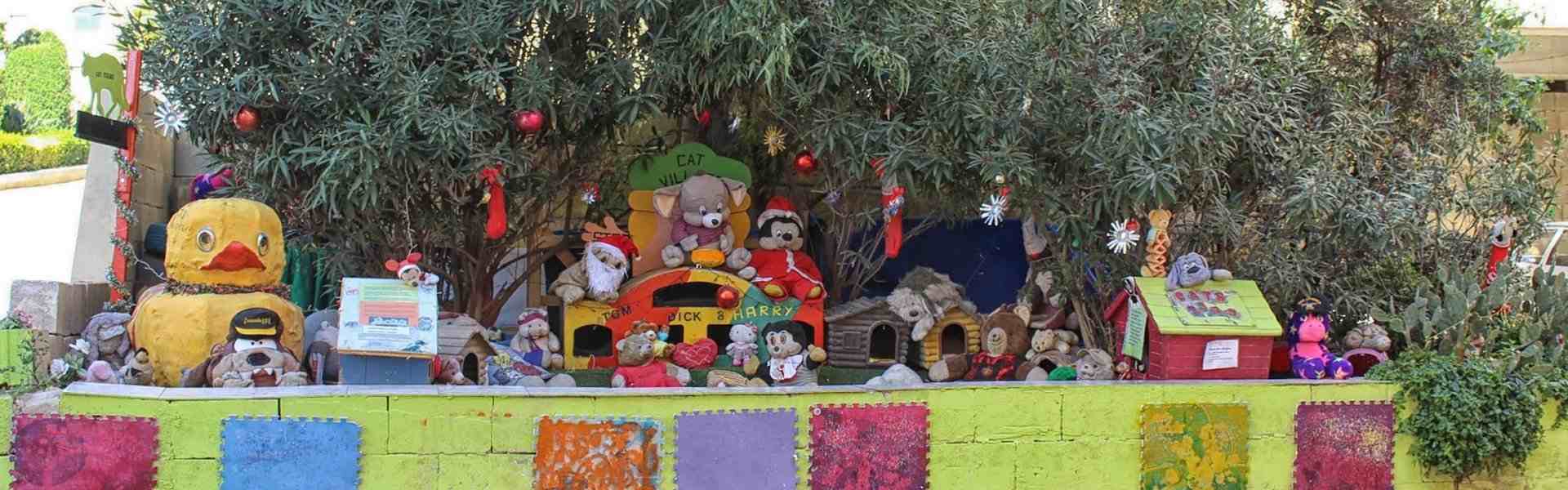
Anyone who spends a few days in Malta notices the cats. They lounge in the public gardens, doze on sun-warmed harbour walls, pick their way along the bastions of Valletta, and gather, with uncanny punctuality, at the spots where, every evening, someone arrives with food. Some tourists call Malta a 'cat island', and it is one of the things visitors most consistently remember about the place.
What strikes many of those visitors is not just how many cats there are, but how well most of them look. As one Malta travel guide puts it, you are struck here by the relative absence of the starving street cats you sadly see in many other countries. The reason is simple, and it is one of the quietly lovely things about Maltese society: most of Malta's stray cats are looked after not by a single owner, but by the whole community.
Behind that gentle street-level scene is a real, if largely invisible, network: an estimated thousand-plus volunteer 'feeders' who turn up day after day; a string of NGOs and sanctuaries; a government neutering programme; and, since 2024, a formal legal system of registered cat colonies. This is the story of who actually feeds Malta's cats, and of how an island balances deep affection for its felines with the hard, practical work of keeping their numbers under control.
How Many Cats? An Honest Answer

Let's start with the question everyone asks and nobody can actually answer: how many stray cats are there in Malta?
The honest answer is that nobody knows, and there is no official or scientific count. The figure you will see repeated again and again, '300,000 cats', sometimes '350,000', often phrased as 'nearly as many cats as people', is not a government statistic or a research finding. It originates from an informal estimate by a Swiss couple, Alex and Gabi, the authors of a photographic book about Malta's cat carers, who concluded after their own observation that the islands host nearly as many strays as inhabitants. Their estimate was reported by Television Malta in 2017 and has been quoted ever since. Other casual estimates put the figure lower, at 'more than 200,000'. None of these is based on a systematic survey.
So the truthful position is this: Malta and Gozo are home to a very large stray-cat population, certainly in the tens of thousands, quite possibly far more, but the precise number is unknown, and anyone who quotes a confident figure is repeating an estimate rather than a measurement. What is not in doubt is that the population is large enough, and visible enough, to be one of the defining features of the Maltese streetscape, and large enough to require serious management.
Why so many? The causes are the same ones identified by every animal-welfare organisation on the islands: insufficient spaying and neutering of pet cats that then breed freely; the abandonment of cats by owners who move away or can no longer cope; and a fertility rate that makes the problem compound quickly. A single female cat can begin reproducing at around five months old, can have multiple litters a year, and can produce a very large number of kittens over her life. Without sterilisation, a handful of un-neutered cats becomes a colony with startling speed, which is why, as we will see, the most important work is not the feeding at all, but the neutering.
Who Feeds Them: The Thousand Quiet Carers

At the heart of Malta's cat story are the feeders: ordinary people who, without pay and largely without recognition, take personal responsibility for one or more colonies of stray cats. The same Swiss-couple research that produced the famous population estimate also concluded that around 1,000 people across the islands look after strays, a figure widely repeated in Maltese coverage. They come, in the words of the book that documented them, 'from all walks of life, nationality, gender and age group'.
The pattern of their work is remarkably consistent. A feeder typically has one or more regular spots, and arrives at the same time each day, often early morning or early evening. The cats, who are creatures of routine, learn the schedule and gather in advance. One feeder interviewed by the Maltese press described a round running from 7:30 to 9:00 each morning across several colonies; a Swiss feeder in Marsaskala described feeding at four locations besides her home and additionally caring for more than fifty cats in a shelter. Much of this is paid for out of the feeders' own pockets, supplemented by donations and, increasingly, by the work of organised NGOs.
It is genuinely hard, often thankless work. Feeders described the financial strain of veterinary bills, paying a €150 deposit and over €130 in treatment costs out of pocket for a single sick cat on a public holiday, and the emotional toll of dealing with abandonment, illness, and occasional acts of cruelty. Feeders also frequently take sick or injured cats into their own homes to recover, and spend large amounts of time trapping cats for neutering and finding foster homes for kittens. The gentle image of someone scattering food for grateful cats conceals a great deal of unglamorous labour, expense, and heartbreak.
The Organisations: Sanctuaries, NGOs, and the Famous Colonies
Around the individual feeders has grown a network of organisations and well-known communal colonies. Among the most prominent:
The Malta SPCA (MSPCA): the island's best-known animal-welfare organisation, plays a coordinating role in cat-population management alongside the government's Animal Welfare Directorate, combining humane population control with disease surveillance, investigations, research and legislative proposals.
CSAF: Carers for Stray and Abandoned Felines, founded in 2005 by a small group of volunteers and based in Bormla (Cospicua), has grown into a shelter caring for over 300 cats and kittens.
Cat Village Malta in St Julian's is one of the most famous communal colonies on the island, a small 'village' of cared-for cats, long associated with a dedicated carer named Roza, who has worked to keep the cats vaccinated, dewormed and neutered. The colony's origin story, told to visitors for years, is that an elderly woman began feeding local strays, then built them shelters when the rains came, and gradually created a whole cat community.
Independence Gardens in Sliema, on Balluta Bay along the Sliema–St Julian's promenade, is perhaps the most-photographed cat colony in Malta: a shaded area filled with handmade cat shelters, bowls of food and water, and blankets, maintained by local volunteers and beloved of tourists. Other well-known cat-watching spots include the Upper Barrakka Gardens in Valletta, and the Argotti and San Anton gardens.
Other organisations operate across the islands, including Animal Care Malta in Mellieħa, Kitty Guardians Malta, and a range of smaller groups and private sanctuaries, alongside vets such as the NGO clinic Happy Paws, which has offered reduced-price neutering to colony carers. The whole forms a loose but genuine ecosystem of care, individuals, NGOs, sanctuaries and sympathetic vets, that has kept Malta's cats fed and, increasingly, controlled.
Malta's cats have even become a cultural export. The 2023 documentary film Cats of Malta, directed by Sarah Jayne Portelli and produced by Nexus Production Group, explores the island's cat colonies, cafes and the human–cat community through interviews with local feeders, artists and volunteers; it had its world premiere at the Melbourne Documentary Film Festival. The photographic book Islands of Cats: The Humble Stray Cat Carers of the Maltese Islands (published in English, German and Maltese) documents the carers and their colonies in hundreds of photographs. MaltaPost has even issued a set of stamps featuring local cats.
Why Feeding Alone isn't Enough: The Neutering Question
Here is the part of the story that the charming street scenes obscure, and that every serious animal-welfare body in Malta stresses: feeding cats without neutering them makes the problem worse, not better.
The logic is stark. Well-fed cats are healthier and breed more successfully. A colony that is fed but not sterilised will grow, not shrink. As the MSPCA puts it bluntly, one of the most damaging widespread beliefs is that 'feeding them is enough' because feeding without sterilisation increases population growth. The organisation has been sharply critical of carers who feed their colonies but do not neuter all the cats in them, warning that the efforts of those who do neuter are undone by those who do not.
The internationally-accepted humane solution is Trap–Neuter–Return (TNR), known locally also as Capture–Neuter–Release (CNR). Cats are humanely trapped, neutered by a vet (and usually 'ear-tipped', a small, painless removal of the tip of one ear under the same anaesthetic, so that neutered cats can be recognised at a glance), and then returned to their colony. Over time, a fully-neutered colony stabilises and gradually shrinks through natural attrition, without the cruelty of culling. Malta's approach to managing its feral cat population centres on TNR programmes delivered by NGOs with the backing of the Animal Welfare Directorate.
This is why the real heroes of Malta's cat story are not simply the people who put down food, but the people who do the harder, less visible work of trapping cats and getting them neutered, and the vets and NGOs who make that neutering affordable. Feeding keeps a cat alive today; neutering is what prevents a hundred more cats from living hard lives on the street tomorrow.
From Informal Kindness to Formal System: The 2023–24 Reforms
For most of its history, Malta's cat-care network was entirely informal, a matter of private kindness, with no legal structure at all. That changed significantly in 2023 and 2024, as the government moved to put the system on a formal footing.
In 2023, the government launched a national cat-neutering campaign, announced by the Animal Rights Minister Anton Refalo, committing €200,000 per year to the effort. Run by veterinarians operating from a clinic in Naxxar, the campaign's stated goal was to neuter as many stray cats as efficiently as possible, with feeders and trappers encouraged to bring cats in. An earlier €30,000 initiative had already helped neuter and microchip 1,400 cats. Animal-rights groups had advocated for a nationwide neutering programme for years.
Then, in 2024, a new legal notice formalised the role of the cat feeder itself. Under the new rules, no person may feed stray cats in a public area unless they are registered with their local council, on pain of a €50 fine. Registered feeders must provide detailed information about their colonies: the GPS coordinates of feeding areas, the number of cats in each colony, the number that have been neutered, and microchip details where available. They must make every effort to ensure the cats are neutered and healthy and must report any suspected sick cat or disease outbreak to the Director of Animal Welfare. Local councils send updated cat-feeding registers to the Animal Welfare Directorate twice a year, and a register of authorised feeders is maintained by two designated controllers.
The aim of the scheme is coherent: to turn an invisible, informal activity into a mapped, accountable system, so that the authorities know where the colonies are, how big they are, and how far each has been neutered, the data needed to actually bring the population under control. To support registered feeders, whose work has so often been self-financed, the government attached a €350,000 fund and a voucher scheme, with vouchers exchangeable for dry cat food from approved suppliers.
Not everyone welcomed the new rules. Some feeders reacted with anger, particularly to the fine and to the principle that a feeder could be penalised for feeding a hungry cat outside their designated zone. 'The government wants us to ignore these cats or risk a €50 fine,' one feeder protested. 'First they issue a scheme to help feeders, but then they introduce these fines.' The tension is real, and it reflects a genuine policy dilemma: the registration system is, on paper, a sensible way to map and manage colonies, but to the volunteers who have given years and their own money to this work, the arrival of fines and zones can feel like a bureaucratic intrusion on an act of simple compassion.
Why it Matters: Cats, Community, and the Maltese Character
Why does any of this matter beyond the cats themselves?
Part of the answer is practical. Malta is a small, densely-populated island, and a large free-roaming cat population raises real questions of public health, animal welfare, urban cleanliness, and the welfare of wildlife. Managing it humanely, through neutering rather than culling, is a genuine policy achievement, and the combination of community feeding, NGO-led TNR, government funding and (now) a registration system is a more sophisticated approach than many countries manage. Malta's official rabies-free status and its broad framework of animal-welfare law, overseen by a dedicated Animal Welfare Commissioner, sit behind all of this.
But part of the answer is about something less tangible. Roughly 60% of Maltese households share their home with at least one pet, a remarkably high figure for such a small, densely-settled place, and a sign of a genuine and deepening fondness for animals. The willingness of a thousand or more people to get up early or come out at dusk, day after day, to feed animals that are not theirs, that they cannot keep, and that often will not even let themselves be touched, says something about the place. It is a quiet, unsupervised, unrewarded kindness, repeated across the islands every single day.
Visitors sense it. The cat dozing in the Upper Barrakka Gardens, the handmade shelters at Independence Gardens, the bowls of water tucked into a doorway in a Sliema side street, these are not the work of the state, or of any single organisation. They are the cumulative result of thousands of small private decisions to care for something that has no claim on the carer except its need. That is the quiet network. It has no headquarters and no membership card. It is just a great many Maltese (and Gozitan, and resident-foreigner) people, deciding, one cat at a time, that the animals of their island will be fed.
Malta's cats have nine lives, the old saying goes. On this particular island, a good part of the reason they get to use them is the thousand quiet people who show up, every day, with the food.

About Dr Hillary Hopkins
Dr Hopkins is a Maltese lawyer, with a love for Malta's historic stories, forgotten corners, and little cultural rabbit holes.